


Paris is full of hidden treasures, among which are the covered passages, true witnesses to a bygone era. These galleries, built between the late 18th and 19th centuries, offer a glimpse into Parisian history with their majestic glass roofs, floor mosaics, and timeless charm. While some passages, such as the Galerie Vivienne and the Passage des Panoramas, others remain little known but are just as worthy of discovery. Here is a selection of forgotten covered passages that are definitely worth exploring.
Are you a fan of covered passages? We recommend taking this guided tour to get to know them better! On the agenda:a guided walk through a dozen hidden galleries, including restored wonders, forgotten places, and well-kept secrets.
The Grand-Cerf Passage
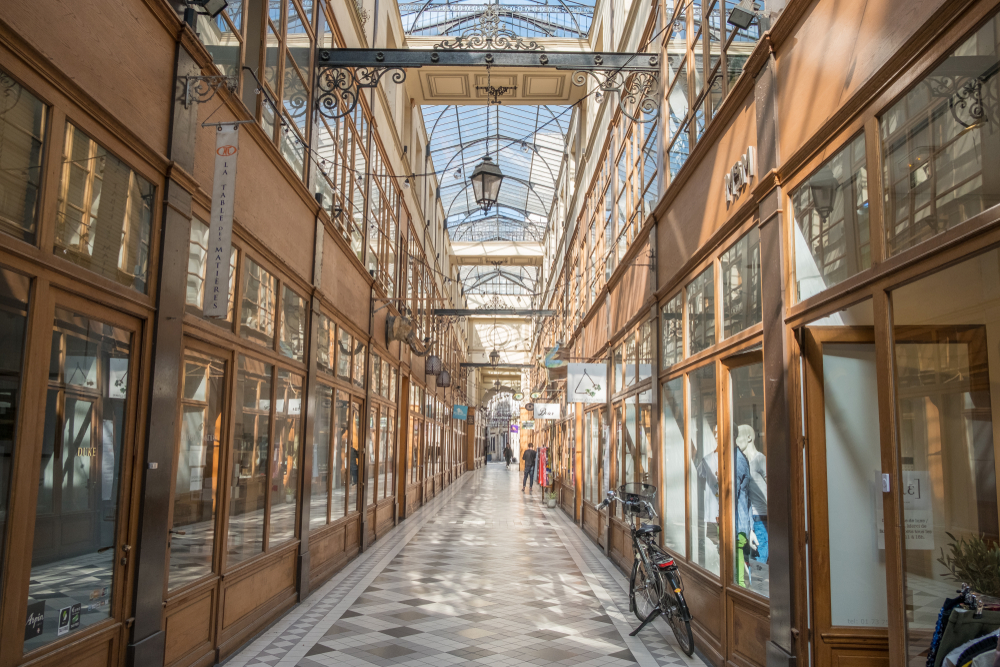
Located near the Montorgueil district, the Passage du Grand-Cerf stands out for its impressive height and luminous glass roof. Long neglected, it has been given a new lease of life thanks to its craft and design shops. Among them, don’t miss the “Rickshaw” shop, which specializes in handmade items.
The Galerie Véro-Dodat

This elegant gallery, located near the Louvre, is a neoclassical gem. It is home to the famous Louboutin boutique. With its dark wood columns and soft lighting, it offers a chic and intimate atmosphere.
The Passage Verdeau

A natural extension of the Jouffroy and Panoramas passages, the Passage Verdeau is often overlooked despite its unique charm. Its fishbone glass roof illuminates the many antique shops and old bookstores located there.
The Brady Passage

Known as Paris’s “Little India,” this passage is a true sensory journey with its Indian and Pakistani restaurants. Although it has lost some of its former glory, it remains a lively place where cultures and exotic flavors mingle.
The Choiseul Passage

Less frequented than its neighbors, this passage is nevertheless one of the longest in Paris. It has recently been renovated to restore its original splendor. Here you will find specialty bookstores, art galleries, and discreet cafés perfect for a quiet break.
These covered passages are not just places to stroll, they tell a rich story linked to the rise of the Parisian bourgeoisie in the 19th century. At the time, they served as elegant shortcuts to escape the muddy streets while offering a shopping space protected by their luminous glass roofs.
Unfortunately, many disappeared during Haussmann’s major renovations or were forgotten over time. Today, only about twenty passages remain in Paris, mainly on the right bank. Thanks to preservation efforts by the city of Paris since the 2000s, these architectural gems are gradually enjoying a second life. It’s up to us to enjoy them!