

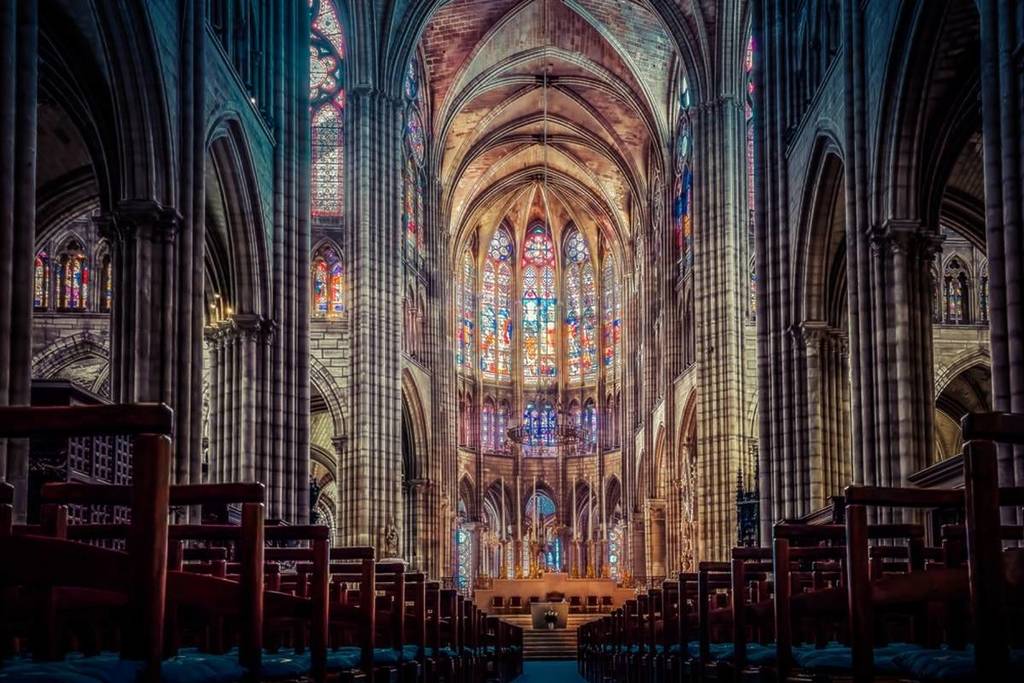
On the outskirts of Paris, in the town of Saint-Denis, stands a major monument of French heritage. The Basilica of Saint-Denis is not just an impressive religious building. It embodies much of the country’s political, artistic, and symbolic history.
Basilica of Saint-Denis: a true cradle of Gothic art
The site originated as an abbey founded around the tomb of Saint Denis, the first bishop of Paris and a Christian martyr. From the early Middle Ages onwards, the place became central to the Kingdom of France. It was here that royal ceremonies developed and, above all, that the necropolis of the kings of France gradually took shape. For over a thousand years, almost all French sovereigns were buried here.
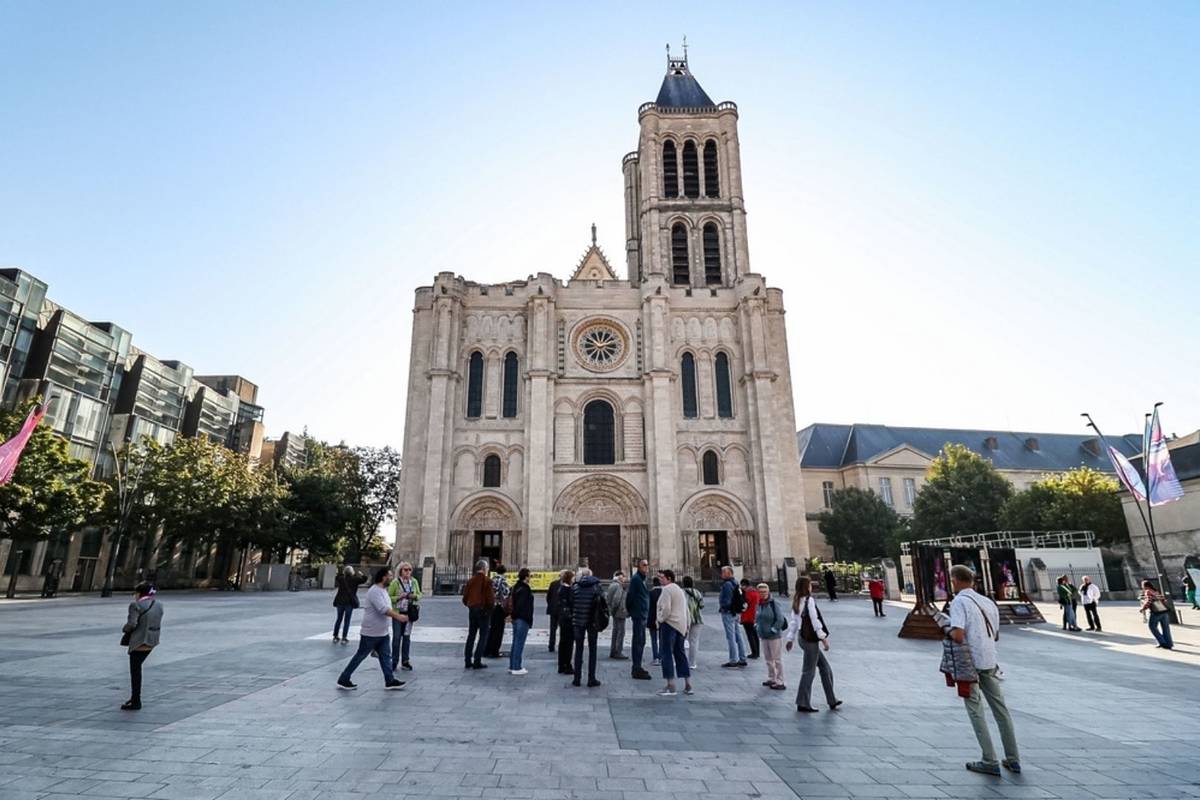
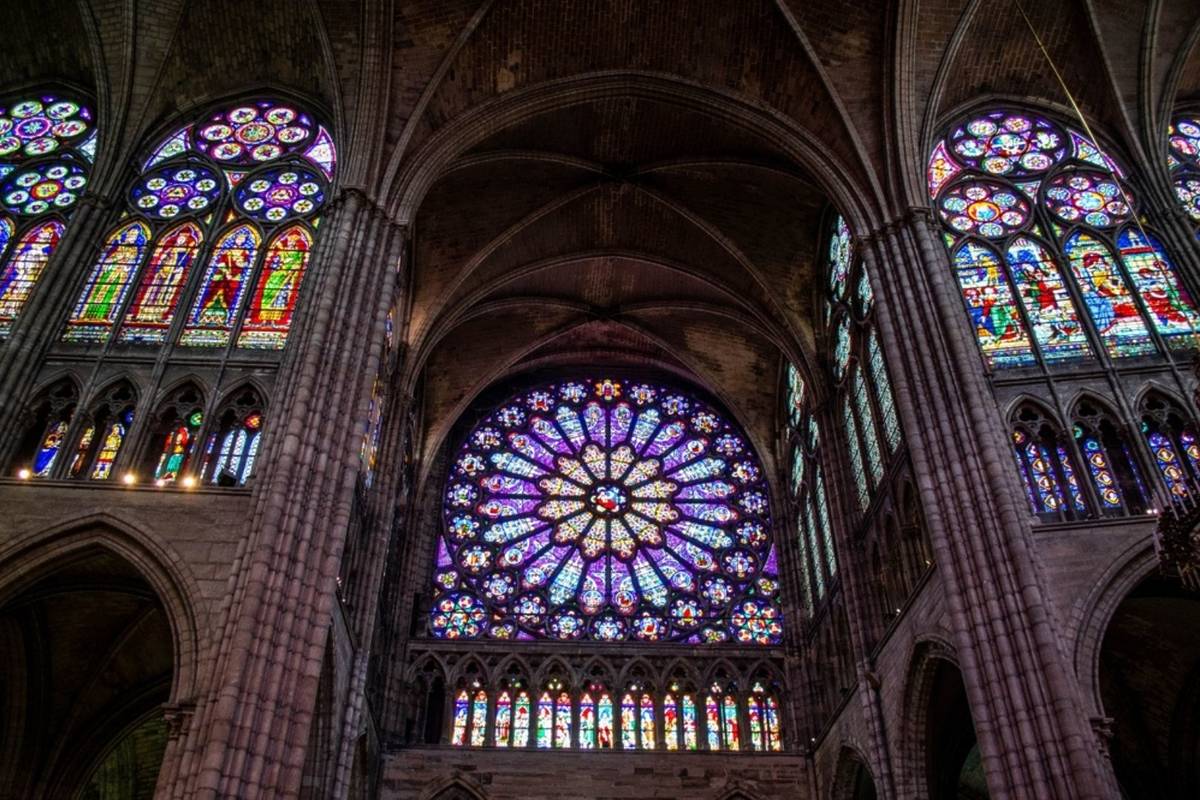
The current basilica owes much to Abbot Suger, a key figure of the 12th century. Under his leadership, the building underwent a profound transformation. The objective was clear: to let in light, increase the volume, and create a new architecture capable of expressing divine and royal grandeur. This reconstruction marked the birth of Gothic art, with its pointed arches, soaring vaults, and monumental stained-glass windows. Saint-Denis then became a model for many cathedrals throughout Europe.
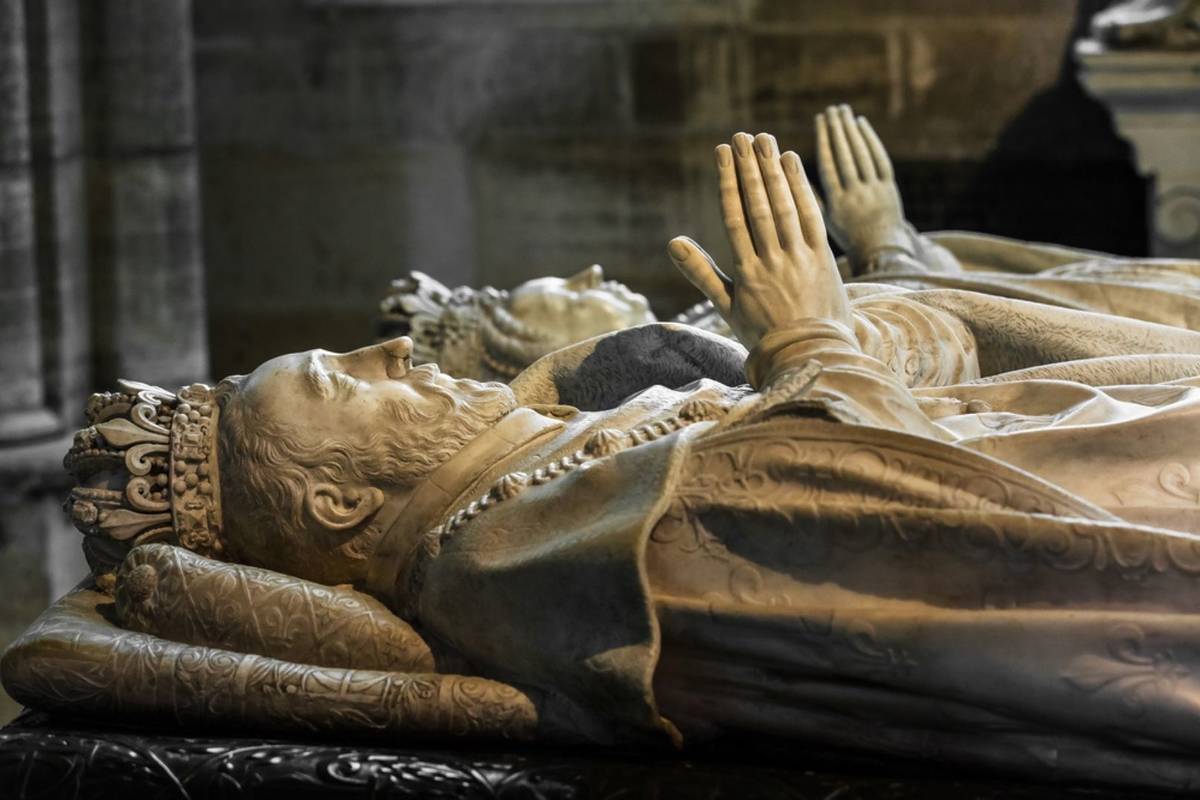
Inside, the basilica impresses with its wealth of funerary sculptures. Recumbent effigies, monumental tombs, and elongated statues trace the evolution of funerary art from the Middle Ages to the Renaissance. Here we find the tombs of major figures in French history, from Dagobert to Louis XVI, François I, and Catherine de Medici.
However, these tombs were desecrated during the Revolution, the bodies were moved, and some monuments were destroyed. Nevertheless, in the 19th century, extensive restoration work was undertaken, notably under the impetus of Viollet-le-Duc. The sculptures were reassembled, the spaces reorganized, and the basilica gradually regained its role as a major national memorial site.
Today, the Basilica of Saint-Denis remains a living building. It welcomes visitors who come to learn about the history of the French monarchy, as well as architecture and heritage enthusiasts. The contrast between the sobriety of certain parts and the decorative richness of the tombs creates a special atmosphere that is both solemn and fascinating.
Another project is currently attracting attention around the basilica. The spire of Saint-Denis, dismantled in the 19th century after stability issues, is being rebuilt. This major project aims to restore the building to its original silhouette, as it once dominated the plain north of Paris.
In short, for a historical, cultural, and heritage visit, head to the north of the capital!
📍Basilica of Saint-Denis – 1, rue de la Légion d’Honneur, Saint-Denis