
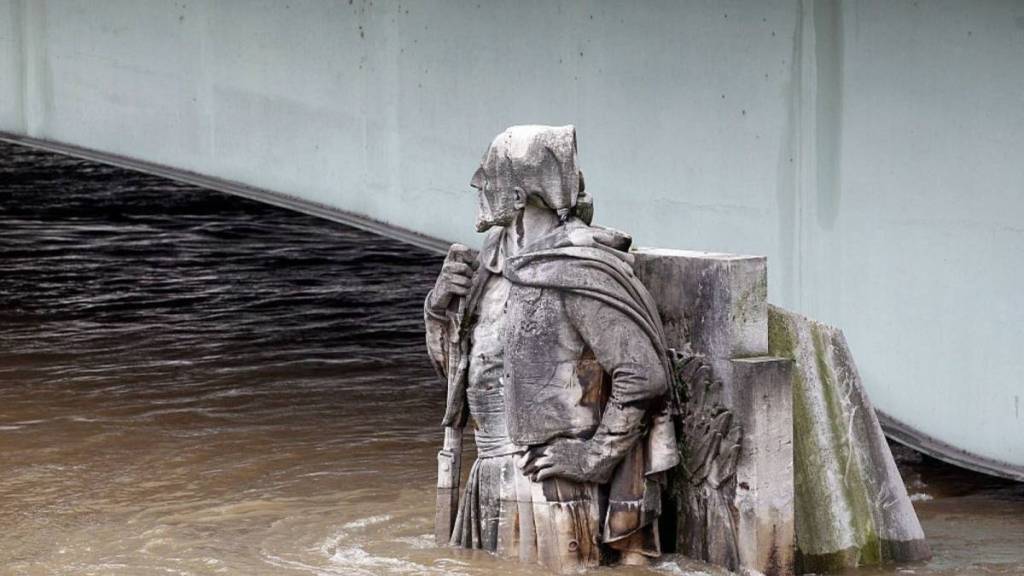

Every time the Seine rises, he inevitably reappears in conversations and in photos. Parisians look at his boots, his legs, and then his uniform to gauge how high the water has risen. Situated beneath the Alma Bridge, the famous Zouave has, over time, become one of the capital’s most recognizable landmarks, even though it has never replaced the actual instruments used to measure the river’s level.
One of the most famous statues in Paris
Standing just over five meters tall, the statue—which has stood there since 1856—depicts a soldier from the Zouave regiments that fought in the Crimean War. The bridge itself owes its name to the Battle of the Alma, won in 1854 by Franco-British troops against the Russian army.
The first Alma Bridge was adorned with four massive military figures representing different branches of the army: a Zouave, a grenadier, an infantryman, and an artilleryman. Georges Diebolt sculpted the first two, while Auguste Arnaud created the others. Their position, which is particularly low relative to the bridge deck, quickly gave them a secondary function. When the Seine rises, the water naturally begins to cover the statues. The Zouave gradually became the most popular of the four, and Parisians got into the habit of watching to see how high the river water rose on his body.
It was above all the historic flood of 1910 that definitively established this tradition. At its peak, when the Seine reached 8.62 meters at the Pont d’Austerlitz, the water rose to the Zouave’s shoulders. Photographs from that time show dozens of onlookers crowded onto the bridge to watch the scene.
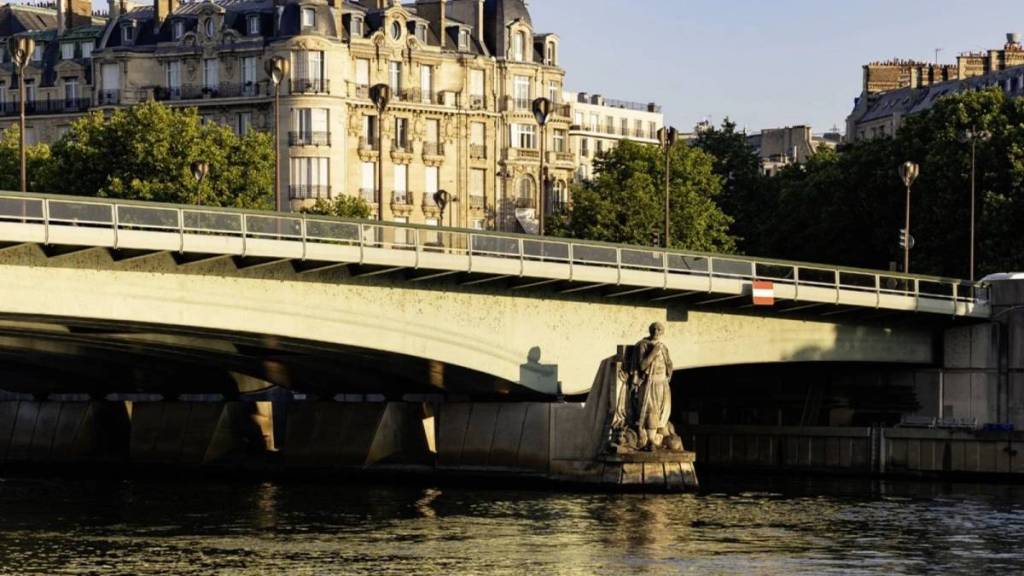
Since then, the popular rule has remained simple: when the Zouave’s feet start to touch the water, Paris must begin to seriously monitor its river. There is, however, one important detail. The 1856 bridge no longer exists. Having become too narrow and ill-suited for modern navigation, it was completely rebuilt between 1970 and 1974. The four statues were then removed, but only one returned to the new structure: the Zouave, who had already become too iconic to disappear from the Parisian landscape. His three former companions were moved to other locations in France. The infantryman ended up near the Bois de Vincennes, the artilleryman in La Fère in the Aisne department, and the grenadier near Dijon.
The Zouave , meanwhile,has been reinstalled on the new bridge, but at a different height than where it stood before. It is therefore impossible to accurately compare a current flood to that of 1910 simply by looking at his uniform. It remains a visual and, above all, symbolic indicator—not a true scientific scale.
Location: Alma Bridge, between the 7th and 8th arrondissements of Paris