
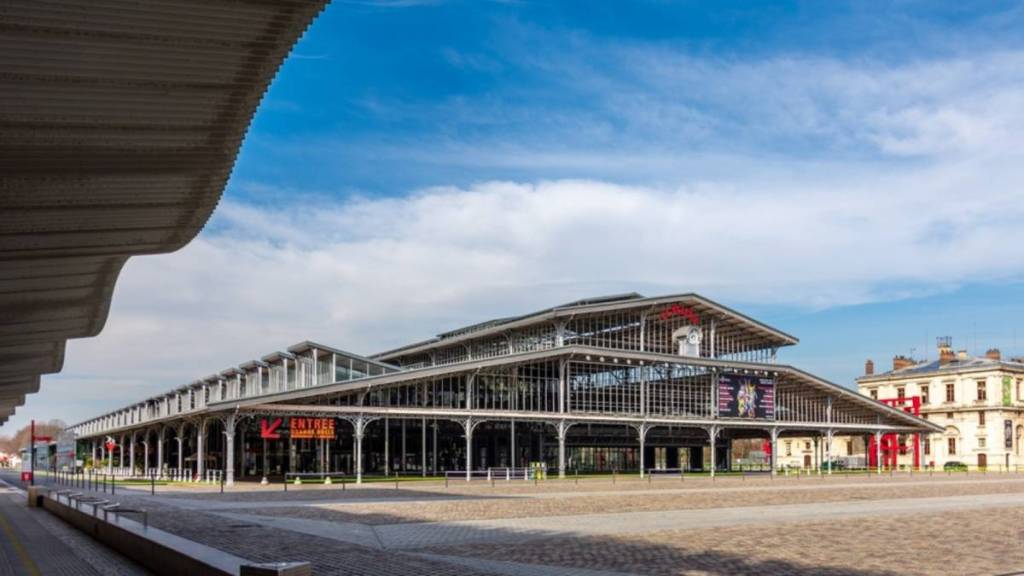

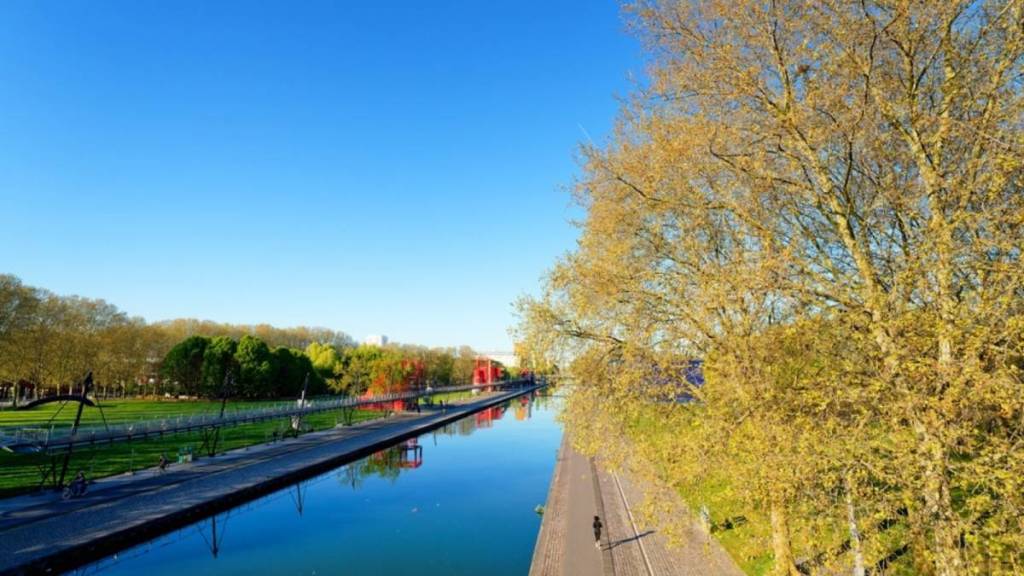
Today, if you visit La Villette, it’s most likely for an exhibition, a concert, an outdoor movie, or simply to lie down on the grass along the canal. But in 1867, it’s important to realize that the scene was radically different: in place of the park’s 55 hectares, there was simply one of the largest complexes dedicated to the trade and slaughter of animals.
Previously scattered throughout the capital, the livestock markets were to be consolidated in a single location, in accordance with Haussmann’s vision. Thus, the slaughterhouses opened in January 1867, followed by the market in October. La Villette then experienced a “golden age of the city of blood.”
The Grande Halle once housed thousands of cattle
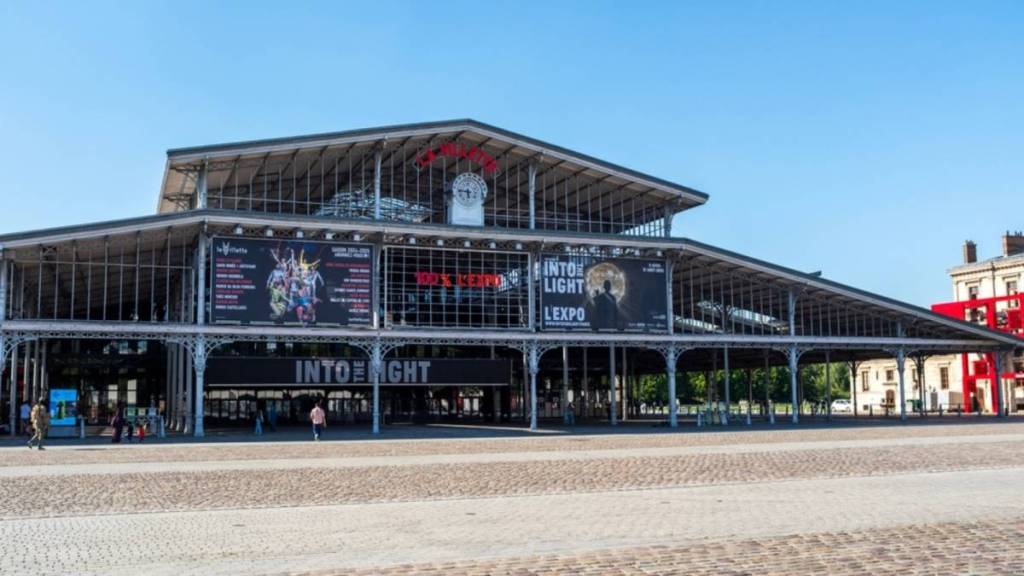
The animals arrived primarily by rail. Two train stations, Paris-Bestiaux and Paris-Abattoirs, were specially built to supply this massive complex. By the turn of the 20th century, activity had reached staggering levels. Thousands of cattle, sheep, calves, and pigs passed through the site every day. The most obvious remnant of that era is still there. The Grande Halle, which today hosts a succession of exhibitions, festivals, and major events, was originally the cattle market.
Its iron-and-glass framework is therefore far from being a set recreated for the park. It dates back to the 19th century and was part of the market itself. Up to 4,600 head of cattle could be traded there. Two other neighboring halls housed sheep on one side and calves and pigs on the other.
However, activity eventually began to decline. The facilities aged, refrigerated transport disrupted the industry, and the opening of the Rungis market in 1969 accelerated the model’s demise. The last cow was slaughtered at La Villette on March 15, 1974. The site then became a vast wasteland in northeast Paris. For a few years, its future remained uncertain. It even hosted concerts, carnivals, and a makeshift skatepark.
In the early 1980s, an international competition was launched in 1982 to envision the future park. 805 teams from 41 countries entered, and architect Bernard Tschumi was ultimately selected in March 1983. It is notably his famous red structures—the 26 “folies”—that can still be found all over the park today.
Then, the Zénith opened in 1984, the Grande Halle was renovated in 1985, the Géode opened that same year, and the Cité des Sciences followed in 1986. The Parc de la Villette was officially inaugurated on October 12, 1987. The Philharmonie would come much later, in 2015.
Nearly forty years after this inauguration, La Villette spans 55 hectares, features 35 hectares of green space, and welcomes approximately 12 million visitors per year.