

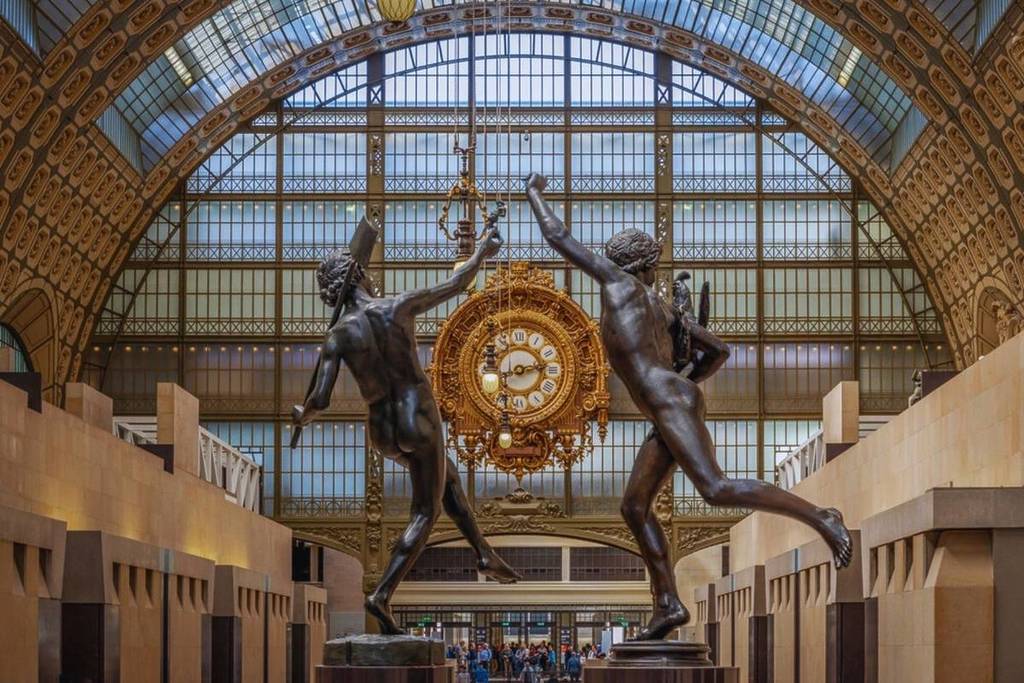
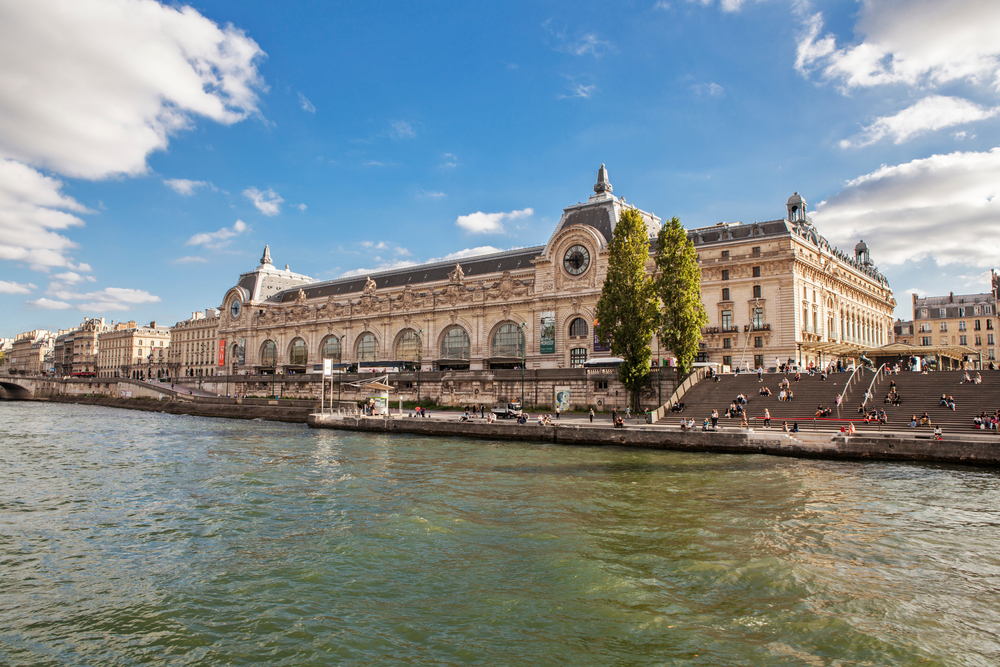
Located on the left bank of the Seine, opposite the Tuileries Gardens, the Musée d’Orsay is one of the greatest cultural treasures in Paris, and indeed in Europe. Yet few people know that, like the Eiffel Tower, this iconic landmark could have disappeared forever in the 1950s. This architectural masterpiece, admired by millions of visitors every year, was almost razed to the ground. Here’s a look back at the incredible fate of a building that was saved in extremis, and has since become a source of national pride.
A station born for the Universal Exhibition
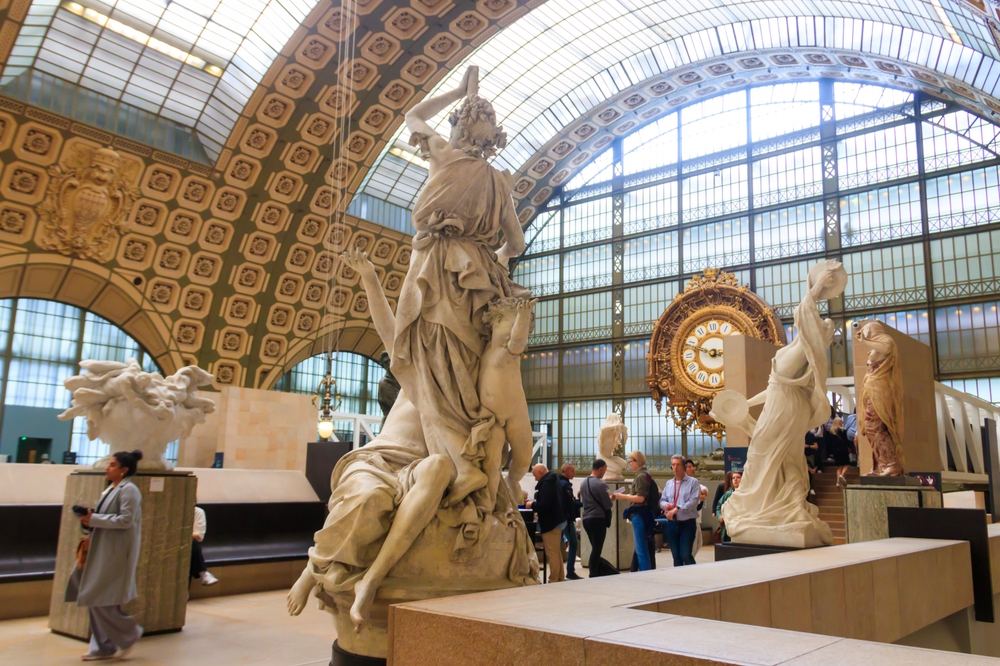
Everyone knows that, before it housed Monet, Van Gogh, Renoir and Degas, the Musée d’Orsay was a railway station! Commissioned for the 1900 Universal Exhibition, Victor Laloux‘s Gare d’Orsay was a symbol of modernity at the time. Fully electrified, with short platforms and a majestic concourse, it was as impressive for its style as for its technical prowess. Laloux also built a luxurious hotel with almost 320 rooms.
The dark years: a project to destroy the station
But by the 1930s, the station was beginning to lose its usefulness. Its platforms were too short to accommodate long-distance trains. The building was gradually relegated to secondary uses: a mail dispatch center, a shelter for prisoners of war, an auction house, or even a film set… an inglorious fate for this palace of stone and glass.
In the aftermath of the Second World War, the station’s fate seemed sealed. Deemed obsolete, it was put up for sale in 1961… but ironically, nobody wanted it. In the 1970s, an official request for demolition was issued. Several replacement projects sprang up, including one – sadly commonplace at the time – to build a luxury hotel. A scenario typical of those years when Haussmann’s heritage was not yet unanimously appreciated, and when it was easier to demolish than to restore…
But this was without counting on the intervention of heritage defenders, including architects, artists and even visionary politicians, who spoke out against this announced destruction. The project was suspended. Better still, in 1978, the station officially became a historic monument.
Rebirth as a museum
In the 1970s, the idea of creating a museum was born. A place was needed to house 19th-century art, between the Louvre and Beaubourg. The former train station was perfect: huge, bathed in natural light (a central element of Impressionism, by the way), and located right in the heart of Paris. Valéry Giscard d’Estaing finally confirmed the official decision at an interministerial council meeting on October 20, 1977.
Work began in 1980. The trio of Renaud Bardon, Pierre Colboc and Jean-Paul Philippon took charge of the architectural transformation. The talented Italian architect Gae Aulenti designed the interior. She redesigned the interior volumes with a boldness that has won international acclaim. A monumental project lasting six years. The Musée d’Orsay finally opened its doors on December 1, 1986, inaugurated by François Mitterrand. And the success was immediate.
https://www.youtube.com/watch?v=Pru-K02EYvs
The Musée d’Orsay today
Almost 40 years later, the Musée d’Orsay has become a major institution. One of the largest in Europe, it houses the world’s largest collection of Impressionist and Post-Impressionist paintings. Between special exhibitions and the permanent collection, Monet, Manet, Renoir, Van Gogh, Cézanne and Courbet are regular visitors. They’re all here, in what was once a simple salle des pas perdus.
With almost 5 million visitors by 2024, it is now the third most visited museum in France, just behind the Louvre and Versailles. A figure that makes you dizzy when you think that it could have ended up as an underground parking lot or a soulless hotel…