
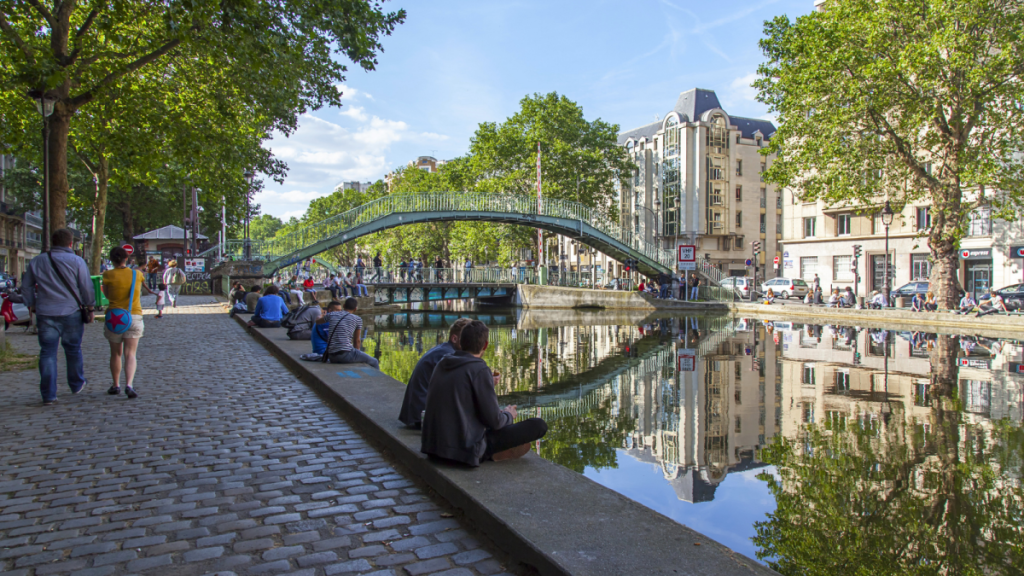

With its metal footbridges, locks, and banks that come alive at the first rays of sunlight, the Canal Saint-Martin has that certain something that makes Paris so charming. Its cinematic atmosphere immediately makes us picture Amélie Poulain skipping stones across its surface, with a mischievous look in her eyes and a wandering spirit. Yet behind this postcard-perfect setting lies a little-known story: in the 20th century, this iconic waterway nearly came to be covered over to make way for an urban highway. A look back at the turbulent history of the Canal Saint-Martin.
A canal that has become iconic, conceived under Napoleon
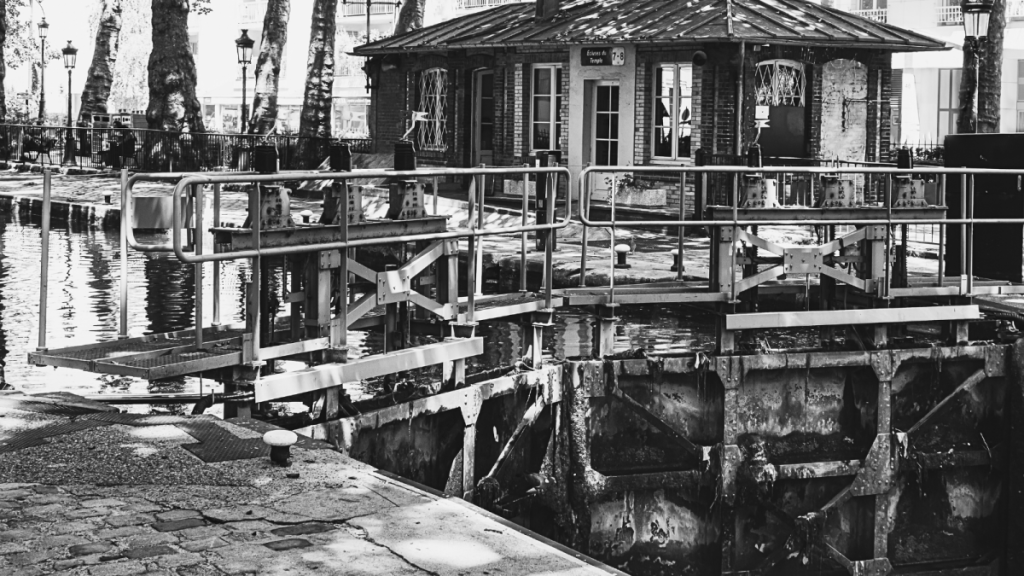
In the early 19th century, Paris faced a major problem: the supply of drinking water. To improve living conditions for residents and facilitate the transport of goods, Napoleon Bonaparte revived the project in 1802 to build a network of canals designed to supply the capital.
Construction on the Canal Saint-Martin began in 1822. On November 4, 1825, Charles X officially inaugurated this new waterway, which connects the Bassin de la Villette to the Seine via the Bassin de l’Arsenal.
For decades, houseboats and cargo ships have thus contributed to Paris’s economic activity.
Part of the canal disappears beneath the boulevards
With the capital’s transformations in the 19th century, the canal underwent a dramatic evolution. To ease traffic flow, several sections were gradually covered over. Today, the Bastille, Richard-Lenoir, and Temple viaducts conceal part of its course beneath the city.
The circular openings cut into some of the vaults—called oculi—allow natural light to reach the water. A subtle architectural detail that reveals the existence of this underground canal…
In the 1960s, a highway project threatened the canal
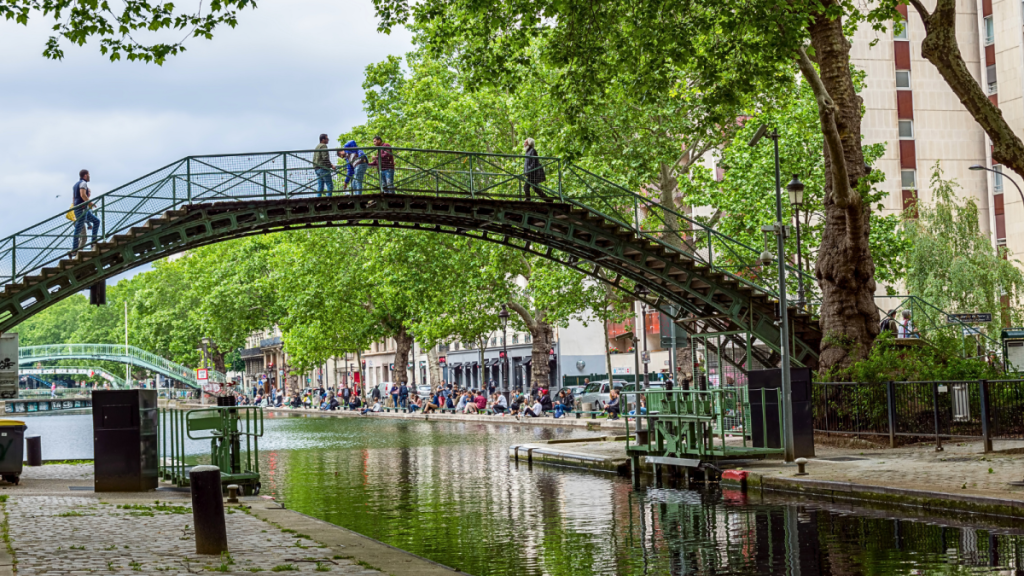
Yet history could have taken a completely different turn. As the automobile gradually reshaped the Parisian landscape, public officials envisioned covering the canal with a multi-lane expressway connecting the Porte d’Aubervilliers to the Porte d’Italie. The goal: to ease traffic flow, even if it meant sacrificing this ribbon of water in the heart of Paris.
But the project faced opposition, particularly from local residents and heritage advocates. Their efforts ultimately paid off: the project’s abandonment was officially announced in 1971 and confirmed a few years later. The canal thus escaped being buried under concrete and asphalt.
Today, its banks remain an unmissable meeting place. As if to thumb its nose at that turbulent past, the canal has traded the cars it was once promised for walkers, outdoor cafés, strollers… and, much like Amélie Poulain, eternal dreamers.