
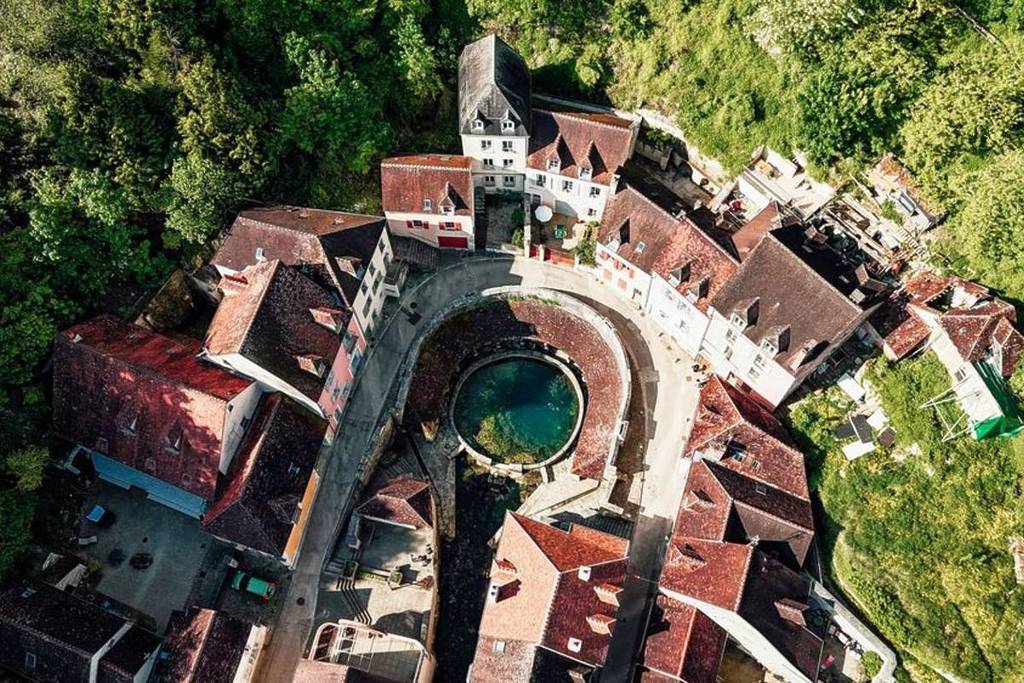

Some natural wonders impress with their size, others with their beauty. La Fosse Dionne, however, fascinates above all because it still retains an air of mystery. For centuries, this natural wonder located in the small town of Tonnerre has attracted travelers, scientists, and divers, all driven by the same question: where exactly does this water come from that gushes constantly in the heart of the town?
A natural wonder that sparks the imagination
Amid the old houses stands a vast circular basin with blue-green hues. The water seems to surge directly from the depths before flowing gently toward the streets of the historic center. Nothing suggests that this is actually one of the largest karst springs in France.
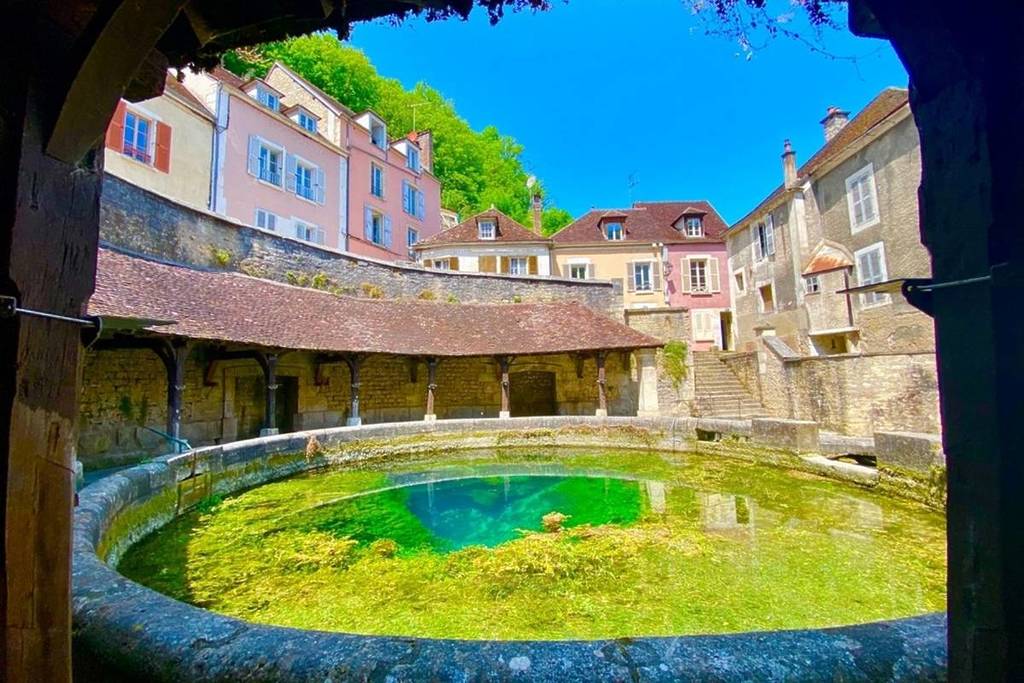
Since the Middle Ages, the Fosse Dionne has been part of daily life for the town’s residents. In the 18th century, a circular washhouse was even built around the spring to allow washerwomen to work sheltered from the elements. It is this unique architecture, still visible today, that contributes greatly to the charm of the place.
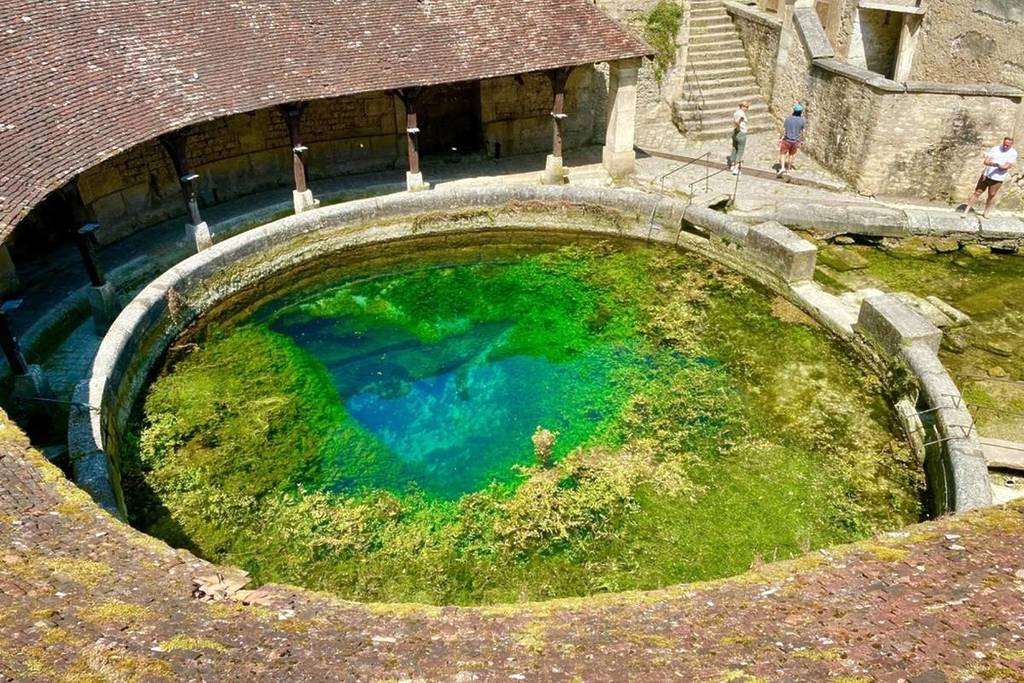
But behind this peaceful image lies a complex geological phenomenon. Every second, the spring discharges several hundred liters of water from a vast underground network carved into the limestone. The problem is that this network remains largely unknown.
Over the decades, several expeditions have attempted to explore its depths. Divers have gradually mapped hundreds of meters of flooded tunnels, discovering conduits that are sometimes immense. Yet, despite technical advances, no one has yet managed to identify with certainty the exact origin of the entire underground network.
This mysterious reputation has also been fueled by several tragedies. During the 20th century, several divers lost their lives while attempting to explore the spring’s tunnels. These accidents helped forge the legend of the place and reinforce its image as an elusive abyss.
Long before scientists arrived, the locals had already come up with their own explanations. For centuries, the Fosse Dionne has fueled numerous legends. Some claimed that a dragon lived in the depths of the basin. Others saw it as a gateway to an underground world or a sacred spring used since ancient times.
Even today, the color of the water varies with the light and the seasons, sometimes giving the basin almost surreal hues. It is this unique atmosphere that draws most visitors. Many come to explore the spring before continuing their stroll through the medieval streets of Tonnerre, one of the oldest towns in Burgundy.
Just over two hours from Paris, the Fosse Dionne is one of those places that’s hard to compare to anything else. At once a geological curiosity, a historic monument , and a scientific enigma, it continues to captivate visitors more than a thousand years after the first traces of its existence. And despite all the explorations conducted so far, part of its history still lies hidden beneath the surface.
📍Fosse Dionne – Tonnerre