
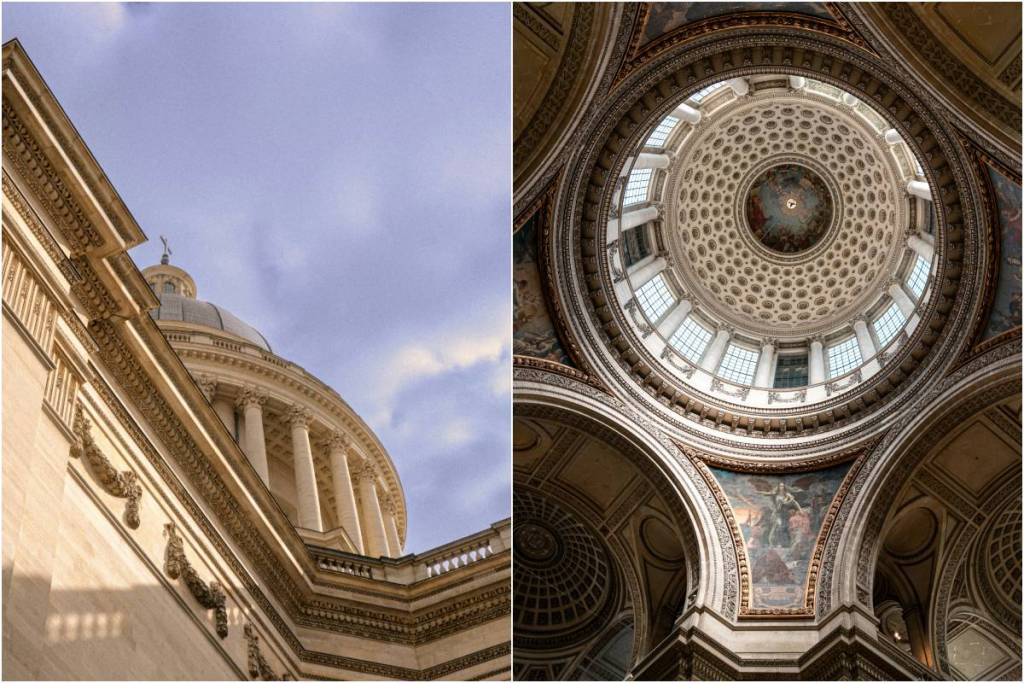

We walk past it without ever really looking up. And yet, the Panthéon is undoubtedly the most fascinating and underrated monument in Paris. Perched on Montagne Sainte-Geneviève, in the heart of the Latin Quarter, this colossus of white stone— 110 meters long, 84 meters wide, and 83 meters high— offers, at the top of its 206 steps, what insiders consider the most beautiful view of the capital, before revealing, deep down in its crypt, secrets that even Parisians are unaware of. Political scandals, potentially empty coffins, posthumous expulsions, expulsions from the rolls… Welcome to the temple of the nation’s great men.
22 October 2026 10:00 + more dates
Place du Panthéon
206 steps up to one of the most beautiful viewpoints in Paris
It is the 5th arrondissement’s best-kept secret. From 1790 to 1889—that is, for 99 years, until the Eiffel Tower was built—the Panthéon’s dome was quite simply the highest point in Paris. Even today, the 206 steps leading to the outer colonnade offer what insiders call the “balcony of Paris ”: a 360-degree view over the capital’s rooftops, with the Eiffel Tower, the Louvre, the Arc de Triomphe, and the spires of Notre-Dame all within sight. No lines, almost no tourists.
Down below, the crypt houses 26 vaults that could theoretically hold more than 300 coffins —and the remains of 82 celebrities who have left their mark on French history.
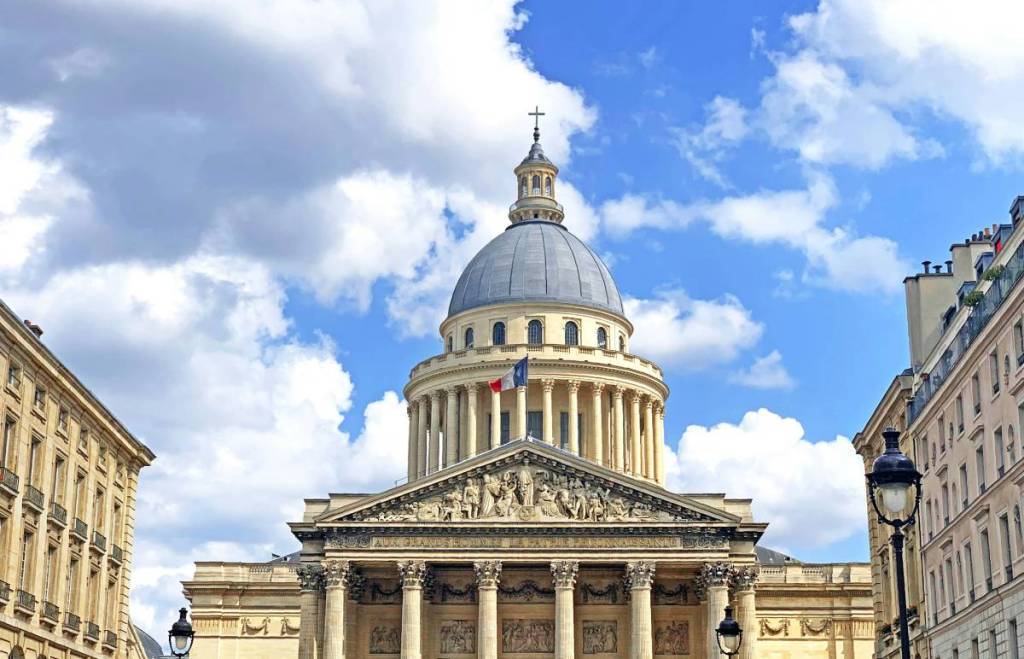
The Panthéon in Paris: born of a royal wish, funded by the lottery
In 1744, Louis XV, gravely ill, begged Saint Geneviève to save him and promised her a basilica. He survived, kept his word, and construction began in 1764 under the direction of architect Soufflot —funded by an increase in national lottery tickets that raised 400,000 livres. Completed in 1790, the building never functioned as a church for a single day: the Revolution immediately transformed it into a national necropolis.
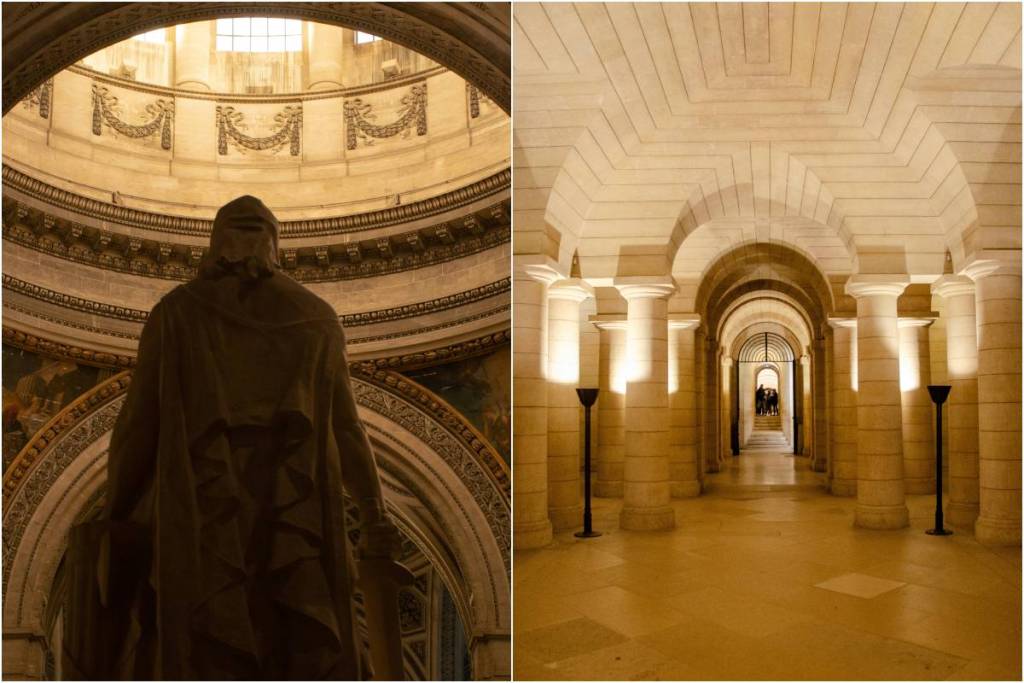
Voltaire and Rousseau: sworn enemies enshrined face to face in the crypt
Rivals (and perhaps lovers?) during their lifetimes, the two philosophers now lie face to face in the same crypt. Forever. Even more unsettling: 19th-century accounts suggest that their coffins may be empty, as royalists reportedly discreetly removed their remains in 1821. The matter has never been officially resolved.
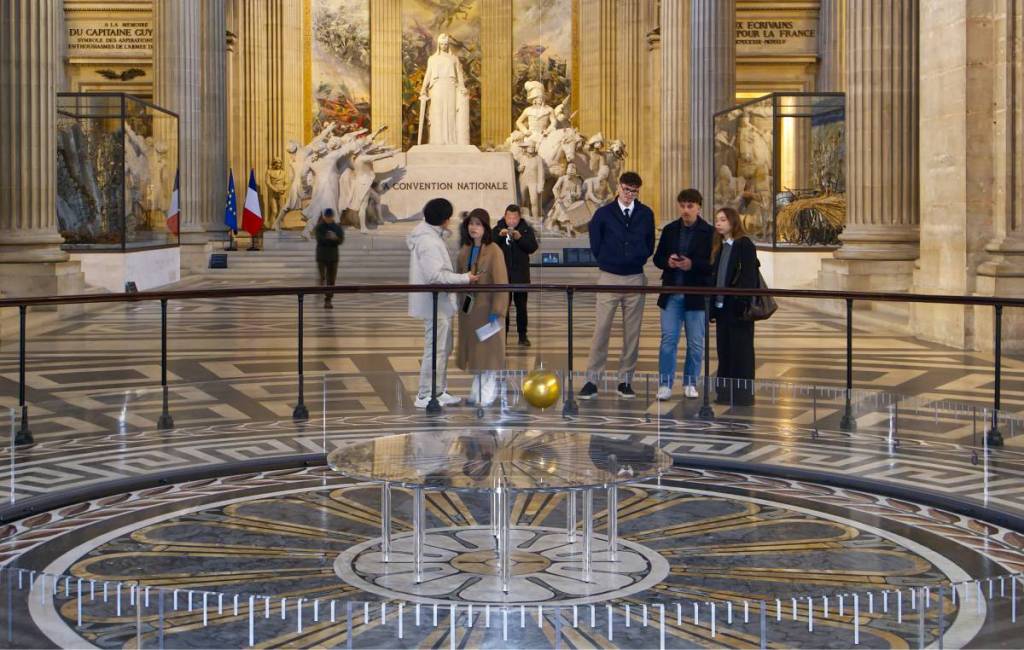
A 67-meter pendulum to prove that the Earth rotates
On March 31, 1851, Léon Foucault suspended a 28-kilo sphere from a 67-meter-long cable beneath the dome. The plane of oscillation deviated by 11 degrees per hour: the Earth’s rotation was proven to the general public for the first time. The pendulum visible today is a replica—the original ball, which was damaged, is at the Musée des Arts et Métiers. It is no less mesmerizing.
Marie Curie: Still Radioactive in Her Lead-Lined Tomb
The first woman to be enshrined in the Panthéon on her own merits in 1995, Marie Curie rests in a triple coffin made of wood, lead, and wood. During her exhumation at the Sceaux Cemetery, experts detected abnormal radioactivity: decades of handling polonium and radium with her bare hands had left their mark. The two-time Nobel Prize winner continues, quite literally, to shine—a century after her death. Discover more secrets about this fascinating monument, which is well worth a visit on your next trip to the Latin Quarter!
22 October 2026 10:00 + more dates
Place du Panthéon