
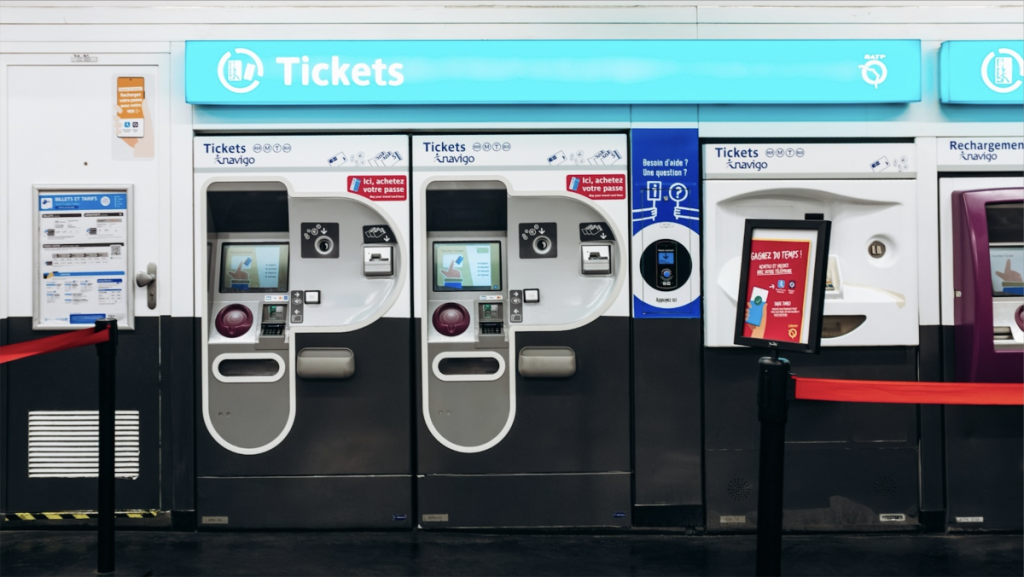

In London or New York, the process has become second nature: you hold your credit card up to the turnstile and enter the subway. No need to buy a ticket or dig around for your transit pass. What if Paris finally did the same? Starting in 2027, passengers will also be able to pay for their rides directly with their contactless credit cards. This marks a small revolution for the Paris Metro, which is joining several major cities already accustomed to this system. But behind this very convenient new feature, a price difference might just give us pause.
Following London and New York, the Paris Metro is finally switching to “pay as you go”
For several years now, London and New York have already adopted contactless payment on their subways—a convenience that Paris is now set to offer. In London, contactless payment has been part of daily life for several years. In New York, the OMNY system also allows passengers to pass through the turnstiles with a simple credit card. And more recently, Madrid adopted this system in June 2026.
Paris has decided to join the movement. This new feature should make life easier for those who rarely use public transportation. No more need to go to a ticket machine or recharge your Navigo Easy pass before boarding the metro. All you’ll need to do is tap your credit card on the validator to pay for your ride and pass through the turnstiles.
However, we’ll have to wait a bit before we can use contactless payment throughout the Paris Metro. The system will debut on Line 1 in July 2027, before expanding to Lines 4 and 14 and the T3a and T3b tram lines. Other lines will gradually join the system, such as those on the Grand Paris Express, followed by lines 7 and 12 in 2028. The RATP’s goal is to enable all commuters in the Île-de-France region to take advantage of the new payment system by 2030.
A convenient new feature, but a more expensive ride
On paper, it doesn’t get much simpler than this. For a tourist or someone who takes the subway occasionally, being able to pay directly at the turnstiles is a real time-saver. But this convenience comes at a cost.
The difference between a standard ticket and a contactless fare is significant for those who take the metro every day. Based on current standard fares, a contactless fare would cost €3.35, compared to €2.55 for a standard ticket. That’s 80 cents more for exactly the same trip.
And that’s not all. Unlike a traditional ticket, contactless payment doesn’t account for transfers. In other words, changing lines means an additional charge. A small detail that could quickly drive up the fare for those planning to switch lines.
Unlike London, where fares vary by zone and passengers benefit from spending caps, Paris plans to charge a flat rate per trip. This difference makes contactless payment less appealing for regular metro riders.

Will we soon have to say goodbye to the Navigo pass?
Don’t panic if you already use your Navigo pass every day! The “pay as you go” option will simply be added to the existing payment methods. Riders will still be able to use their Navigo pass, Navigo Easy, or tickets available on their smartphones.
The main goal is to simplify travel for those who aren’t very familiar with the Parisian transit system or who don’t use it on a daily basis.
The final price has yet to be confirmed, since the announced amounts are based on 2026 fares and could change by the time the system is implemented.
Following London, Madrid, and New York, Paris is set to adopt a practice already familiar to millions of travelers. This is a step forward for those who want to take the metro without having to buy a ticket, even if this convenience will likely cost a little more.