
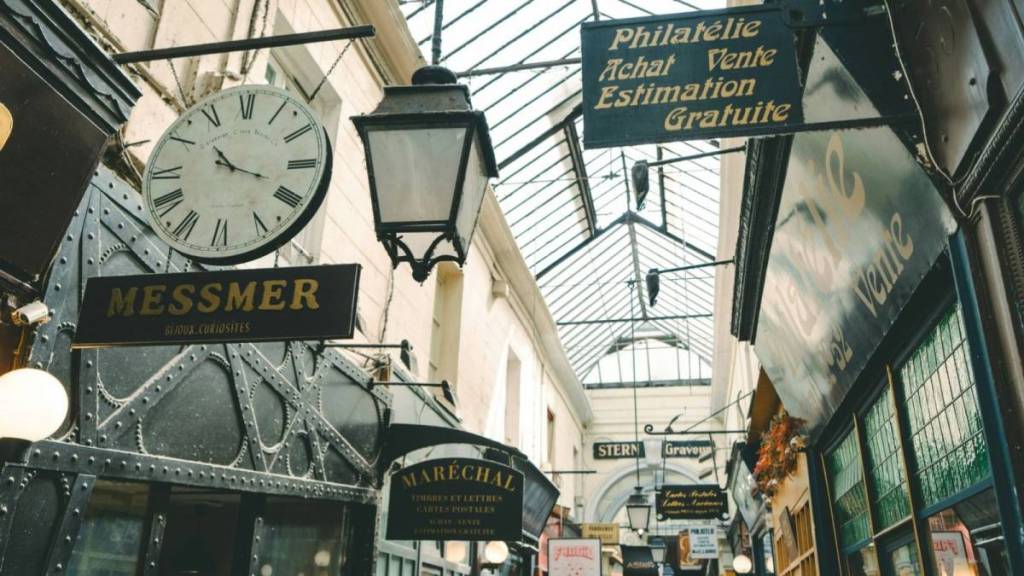

Between the Palais-Royal, the Grands Boulevards, and Les Halles, Paris still has more than twenty covered passages and galleries—a legacy of an era when these shopping arcades allowed people to walk through buildings without having to brave the rain, mud, and hustle and bustle of the streets.
To make them easier to find, the Paris Tourist Office now offers an interactive map of the capital’s covered passageways. You can locate the various galleries, choose the ones that interest you, and create your own walking route. It’s a great idea for a stroll on a rainy day, but also for discovering a Paris that has, in some ways, changed very little since the 19th century.
From the oldest to the longest covered passage in Paris
So for a short stroll, the route can easily begin around the Grands Boulevards, where several arcades are located just a few minutes’ walk from one another. The Passage des Panoramas, built in 1799, is considered the oldest covered arcade still standing in Paris. Beneath its glass roof, restaurants, collectors’ shops, and old storefronts line the passage for just over 130 meters. Directly across the street, the Passage Jouffroy continues the stroll with its marble floor, vintage shops, and the entrance to the Musée Grévin. Further up, the Passage Verdeau is known for its antique dealers, old books, and collectible cameras.
Near Montorgueil, the Passage du Grand-Cerf impresses with its glass roof perched nearly 12 meters high. In the Sentier district, the Passage du Caire holds another record: at over 360 meters, it’s billed as the longest in Paris.
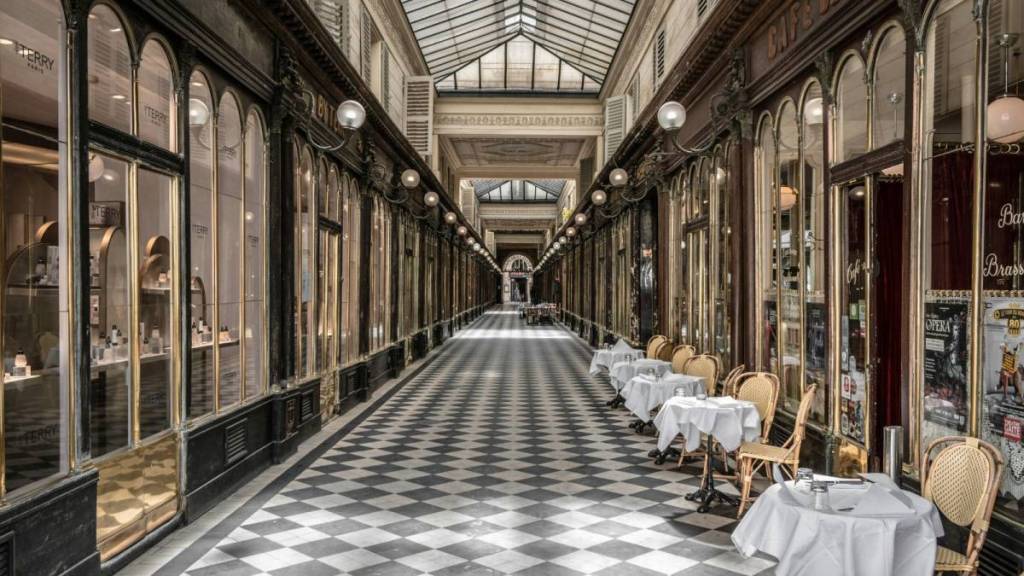
The map also takes you down toward the Palais-Royal and the Louvre. The Galerie Vivienne, built in 1823, is one of the most spectacular, with its large glass roof, rotunda, and, above all, its colorful floor mosaics. Right next door, the Galerie Colbert hides an imposing rotunda beneath a glass dome, but unlike most of its neighbors, it has no shops.
Closer to the Louvre, you’ll also find the Véro-Dodat Gallery, which stands out for its elegance. Some galleries still house antique dealers and bookstores, others feature restaurants or luxury boutiques, while a few have almost entirely changed their purpose.
In short, here’s the perfect tool for discovering—or rediscovering—these true Parisian treasures!
Location: Covered arcades located primarily in the 1st, 2nd, 9th, and 10th arrondissements of Paris