

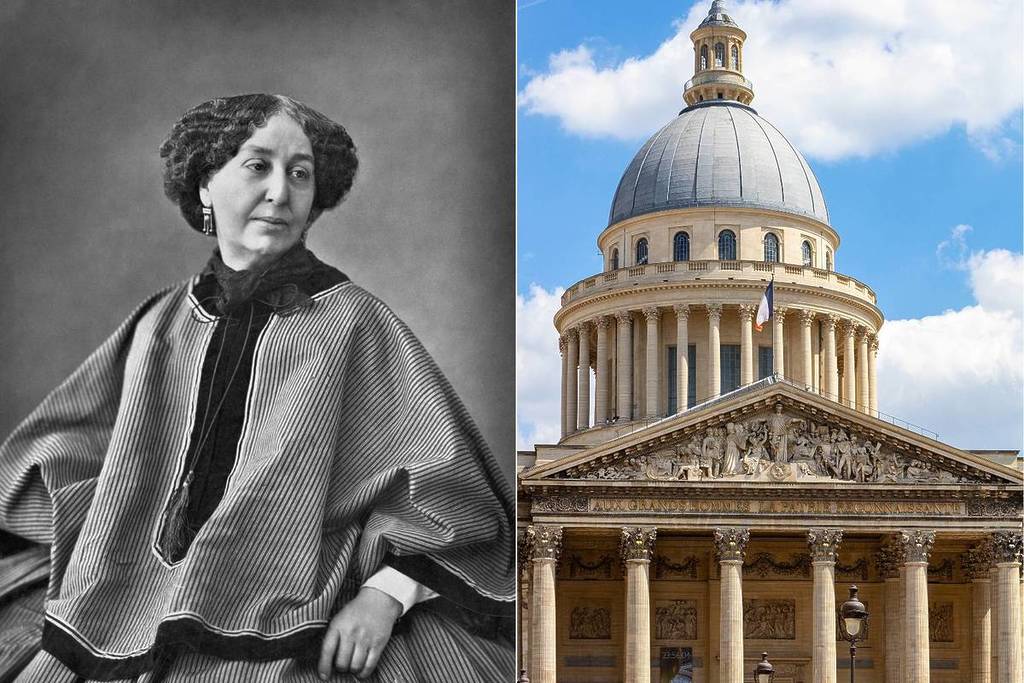
2026 marks the 150th anniversary of George Sand’s death. 60 women authors, all members of the Parlement des écrivaines francophones, call for her entry into the Pantheon.
From Amantine Aurore Lucile Dupin de Francueil to George Sand

George Sand is a pioneering figure of women’s literature: she embodies the first woman of the XIXᵉ century to make a living from her writings, a contemporary of Victor Hugo, Honoré de Balzac and Alexandre Dumas. Born in Paris on July 1ᵉʳ 1804 under the name of Amantine Aurore Lucile Dupin de Francueil, it is nevertheless under the pen name of George Sand that literary enthusiasts know her. But why this pseudonym, so far removed from her birth name, evocative of the aristocracy?
In 1830, when she was married to the writer Jules Sandeau, she published a novel written by four hands: Rose et Blanche, ou la Comédienne et la Religieuse. The work was signed J. Sand, a contraction of the first name Jules and the patronymic Sandeau, at a time when writing was still largely the preserve of men. Later, she kept this Sand name and added a male first name, George, to increase her chances of publication. Yes, George Sand is one of those literate women who left their mark on history, who didn’t just push open doors, but literally kicked them down.
A pioneer of women’s literature and a committed woman
In fact, the customs imposed on women of her time did not suit her at all, as she confides in her book Histoire de ma vie. To hell with dresses and heels: the novelist decided to adopt frock coats and pants, bringing so-called masculine fashion up to date for women.
A prolific novelist, freethinker and committed woman, George Sand was a journalist, letter-writer, playwright and literary critic, who left her mark on her time by embodying rebellion against the conventions of her century and her sex.
60 women authors call for George Sand’s entry into the Pantheon
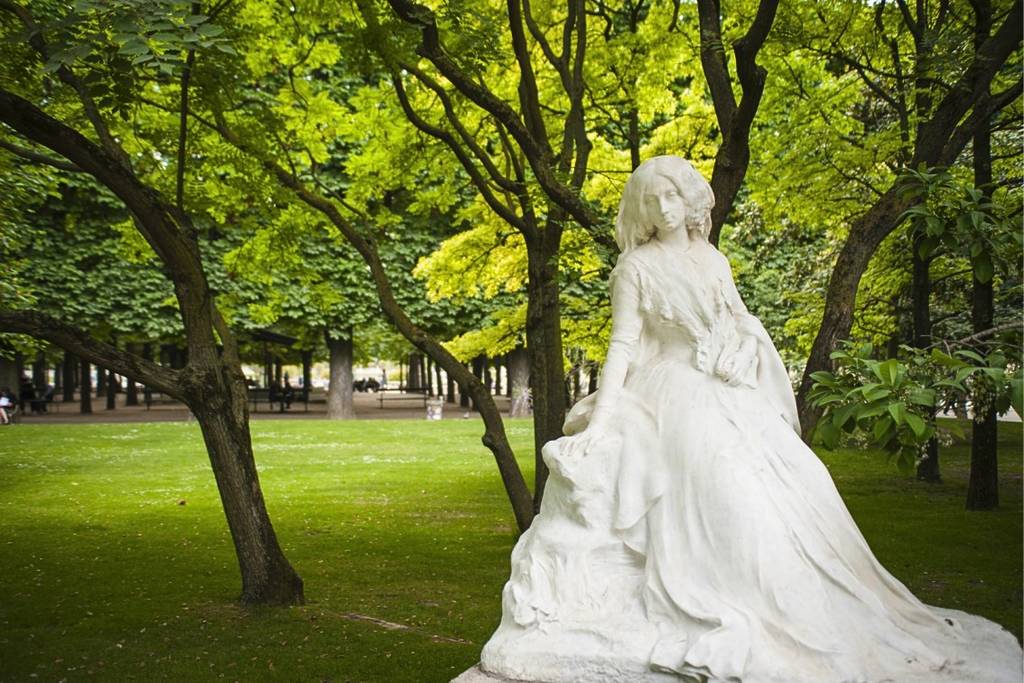
And a few days ago, a powerful literary impulse arose… In a tribune, sixty female authors call for George Sand to finally be honored at the Pantheon in 2026, on the 150ᵉ anniversary of her disappearance. But this is not just a tribute that would be paid to a great writer of her time. Her entry into the Panthéon would represent recognition of a woman who was committed, a republican, a visionary, and whose voice remains inspiring even today.
Through this forum, the 60 authors recall the extent to which Sand embodied the struggle for freedom, whether through her novels or her articles. And above all, how much her place in the collective memory deserves to be symbolically saluted. Beyond literature, we see it as a powerful act, a way of bringing Republican history into dialogue with the literary genius of a woman who was never content to remain in the shadows.
George Sand: 8th woman to enter the Pantheon in 2026?
Moreover, the mobilization does not stop with women authors: some fifty cultural personalities have already lent their support. And in Berry, where Sand lived, the momentum is almost becoming a regional movement. Elected representatives from the Cher and Indre departments are taking a stand, letters are being sent to the Élysée… and the first commune, Buzançais, has even voted unanimously to support George Sand’s entry into the Panthéon.
If this entry to the Pantheon were to become a reality, George Sand would become the 8ᵉ woman to be laid to rest there.