
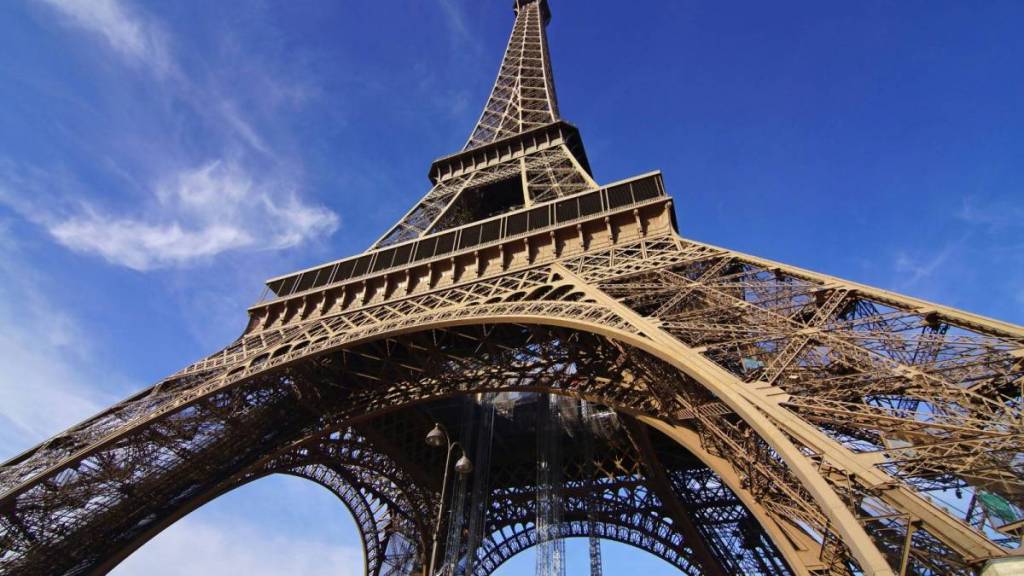

When the first shovels broke ground on the Champ-de-Mars on January 26, 1887, the schedule left little room for delays. The Eiffel Tower had to be ready for the 1889 World’s Fair, held in Paris to celebrate the centennial of the French Revolution. And it was: construction was completed on March 31, 1889—just two years, two months, and five days later.
While the sheer scale of the work seems impressive, it is even more so when one considers what had to be assembled: 18,038 metal parts, 2.5 million rivets, and 7,300 metric tons of iron to erect what would then become the world’s tallest structure. More than 135 years later, the steel structure is still the one we see today, even though the antennas added over time have brought the Tower’s total height to 330 meters.
The colossal construction project of the Eiffel Tower
The speed of construction was not due to an army of thousands of workers laboring simultaneously on the Champ-de-Mars. At the height of construction, only between 150 and 300 people were involved in on-site assembly, in addition to approximately 150 workers in the Eiffel company’s workshops in Levallois-Perret.
This is precisely where one of the keys to the feat lies: much of the work was completed even before the components arrived on site. The parts are calculated, drawn, cut, and drilled with extreme precision in the workshops. They are then pre-assembled into sections a few meters long before being transported to the Champ-de-Mars. Any part found to be defective is simply sent back to the workshop rather than being modified on site.
The iron itself came from Lorraine. The Fould-Dupont forges in Pompey, near Nancy, supplied the 18,038 parts needed for the structure before they were sent to the Eiffel workshops. The precision was such that the components arrived on site with their holes already drilled and a large portion of their rivets already in place.
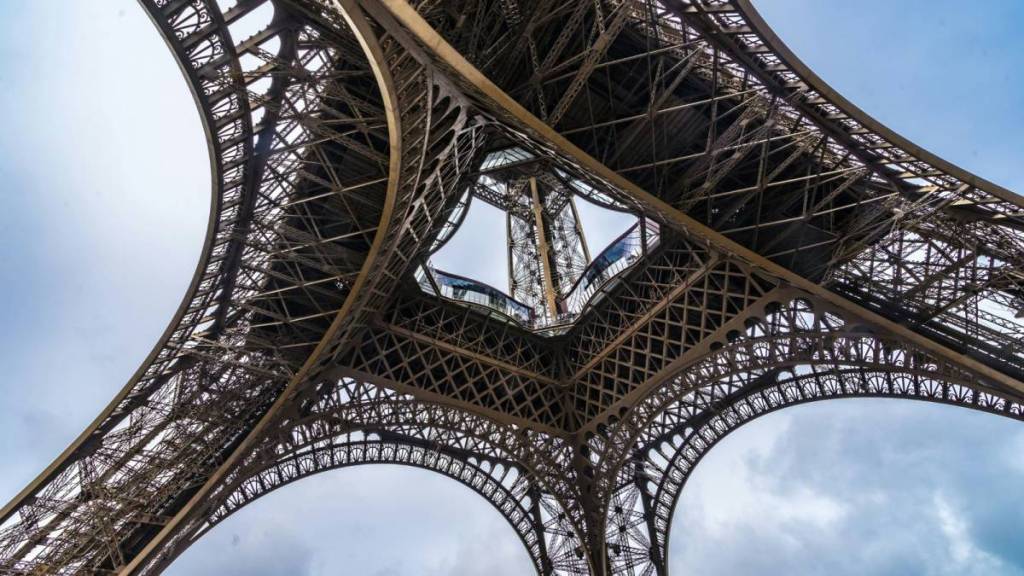
The famous 2.5 million rivets give a sense of just how organized the construction method was. About two-thirds were set directly in the workshop. For those installed on-site, the work was done while the rivets were hot and required a team of four men: one heated the rivet, a second held it in place, a third shaped its head, and the fourth finished flattening it.
Even before erecting the framework, however, another problem had to be solved: the foundations. The work took about five months. On the Seine side, where two pillars had to extend below the water level, watertight metal caissons powered by compressed air were used to facilitate the excavations.
The metal assembly finally began on July 1, 1887. The first level was completed on April 1, 1888, the second on August 14, and the summit was reached the following spring. It thus took only twenty-one months to assemble the Iron Lady in Paris.
Location: Eiffel Tower, 5 Avenue Anatole-France, 75007 Paris
Hours: Open daily; hours vary by season