


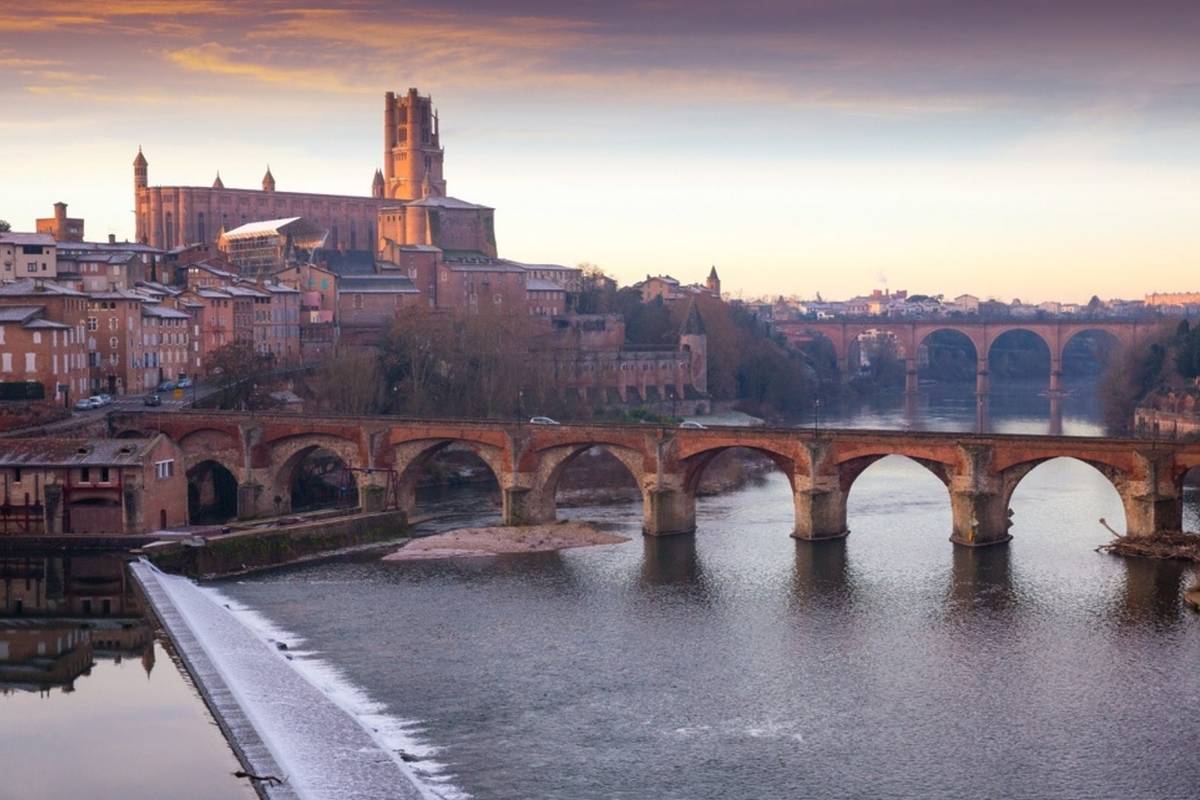
It’s impossible to miss when you arrive in Albi. Just a few hours from Paris, the cathedral of Sainte-Cécile immediately stands out in the landscape, with its massive silhouette and brick-red color, typical of the Tarn region. Listed as a UNESCO World Heritage Site alongside the city’s historic center, it remains one of France’s most distinctive religious buildings, both in terms of its architecture and its history.
The world’s largest brick cathedral
Its construction began at the end of the 13th century, in a very special context. After the crusade against the Cathars, the Church wished to assert its authority in the region. The choice of an almost military architecture is therefore not insignificant. From the outside, Sainte-Cécile looks more like a fortress than a classical cathedral. Thick walls, powerful buttresses and a massive bell tower give the building a rather unusual appearance for a religious building.
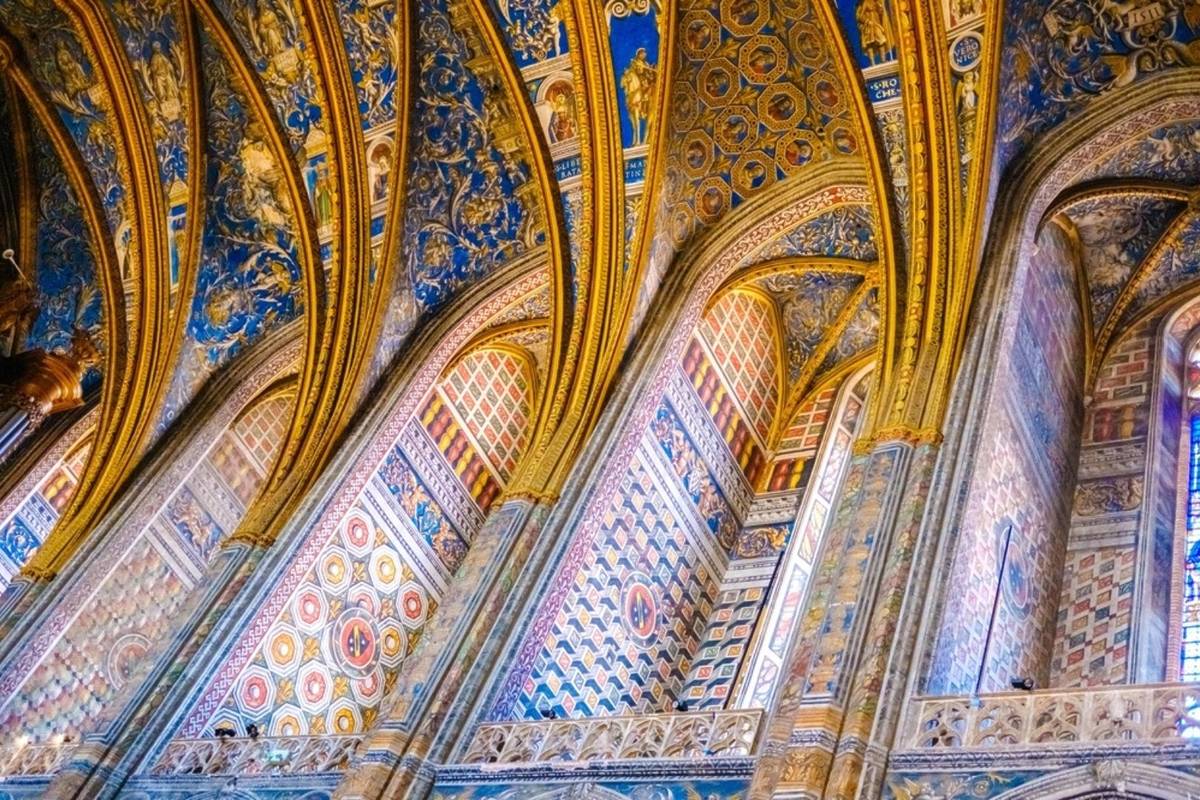
The almost exclusive use of brick, a local material, contributes to this impression. In fact, it’s the largest cathedral in the world made of this material. Once past the portal, the contrast is striking. The interior reveals an unexpected wealth of decoration. The vaults are entirely painted, the walls are covered with frescoes, and the gilded details catch the eye at every step. The almost 18-meter-long rood screen separates the choir from the nave, and bears witness to the exceptional skills of late medieval craftsmen. Inside, you’ll also find one of the largest Last Judgment paintings in Europe, created in the 15th century.
Sainte-Cécile Cathedral also plays a central role in Albigensian cultural life. Concerts are regularly held here, taking advantage of the cathedral’s remarkable acoustics. The organ, installed in the 15th century and modified over the centuries, contributes to this living musical tradition.
All in all, whether for its history or its architecture, Albi’s Cathédrale Sainte-Cécile is well worth a visit.
📍Cathédrale Sainte-Cécile d’Albi – 5 Bd Général Sibille, 81000 Albi