


What if one of Paris’s most beautiful opera houses were to remain without performances for five years? Behind its gilded details, majestic staircases, and famous ceiling painted by Chagall, the Palais Garnier is about to undergo a major turning point in its history. Starting in 2027, its stage will close for major renovations, with a reopening scheduled for 2032. However, the project was originally supposed to last only two years. But a problem discovered behind the scenes at the landmark has completely changed those plans.
A 150-year-old landmark set to undergo a long hiatus
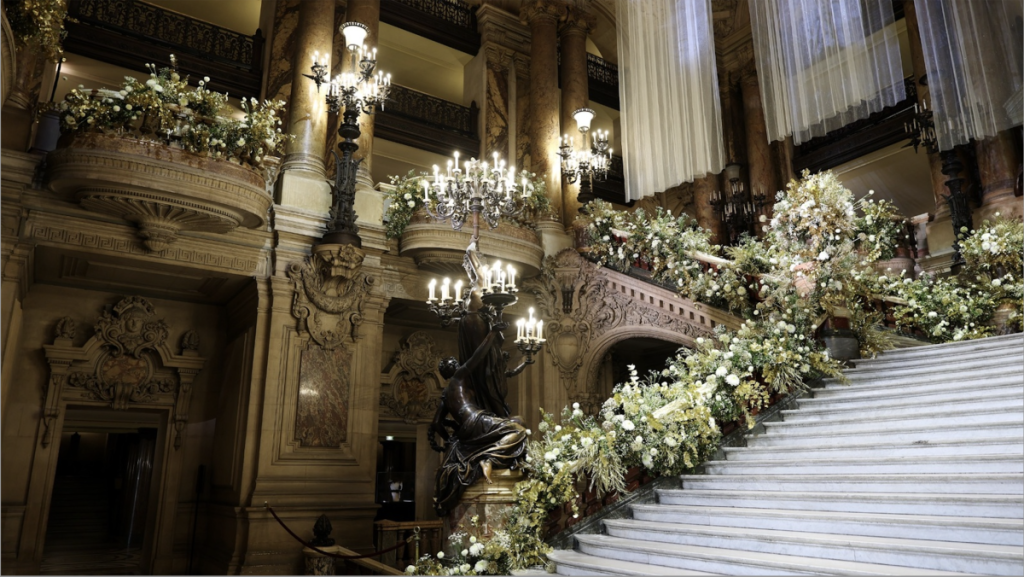
Since its inauguration in 1875, the Palais Garnier has held a special place in the Parisian landscape. Designed by architect Charles Garnier, this landmark in the 9th arrondissement has welcomed generations of dancers, singers, and audience members. With its grand marble staircase, gilded details, and Italian-style auditorium, it remains one of Paris’s most spectacular landmarks today.
Recommended Articles
 From the screen to the runway: “Emily in Paris” is preparing a one-of-a-kind fashion show in the capital, featuring all the series’ iconic looks. But will we be able to attend?
 Transportation in Paris: Several lines disrupted from November 16 to 22—here’s why this week is shaping up to be complicated
But after more than a century and a half of performances, the famous opera house is about to enter an unusual period. Its stage is set to close for five years while major modernization work is carried out.
Originally, the Paris Opera had planned for a renovation lasting only two years, from the summer of 2027 to the summer of 2029. Performances were then set to resume as usual. However, recent expert assessments have revealed a problem that has significantly extended the timeline.
Why will the renovations ultimately take five years?
The presence of lead in the stage facilities has complicated the renovation work at the Palais Garnier. Until now, the project was primarily intended to modernize the equipment used during performances. But the teams must now incorporate a major lead-removal operation, which will take much longer than expected.
Expert assessments have shown that the project will require far more extensive lead remediation than originally anticipated. The Paris Opera must temporarily remove the lead to modernize the facilities and improve working conditions for its staff.
The renovation project will therefore extend from two to five years, with the stage scheduled to reopen in 2032. This change in schedule was confirmed by the Paris Opera last July.
During those five years, performances will not disappear entirely. Most of the operas and ballets will simply move to a new venue—the Opéra Bastille. Other performances may also find a home in various Parisian theaters while the Palais Garnier undergoes renovations.
Will the Palais Garnier still be open to visitors?
But what about tours? While the Palais Garnier is famous for its performances, it also attracts many visitors who come to admire its architecture and impressive sets.
While tours were initially supposed to continue during the renovations, the presence of lead could ultimately change everything. Between the removal work, the noise, and the vibrations from the construction site, the Paris Opera may even have to temporarily close the entire building.
For now, it’s impossible to know whether visitors will still be able to admire the grand staircase and the sumptuous salons of the Palais Garnier during the renovations. If the closure of the stage until 2032 is confirmed, the Paris Opera has yet to specify which parts of the building will remain open to visitors.
And at the Opéra Bastille, the renovation project has also been postponed. The renovation of its stage equipment, initially scheduled to begin in 2030, is now set to start in 2033 and last for two years.
In the meantime, the Palais Garnier continues to host performances. No specific closure date for 2027 has been announced. So there is still time to attend a performance at this iconic venue in the capital before its curtain falls for several years.