
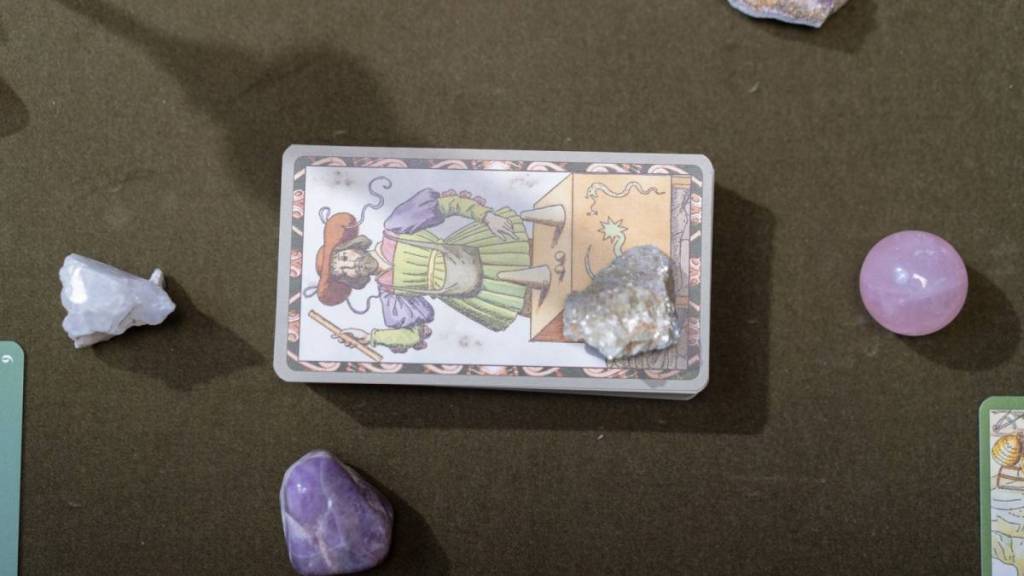

Beneath the glamour of Louis XIV’s reign lay a much darker Paris. Fortune-tellers, alchemists, poisons, and occult rituals thrived behind the scenes of old Paris. At the center of this world is Catherine Deshayes, known as La Voisin. Initially known as a midwife and fortune-teller, she became one of the major figures in the famous Affair of the Poisons, a criminal scandal that ultimately reached the highest echelons of the court.
When fortune-telling turns into crime
Before becoming one of the most feared women of her time, La Voisin received clients who came to learn their futures. She practiced divination and moved in circles where apothecaries, alchemists, and other fortune-tellers mingled.
But her activities quickly took a much darker turn. Circulating around her were what were known at the time as “inheritance powders.” Behind this almost elegant expression lay poisons capable of somewhat hastening… an inheritance.
Little by little, La Voisin became a central figure in this small, clandestine world. Her clientele extended far beyond the working-class neighborhoods of the capital: the investigation would reveal connections reaching all the way into the aristocracy.
The Scandal That Shook Paris
Everything came to a head in the 1670s. Following the arrest of the Marquise de Brinvilliers, who was convicted of poisoning several members of her family, the police began to uncover a much larger network. In March 1679, La Voisin was arrested. The case took on such proportions that Louis XIV established a special court, the Chambre ardente, tasked with investigating her crimes. More than 400 people appeared before it until its dissolution in 1682.
Poisons, clandestine abortions, divination… investigators then uncovered a particularly dark world that both fascinated and alarmed Paris. Madame de Sévigné even wrote at the time that this affair “has all of Paris in a frenzy.”

Black Masses and occult rituals: how far did La Voisin go?
This is undoubtedly the most terrifying part of her story.
During the investigation, several witnesses accused La Voisin of participating in witchcraft rituals and black masses with Étienne Guibourg, a defrocked priest. Some accounts even mentioned the sacrifice of infants.
These accusations are indeed part of the historical record of the Affair of the Poisons. However, they cannot be considered facts established with certainty. Some of what we know comes from testimonies gathered during legal proceedings in which torture and corruption were still central to the justice system.
The story becomes even more intriguing when the name of Madame de Montespan, Louis XIV’s famous mistress, surfaces in the affair. After La Voisin’s death, her daughter gave testimony that compromised the marquise. The Palace of Versailles confirms that Montespan was implicated in the scandal and that the affair contributed to her fall from grace.
The End of the “Queen of Dark Paris”
La Voisin would never know just how high the scandal would reach.
After her arrest, she was interrogated and then sentenced to death. On February 22, 1680, she was burned at the stake in Place de Grève, now known as Place de l’Hôtel-de-Ville. But her execution did not put an end to the Affair of the Poisons. On the contrary, the revelations continued and came dangerously close to the king’s inner circle.
When the affair directly threatened the court’s reputation, Louis XIV eventually ordered part of the investigation to be halted. The Chambre ardente was dissolved in 1682. That same year, a new royal edict also tightened regulations on toxic substances, the prosecution of poisoning cases, and the practices of so-called magicians or fortune-tellers.
A story that also depicts the darkest side of Paris during the reign of Louis XIV
More than three centuries later, La Voisin remains one of the most fascinating figures in Parisian criminal history. Her story lies precisely at the intersection of real crime, occult beliefs, and the secrets of the court.
Behind the legendary figure of the “witch” lay, above all, a genuine criminal case. Poisons were circulating, clients from high society appeared in the case files, and Louis XIV’s police found themselves facing a network large enough to warrant the convening of a special tribunal.
A story that serves above all as a reminder that, behind the majestic Paris of the Grand Siècle, there also lurked a much darker Paris.