
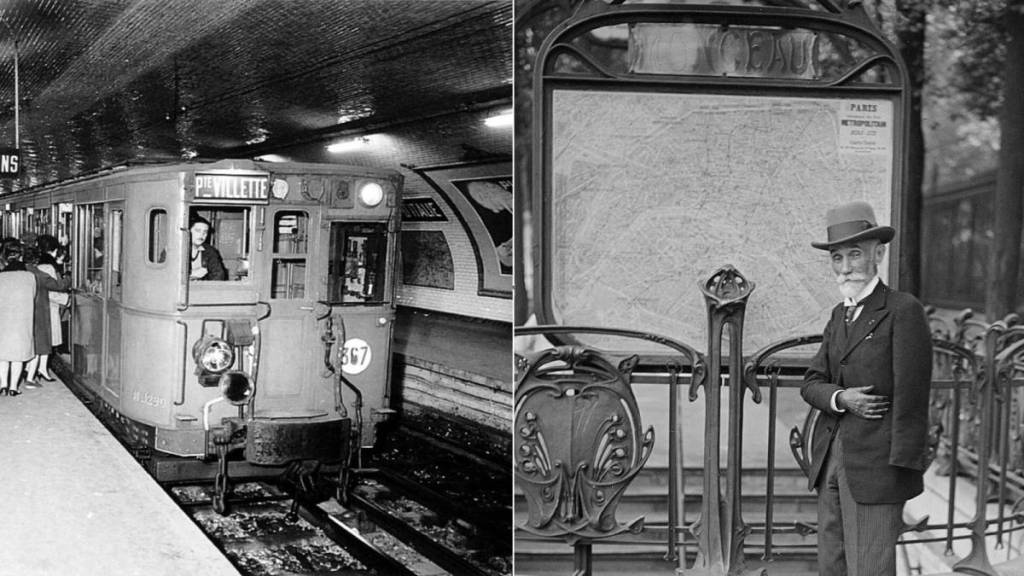

Millions of passengers are familiar with the Montparnasse-Bienvenüe station, but far fewer know the man behind the name. Yet Fulgence Bienvenüe was no minor figure in Parisian history: this civil engineer from the École des Ponts et Chaussées oversaw the construction of the metro for more than thirty years and worked on twelve lines and 115 kilometers of track.
Born in Brittany in 1852, Bienvenüe attended the École Polytechnique and then the École des Ponts et Chaussées, and began his career in the railroad industry. On February 25, 1881, at the age of 29, an accident at a railroad construction site cost him his left arm. The engineer is said to have summed up the incident with rather dry humor: he had been “expropriated of his arm.” The accident did not prevent him from continuing his career and joining the City of Paris a few years later.
Fulgence Bienvenüe, the man behind the first Paris metro
Even before the metro, Bienvenüe was already working to transform Paris. In particular, he participated in sanitation projects in certain neighborhoods and designed the Belleville tram-funicular, which opened in 1890. But his major project began a few years later.
Together with engineer Edmond Huet, he developed a plan for an electric, underground metropolitan railway. Paris was then faced with an urgent problem: its surface transit systems were overwhelmed, and the 1900 World’s Fair was fast approaching. The project was declared a public utility in 1898, and construction on the first line began on October 4 of that same year.
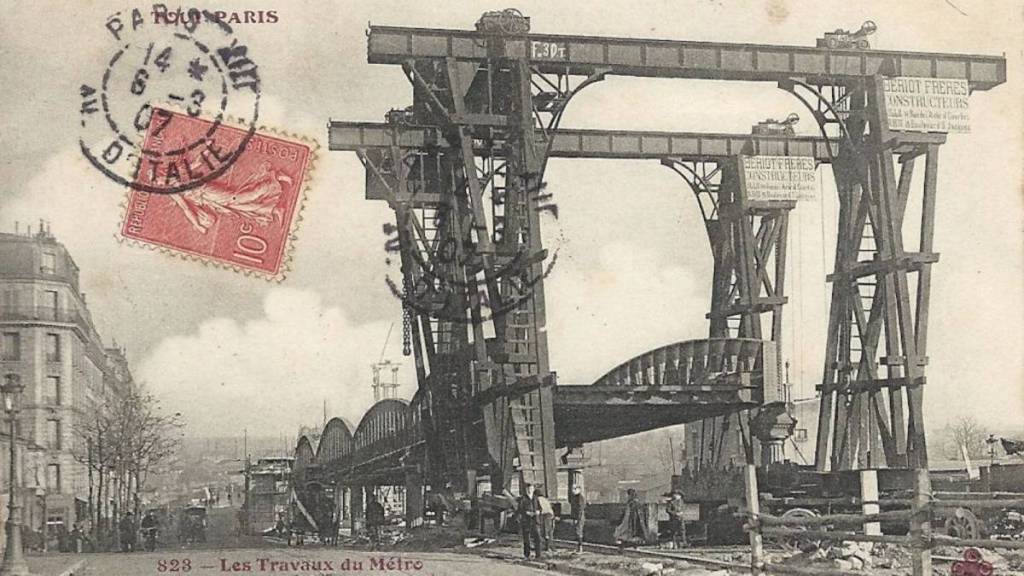
Less than two years later, on July 19, 1900, Parisians were introduced to Line 1 between Porte de Vincennes and Porte Maillot. Yet the story was only just beginning. Bienvenüe remained at the helm of the construction efforts for decades, overseeing the gradual expansion of a network that profoundly transformed travel in the capital. He worked until 1932, when he retired at the age of 80.
Fulgence Bienvenüe died in 1936 and is buried at Père-Lachaise Cemetery, in a tomb that is surprisingly modest for someone who left such a massive mark on Paris. In 2024, a bust in his likeness was also installed at the Montparnasse-Bienvenüe station.