

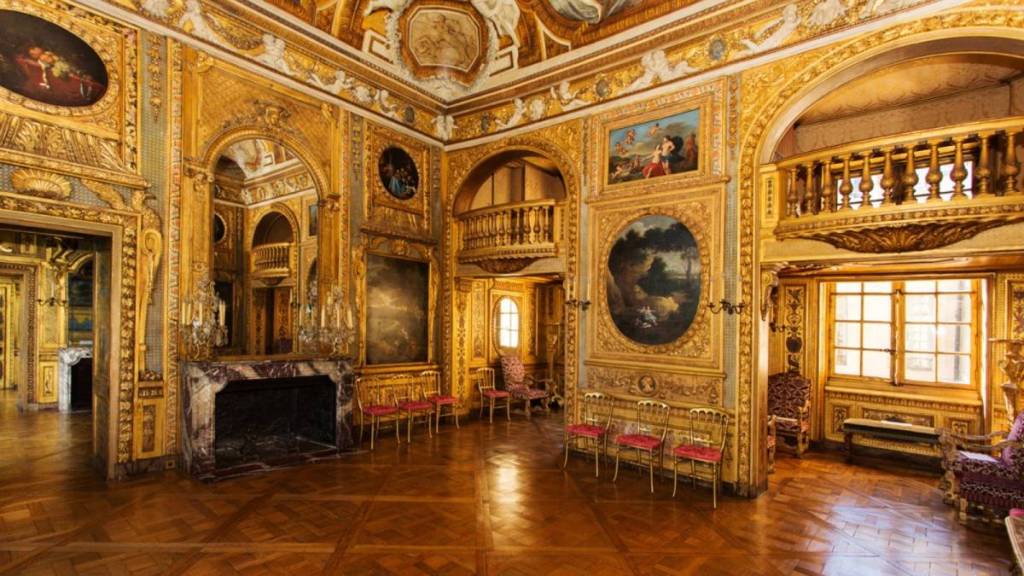
Behind the rather unassuming façade of 17 Quai d’Anjou, on Île Saint-Louis, one of the most astonishing stories of 19th-century literary Paris unfolded. In what is now the Hôtel de Lauzun—then known as the Hôtel Pimodan—a handful of writers, artists, and doctors began gathering in 1844 for what would go down in history as the Club des Haschischins. Charles Baudelaire and Théophile Gautier were involved in these gatherings, which took place in a setting of gilded wood paneling and painted ceilings that still exists today.
The initiative was notably linked to the psychiatrist Jacques-Joseph Moreau de Tours, who was then interested in the effects of cannabis on perception and the mind. The participants gathered at the home of the painter Fernand Boissard and took part in sessions nicknamed “antaisies.” Hashish was consumed there in the form of a preparation called dawamesk. The experience was as much medical as it was literary: in an era fascinated by dreams, the Orient, and altered states of consciousness, these evenings provided writers with a new field of observation.
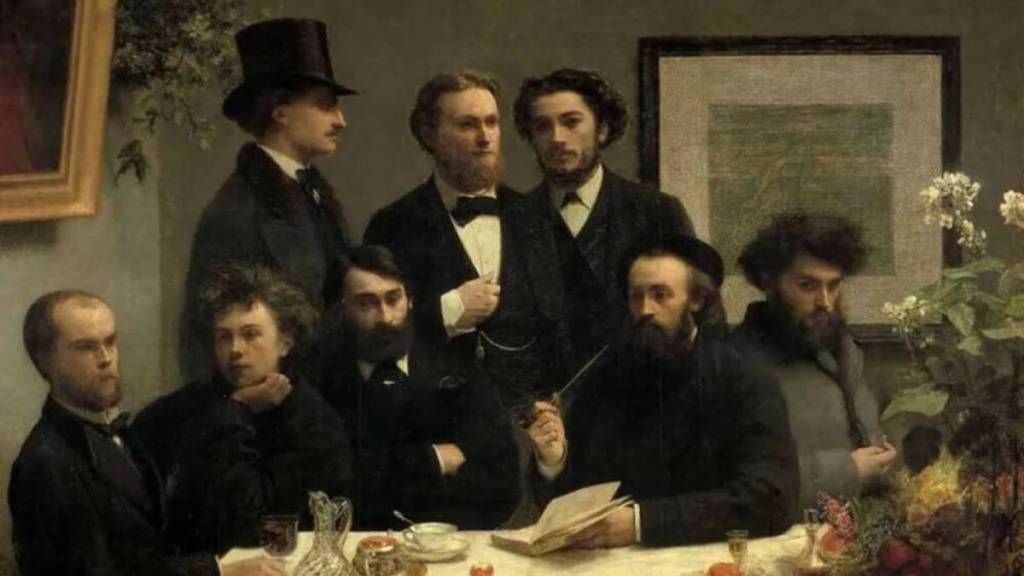
Théophile Gautier wrote about the Club des Haschischins as early as 1846
The club owes much of its lasting fame to Théophile Gautier. In February 1846, he published an essay in the *Revue des Deux Mondes* titled “Le Club des hachichins,” in which he recounted one of these evenings and the strange sensations provoked by the experience. The account quickly transformed these private gatherings into a famous episode of Parisian bohemian life.
Charles Baudelaire was also closely connected to the venue, as he lived at the Hôtel Pimodan in the mid-1840s. But his role has sometimes been exaggerated. The BnF notes that he was probably not a heavy user and that he attended the sessions only occasionally. Gautier himself would later explain that Baudelaire rarely came and did so more as an observer. This experience nevertheless fueled his reflections on drugs and creativity, which he elaborated on in *Les Paradis artificiels* in 1860.
Built beginning in 1656, the Hôtel de Lauzun features some of the best-preserved 17th-century private interiors in Paris: painted ceilings, gilded wood paneling, fireplaces, and salons overlooking the Seine. Baudelaire occupied a room there, while Gautier and Roger de Beauvoir were also among the writers who frequented the address.
Purchased in 1928 by the City of Paris, the building primarily hosts institutional and research activities, but it is currently closed to the public until further notice. A closed door that, almost in spite of itself, perpetuates the reputation of this address where, nearly two centuries ago, a segment of romantic Paris came to test the limits of the imagination.
Location: Hôtel de Lauzun, 17 quai d’Anjou, 75004 Paris
Hours: The hotel is currently closed to the public