
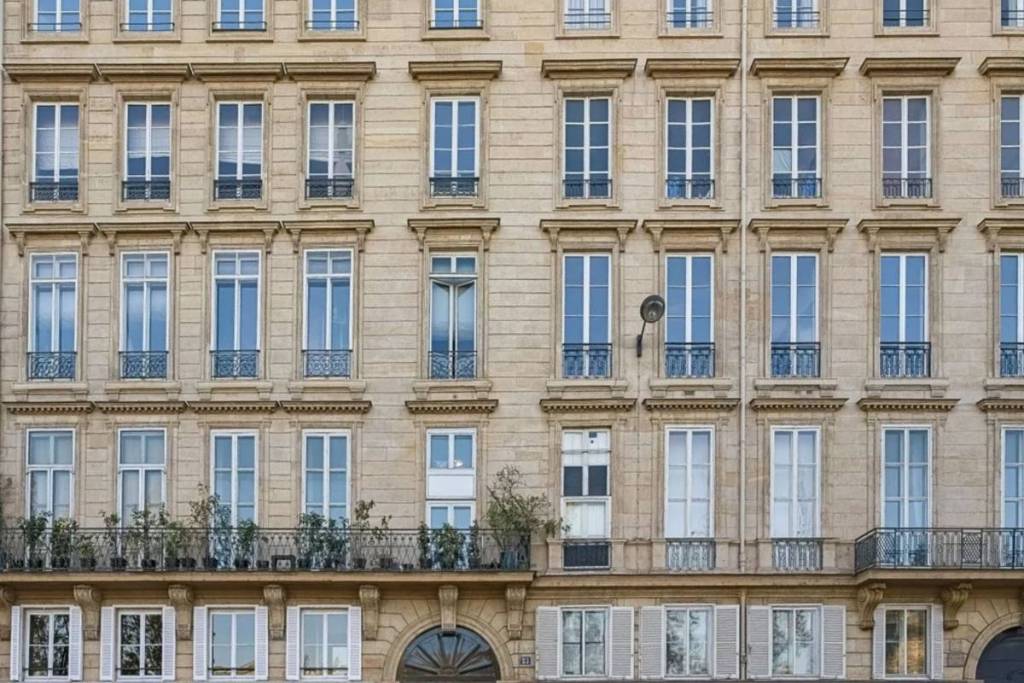

Six rooms, three bedrooms, and a breathtaking view of the Seine: compelling features for a Parisian property. But this one has an extra special detail: it’s located in the mansion where Voltaire spent the last months of his life. Situated in the heart of Quai Voltaire, directly across from the Louvre, the property was listed for sale in the fall of 2026.
Located within the Hôtel de, built in the 17th century and designated a Historic Monument, the property occupies the main floor of the building and spans nearly 250 square meters. This extraordinary property features three adjoining salons, Versailles-style parquet floors, antique fireplaces, and remarkable painted ceilings, all beneath ceilings over 3.50 meters high. Five large windows overlook the quays and offer a beautiful view of the Louvre and the Tuileries.
A master suite, two additional bedrooms, a separate kitchen, and a dining room opening onto a balcony facing the courtyard complete the layout. The interiors have been restored while preserving their historic features, including the moldings, alcoves, and marquetry.
It was in this mansion that Voltaire experienced his final triumph in Paris
When Voltaire returned to Paris in February 1778, he was 83 years old and had not seen the capital for nearly twenty-eight years. He was welcomed by his friend and admirer, the Marquis de Villette, who made an apartment in his mansion available to him. Very quickly, the residence became a gathering place for the leading figures of Parisian intellectual life.
The philosopher came, in particular, to attend performances of his latest tragedy, *Irène*. On March 30, he received a triumphant welcome at the Académie Française, then at the Comédie-Française, where the audience cheered him on. His return to Paris felt like a crowning achievement, after decades of controversy and estrangement.
But his health was rapidly declining. Two months later, on May 30, 1778, he died at the Hôtel de Villette. The room where he died was on the courtyard side, in a part of the residence whose exact location is described differently in various archives.
The story doesn’t end there. After his death, the Marquis de Villette had the philosopher’s heart removed and embalmed. It then underwent a rather incredible journey, passing from owner to owner before joining the collections of the Bibliothèque nationale de France, where it is still preserved today.