
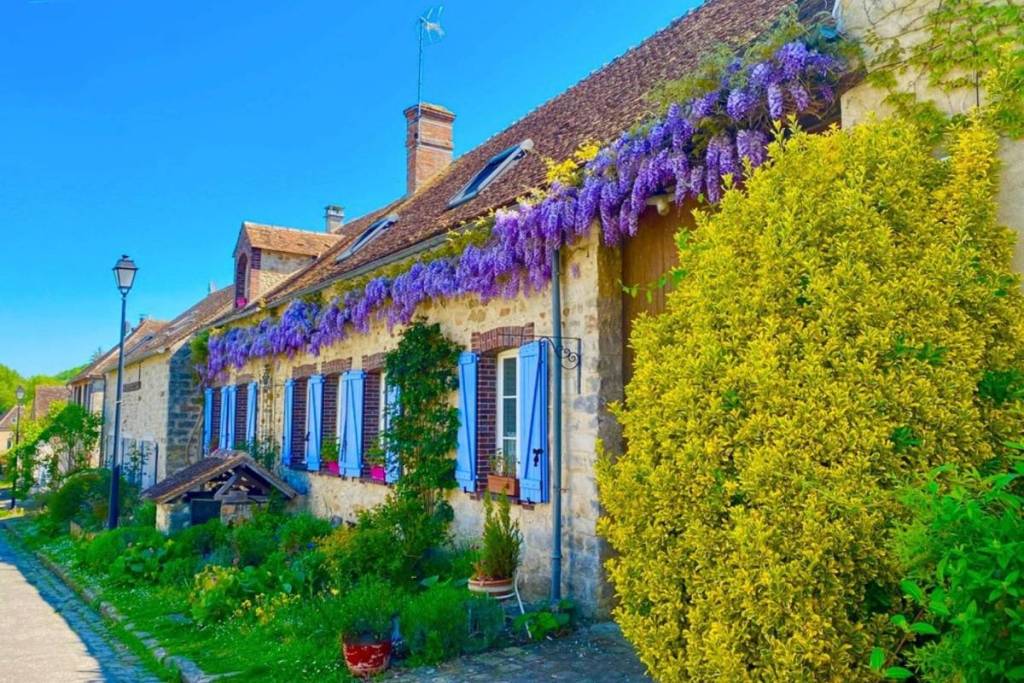

About 100 kilometers southeast of Paris, you can discover a village where almost all the streets seem to lead to the water. Crossed by the Orvanne River, Flagy has preserved a very distinctive medieval layout, punctuated by seven bridges or footbridges. In 2023, this small village in Seine-et-Marne even represented the Île-de-France region on the TV show *Le Village préféré des Français*.
Seven streets leading down to the same river
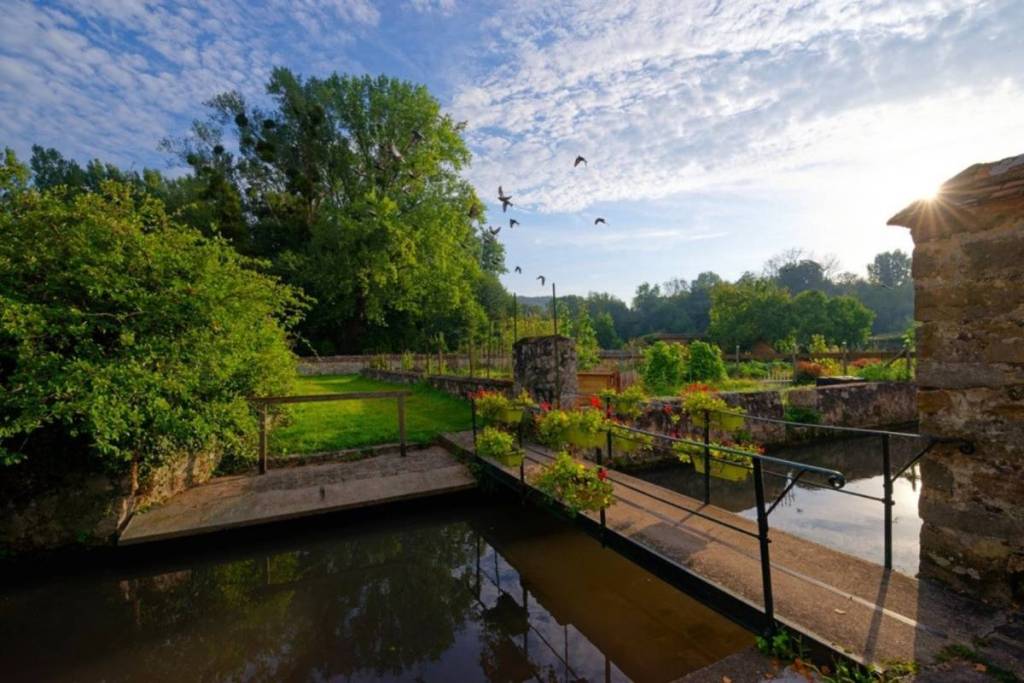
In 1177, Louis VII decided to establish a “new town” there, laid out according to a regular grid plan. The streets were laid out in parallel and slope down toward the Orvanne, whose course was modified to power mills, irrigate gardens, provide water for animals, and allow residents to wash their laundry.
The walk therefore naturally follows the river. Small bridges connect the two banks, washhouses appear between the houses, and gardens sometimes extend all the way down to the water’s edge. The scenery is by no means monumental, but the whole area forms a “Village of Character” that ranked twelfth in the national rankings presented by Stéphane Bern in 2023.
Starting from Paris, this getaway can easily be combined with a visit to Moret-sur-Loing or a stroll through the southern part of the Fontainebleau Forest. Flagy, however, is worth taking the time to wander its streets without trying to cram in a packed itinerary. The church square, the old farmhouses, the Bistrot de l’Orvanne, and the riverbanks are enough to fill a leisurely stroll, far from the touristy villages.
A 13th-century mill and a weather vane unlike any other
Set apart from the center, the Moulin de Flagy stands as one of the main reminders of the village’s medieval past. Completed at the end of the 13th century, it is said to have belonged to Blanche of Castile. Its waterwheel harnessed the flow of the Orvanne to produce flour, and the mill continued to operate for several centuries, even going so far as to clandestinely produce bread flour during World War II. Restored beginning in the 1960s, it now houses a six-room hotel and restaurant, with a terrace along the river.
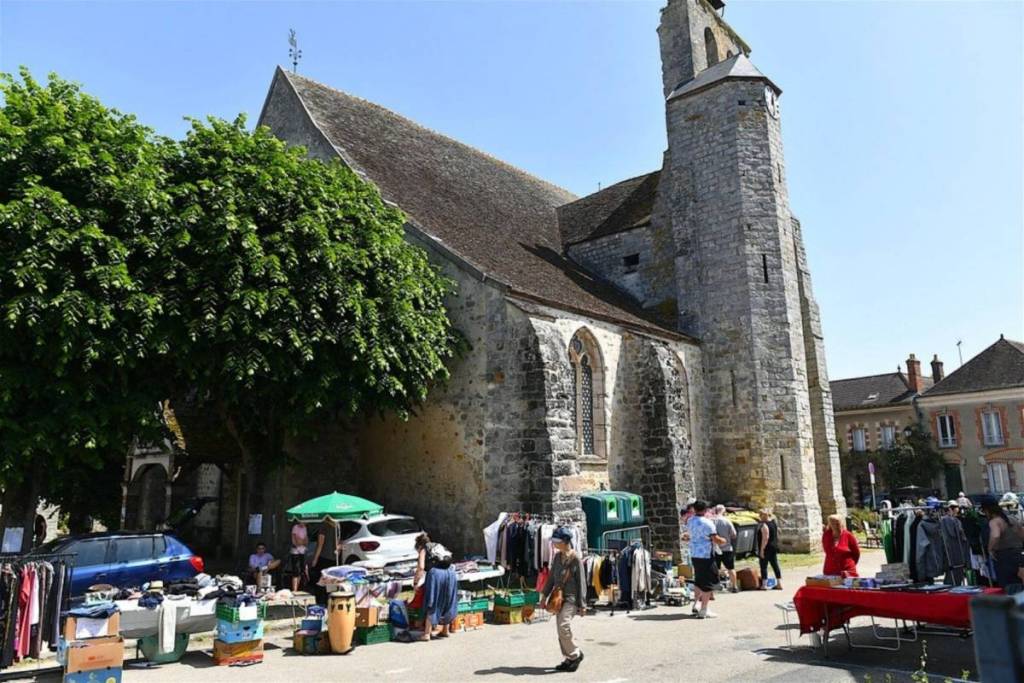
On your way back to the Church of Notre-Dame-de-Pitié, built between the late 12th and early 13th centuries, be sure to look up. Its weather vane doesn’t just feature the usual rooster—a pig’s head is also visible. According to local legend, it commemorates the residents’ refusal to come to the aid of a neighboring village struck by the Black Death. The bishop is said to have then condemned the people of Flagi to keep this symbol on their church. A story that’s impossible to verify, of course, but one that’s a fitting way to end a visit to this village!