

Behind the blue street signs on certain Parisian streets lie stories that propriety has sometimes tried to erase. Rue du Pélican, located in the 1st arrondissement just a stone’s throw from the Louvre, is the most striking example of this. In the Middle Ages, during the reign of King Saint Louis, this small street was reserved for prostitution and bore the very explicit name Rue du Poil-au-con. It was not until the 19th century that its name was phonetically rounded off to become the current Rue du Pélican.

A similar semantic evolution took place in the Marais neighborhood. Rue du Petit-Musc, in the 4th arrondissement, takes its name from a much cruder Old French expression: “put-y-musse,” which literally means “where the prostitute hides.” Just like Rue du Pélican, this street was part of the areas where prostitution was legal during the reign of Saint Louis.
From Cutthroats to Cabbage Fields
Other streets in the capital bear witness to the dangers or geography of the medieval era. Also in the 4th arrondissement, the very short Rue des Mauvais-Garçons commemorates a gang of thugs who had set up shop there. These criminals systematically extorted money from passersby who dared to venture there. Today, the former no-man’s-land has given way to a peaceful street that is home to, among other things, a pastry shop.
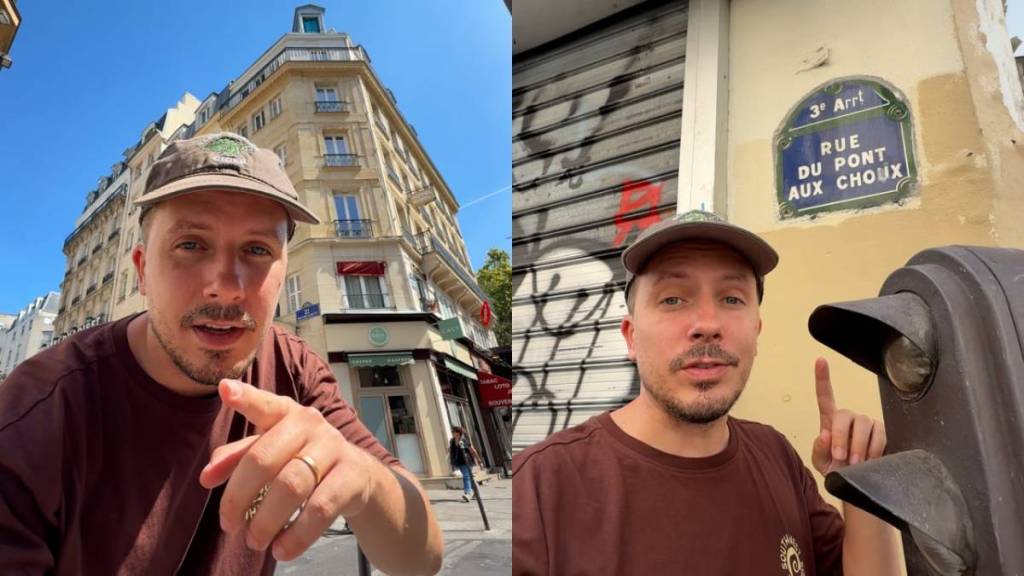
Further north, in the 3rd arrondissement, the Rue du Pont-aux-Choux, for its part, recalls the area’s original topography. Back when the Marais fully lived up to its name as a marsh, this exact spot was home to a small bridge. It allowed people to cross the streams and traverse the cabbage fields that covered the area. Today, asphalt and speed bumps have permanently replaced the old bridge and its crops.