

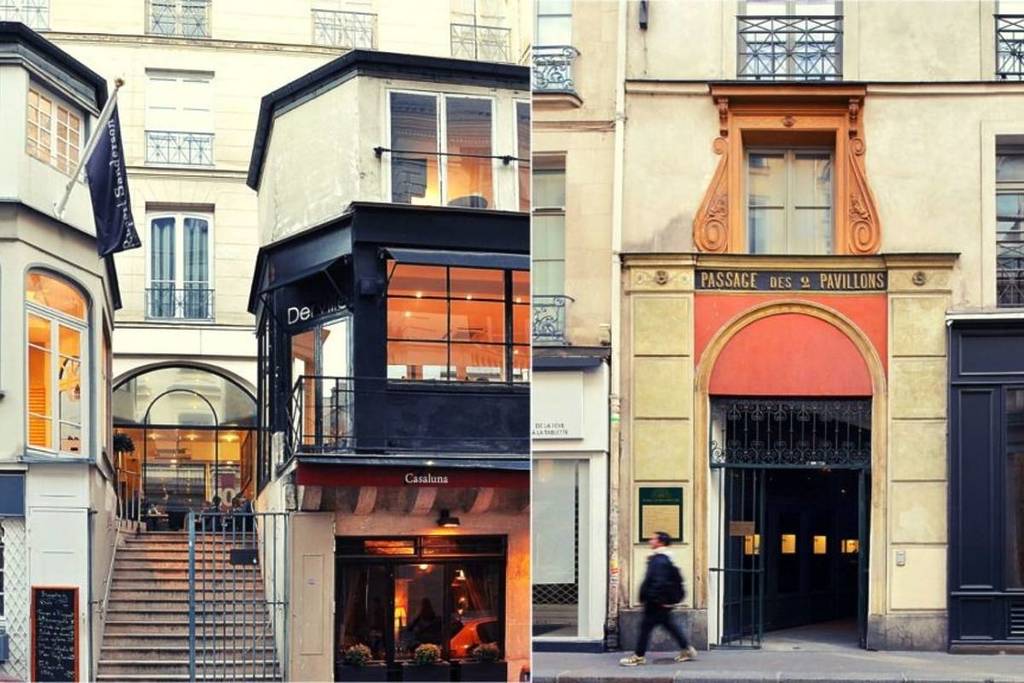
While we are familiar with large covered galleries such as the Galerie Vivienne and the Passage des Panoramas, some more discreet passageways tell equally fascinating stories. This is the case with the Passage des Deux-Pavillons, nestled in the Palais-Royal district and often overlooked by traditional tourist routes.
Are you a fan of secret passages? We recommend taking this guided tour to discover them for yourself! On the agenda: a guided walk through a dozen hidden galleries, among restored wonders, forgotten places, and well-kept secrets.
A historic passageway in the heart of the capital
A stone’s throw from the magnificent Saint-Eustache church, the Passage des Deux-Pavillons opened around 1820 on the ground floor of a building located between Rue de Beaujolais and Rue des Petits-Champs. The passage owes its name to the two pavilions that frame its main entrance. Measuring just 33 meters long and 2.2 meters wide, it holds a special distinction: it is the smallest covered passageway in Paris.
What gives it its unique charm is not only its size, but also its slightly winding layout: it was modified shortly after its creation due to local rivalry, which speaks volumes about the commercial spirit of the early 19th century. Originally, the passage led straight to the Galerie Colbert, one of the large neighboring passages. But faced with competition from the Galerie Vivienne, its owner at the time had the passage rerouted so that it led directly to his own gallery, thus attracting strollers and potential customers.
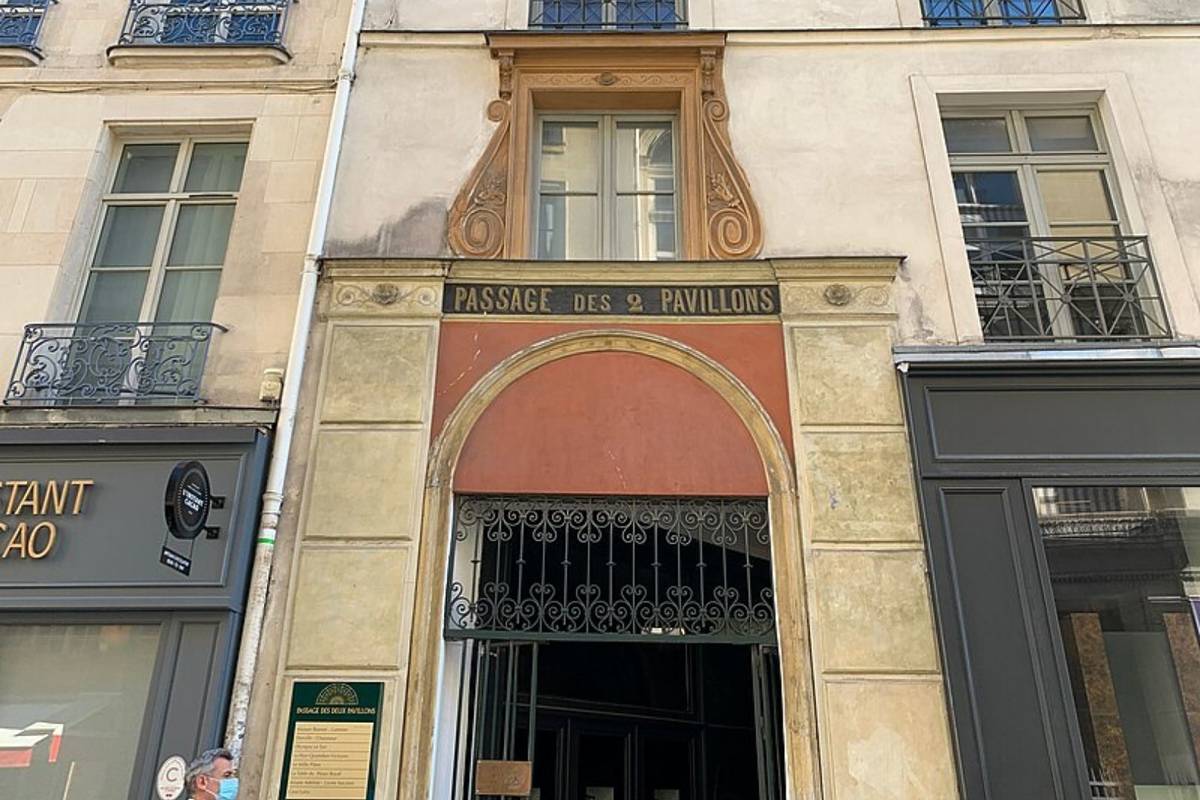
Today, the Passage des Deux-Pavillons has retained its intimate atmosphere and 19th-century style, with its elegant boutiques, old facades, and almost secretive feel. Listed as a historic monument, it connects two streets in central Paris, crossing a surprising place that seems frozen in time.
This small covered passageway is also an ideal stop during a stroll between the gardens of the Palais-Royal, the Galerie Vivienne, and the Galerie Colbert. It perfectly illustrates how Paris, even in its narrowest corners, conceals unexpected stories and places full of charm.
📍Location: Passage des Deux-Pavillons – Access via 5, rue des Petits-Champs and 6, rue de Beaujolais, 75001