

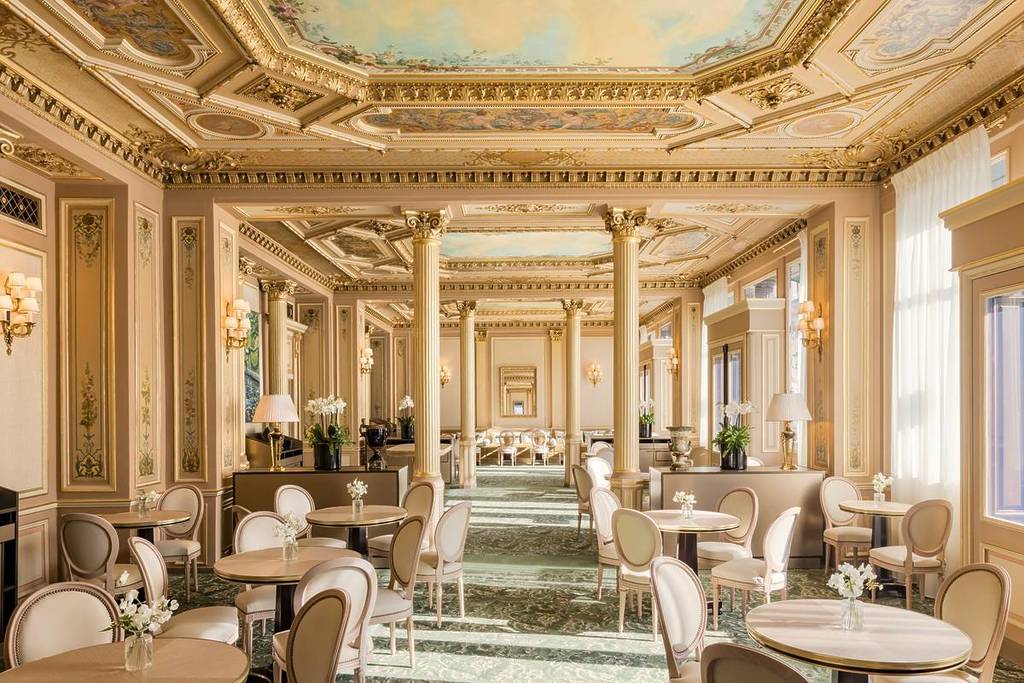
The Belle Époque saw the arrival of renowned artists, and even crowned heads. Even today, celebrities meet at this prestigious restaurant in Paris’s 9th arrondissement. An establishment with golden letters and a sumptuous decor, nestling on the mythical Place de l’Opéra…
1862: the birth of the Grand Hôtel de la Paix, and with it, the inauguration of the now mythical Café de la Paix.
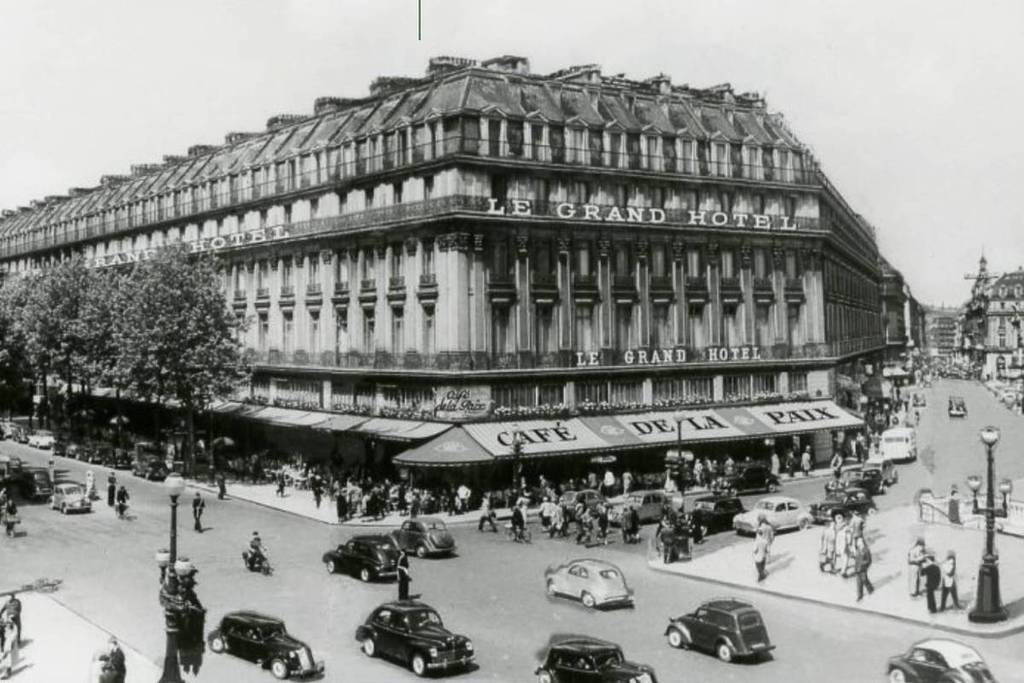
The year was 1860. At that time, a competition was held for the construction of an “Imperial Academy of Music and Dance”. Renowned architects were all hoping to win the competition, but in the end, on May 30, 1861, an unknown architect won the project. His name? Charles Garnier. Opposite the brand-new opera house, Napoleon III wanted to build the largest hotel in Paris, to accommodate future visitors to the 1867 International Exhibition. Thus,in 1862, the so-called “Grand Hôtel de la Paix” was built in the capital. Empress Eugénie inaugurated it in grand style on May 5 of the same year. And Napoleon III’s ambition was respected. With some four hundred and seventy rooms, the Grand Hôtel de la Paix, designed by architect Alfred Armand, was the largest hotel in Paris at the time. And guess what the name of this immense hotel’s café-restaurant was? The Café de la Paix. A legend is born.
A café-restaurant in the heart of the largest hotel in Paris at the time, in a Napoleon III decor.
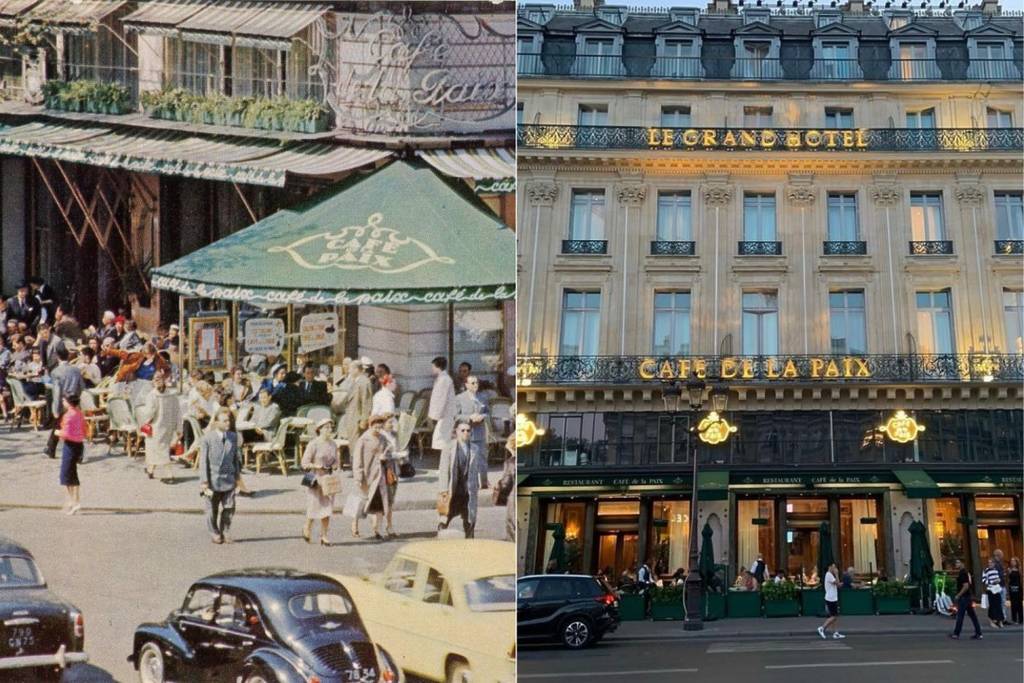
Later, the “Grand Hôtel de la Paix” was renamed “Le Grand Hôtel” and later became the “Intercontinental Paris-Le Grand Hôtel”. The Café de la Paix, however, always retained its original name. And how can we talk about the Café de la Paix without mentioning its splendor? Sumptuous painted ceilings, moldings, chandeliers and mirrors… The décor of the Café de la Paix is worthy of an imperial palace. Its meticulously painted faux-sky ceiling is as captivating as its Greco-Roman-inspired ornamentation. The cast-iron Greek columns scattered throughout the neoclassical restaurant are equally impressive.
The haunt of Massenet, Zola, Proust and Maupassant
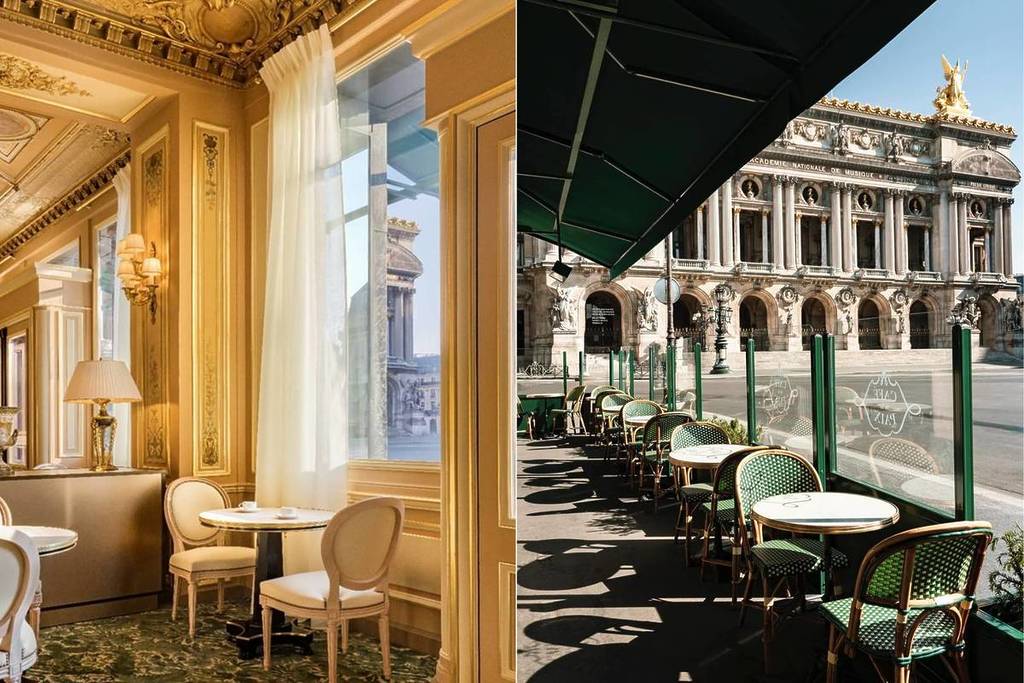
As the years went by, the whole of Paris flocked here, including the leading artists of the day, from opera composer Jules Massenet to one of the most famous French writers of the 19th century, a certain Emile Zola. In 2003, the legendary Café de la Paix was given a makeover. Architect Pierre-Yves Rochon refreshes and sublimates the place. While retaining its soul and essence, the place now emphasizes the Empire and Pompeian styles rather than its Napoleon III decor.
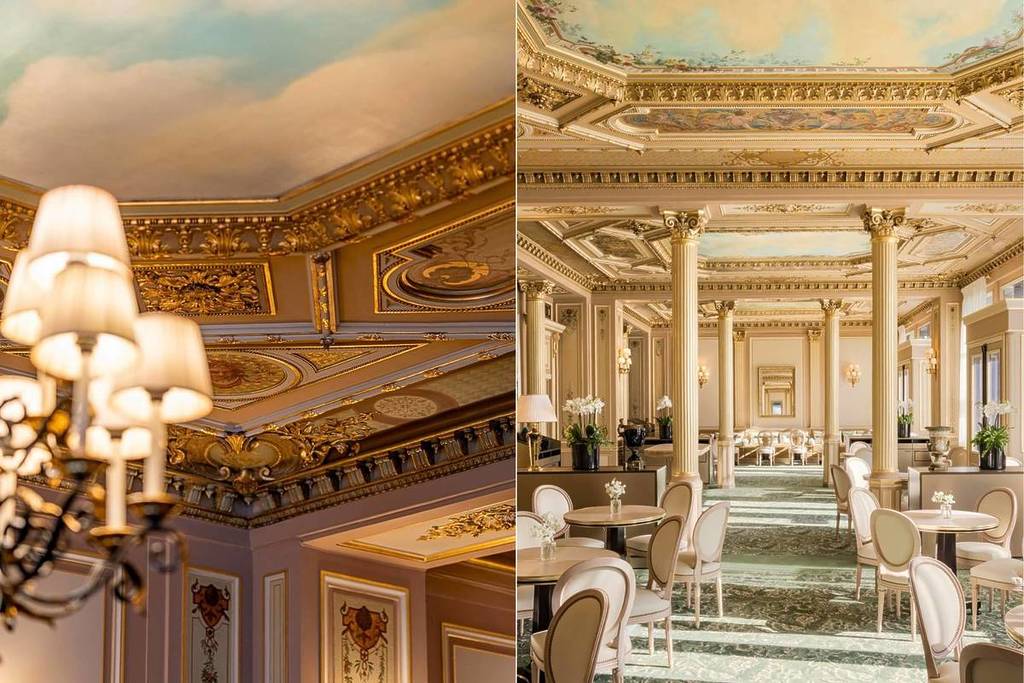
Have you ever been to this legendary café-restaurant? We advise you to visit at least once in your life, perhaps for the Petits-déjeuners du coeur organized every year at the Café de la Paix, in aid of the Mécénat Chirurgie Cardiaque association? A golden opportunity to (re)discover an emblematic Parisian venue, and do a good deed.