
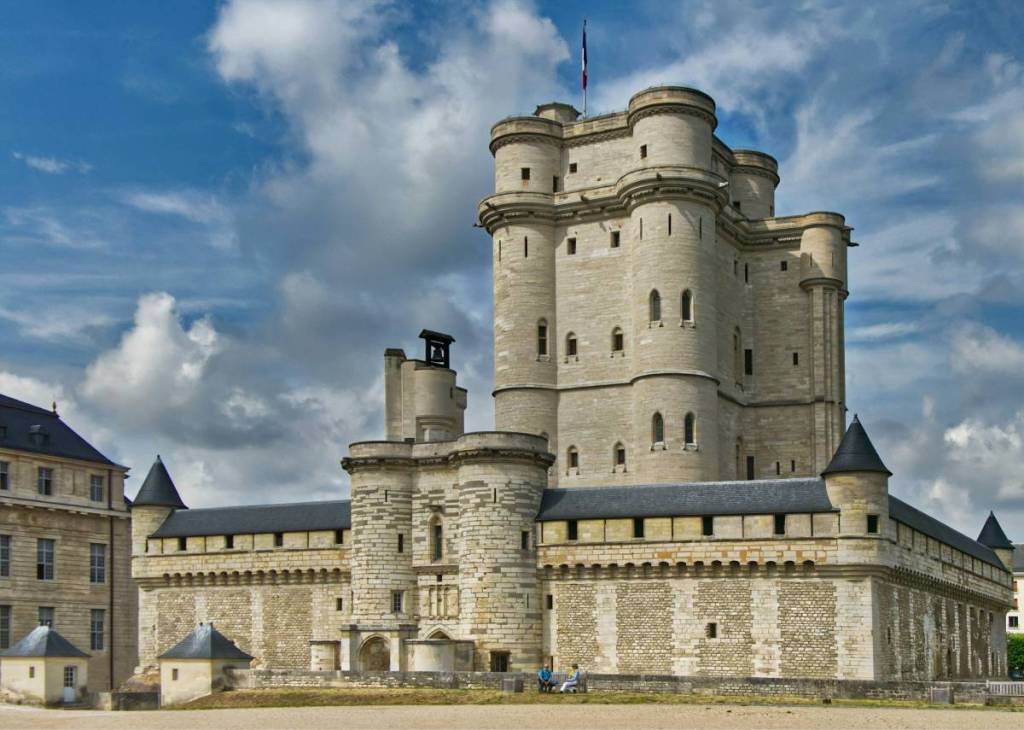

To the east of Paris, a 10-minute walk from Line 1, lies a 52-meter-high royal fortress. The Château de Vincennes is one of the least-known monuments in Île-de-France. Yet it is also one of the most fascinating: it has housed kings within its walls, imprisoned Sade and Mirabeau, and once housed the largest library in Europe…
22 October 2026 10:00 + more dates
Château de Vincennes
The Château de Vincennes: An Untapped Treasure Just 15 Minutes from Paris
Every year, Versailles attracts nearly eight million visitors. Just fifteen minutes away—at the terminus of Metro Line 1— the Château de Vincennes, however, welcomes fewer than two hundred thousand. Yet it is just as regal. If you’d like to climb Europe’s tallest medieval keep without having to wait in line, you can.
The tower rises to 52 meters, roughly the same height as those of Notre-Dame de Paris. It was built between 1360 and 1380 on the orders of King Charles V as a fortress against popular uprisings in Paris during the Hundred Years’ War. At the time, Vincennes offered the security of a stronghold and the comfort of a hunting estate, complete with its own forest. Above all, the king established his personal library there, containing more than a thousand manuscripts— the largest collection in Europe at the time.
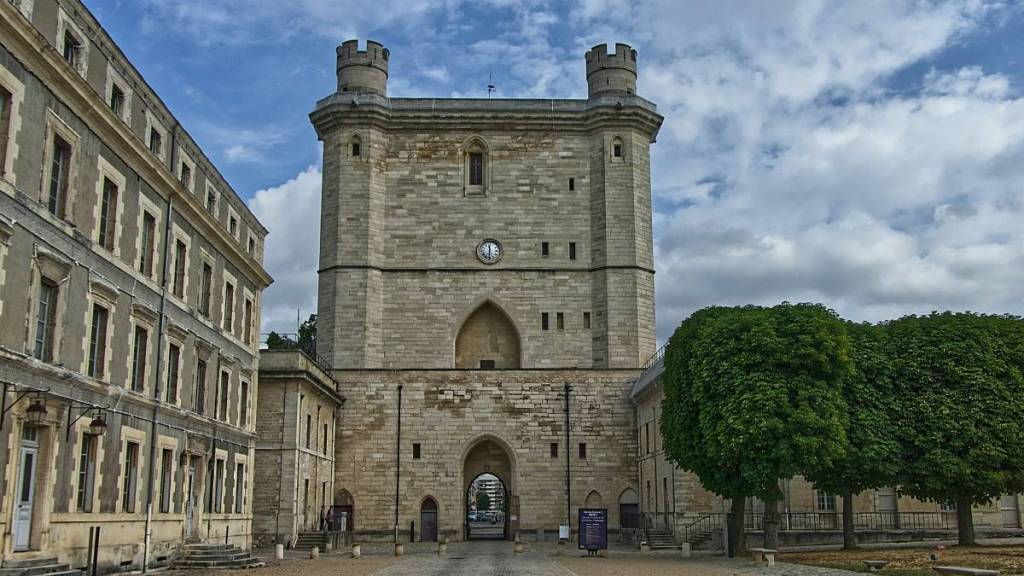
The tallest keep in Europe and a royal prison
The tower changed its function and, from the 15th to the 19th century, became one of the kingdom’s most discreet state prisons. Historical figures were imprisoned there under a lettre de cachet. The Marquis de Sade, Diderot, and Mirabeau—the future hero of the Revolution—are notable examples. In fact, you can still see graffiti carved by prisoners on the walls of the keep today, one of the most fascinating highlights of the tour.
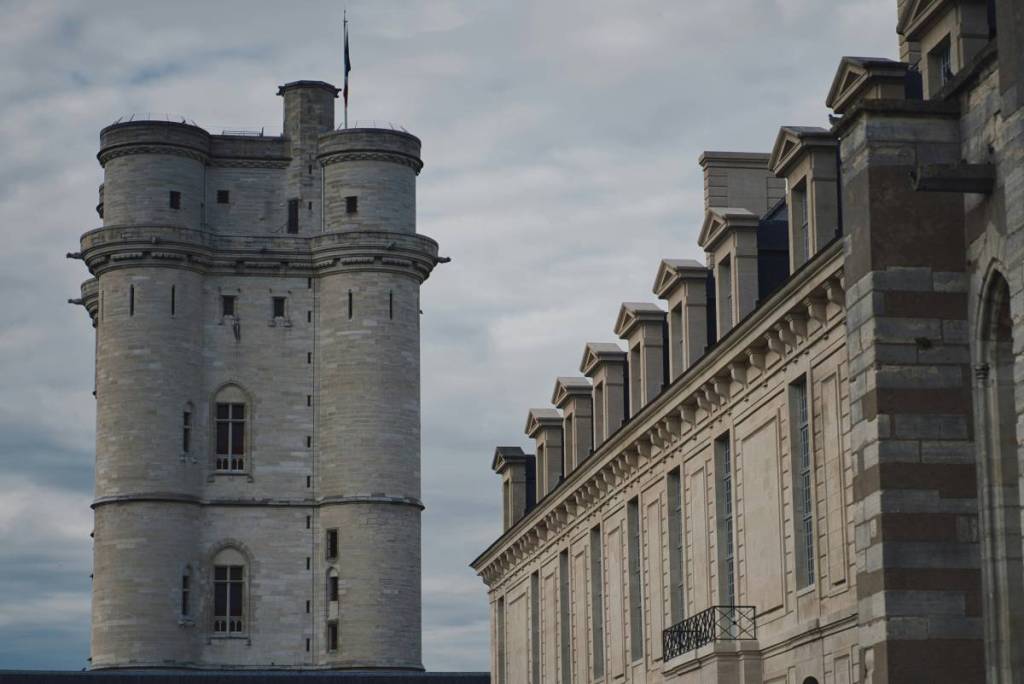
Under the Ancien Régime, the windows on the upper floors were bricked up or barred to turn them into stone cells. Even today, a tour of the closed-off floors of the keep— accessible on certain Sundays—takes visitors through five levels and a thousand years of history to a terrace offering an unobstructed view of all of eastern Paris.
It was here, not at Versailles, that Louis XIV grew up. In the 1650s, architect Louis Le Vau built the King’s and Queen’s pavilions here , a classical courtyard of perfect symmetry that foreshadowed what Versailles would become twenty years later.
A chapel that rivals that of the Cité
Within the castle walls stands the Sainte-Chapelle, founded in 1379 and modeled after the one on the Île de la Cité. Its Renaissance stained-glass windows, though less well-known than those of its Parisian counterpart, are among the best-preserved in the region.
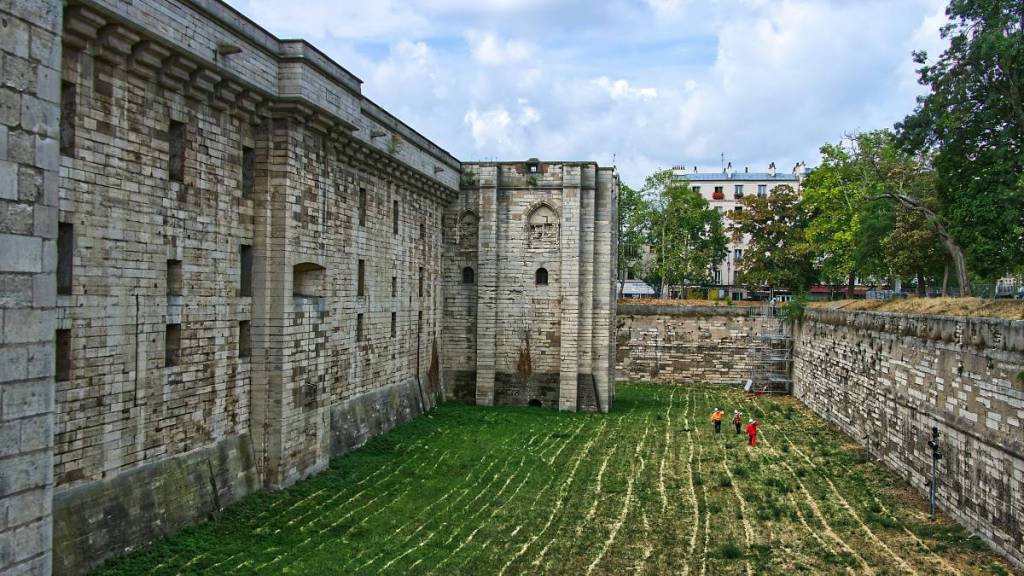
The site has since endured through the centuries, regularly changing its purpose. It served as an arsenal under Napoleon, a military barracks, and a headquarters during both world wars… In August 1944, on the eve of the Liberation of Paris, members of the Resistance were executed in the castle’s moats. Commemorative tours still mark this episode every year during Heritage Days. Since 1948, the site has housed the Historical Service of the Ministry of Defense, which preserves military archives.
22 October 2026 10:00 + more dates
Château de Vincennes