


It’s lingered at the bottom of our pockets, lost its magnetic strip at the worst possible moment, and accompanied millions of trips through Paris. But this time, the end is truly near. Starting November 5, 2026, it will no longer be possible to buy paper tickets at Metro stations and RER stations. A small revolution for an object that was created over 125 years ago and has, over time, become almost as iconic to Paris as the famous Guimard Metro entrances.
On November 5, paper tickets will disappear from ticket machines
This change didn’t happen overnight. For several years now, the RATP and Île-de-France Mobilité have been gradually phasing out the famous paper ticket in favor of the Navigo Easy, smartphones, and Navigo Liberté+.
A new milestone was reached in 2025 withthe gradual phase-out of sales across much of the network. Then, on October 1, ticket machines on buses and trams stopped offering them. Next, on November 1, sales on board buses will cease. Finally, on November 5, no more paper tickets will be sold at metro stations and RER stations.
But if you still have a few lying around in a drawer, there’s no need to throw them away. The cardboard t+ tickets will be valid on the metro until December 15, 2026. Origin-Destination tickets can also be used until that date on their intended route. After that, it will still be possible to exchange them until January 14, 2027, up to a limit of five tickets per day.
A small piece of cardboard that’s part of Parisian history
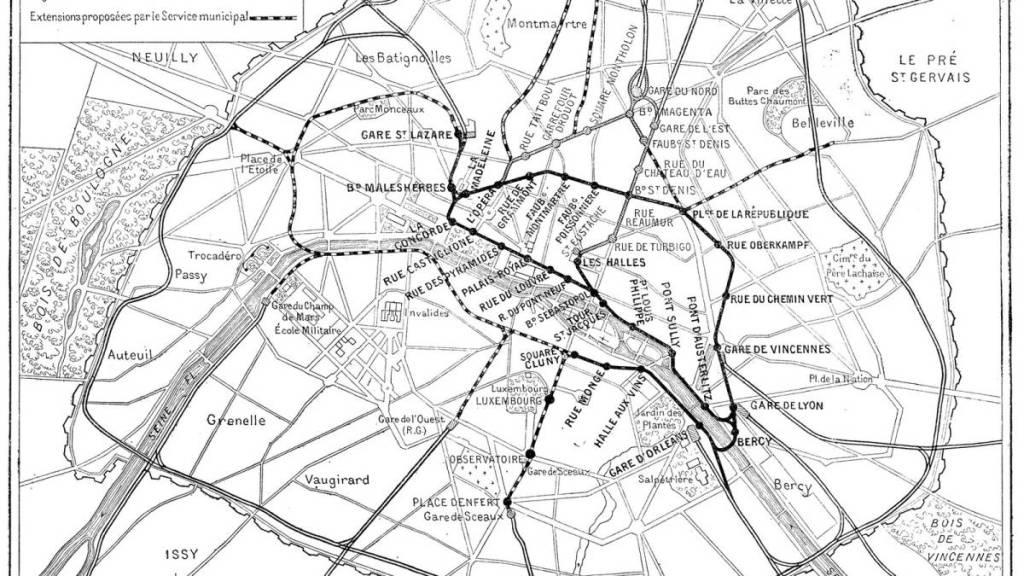
The Paris metro ticket is as old as the metro itself. It first appeared on July 19, 1900, the day the first line between Porte Maillot and Porte de Vincennes opened. At that time, the metro had just arrived and was beginning to become part of Parisians’ daily lives.
For decades, the ticket changed colors, prices, and even classes. Until 1991, the metro had first- and second-class cars. And depending on the era, the company, and the class, the ticket could be red, blue, or yellow.
For older generations, the ticket brings to mind the famous ticket punchers. Until the early 1970s, these agents would check and punch each ticket at the metro entrance. In 1973, tickets became magnetic, turnstiles made their debut, and gradually replaced manual ticket punching. A small innovation for us, but a significant one at the time.
From the ticket punch to the Navigo: over a century of evolution
This little paper ticket has ultimately spanned nearly the entire modern history of the Paris Metro. It witnessed the end of first class, the arrival of the Carte Orange in 1975, and then that of the Navigo pass. Little by little, the paper ticket has lost its central role in daily commutes.
In recent years, its main flaw has become legendary: demagnetization. According to the RATP, nearly 5 million tickets are demagnetized each year, often because they were too close to a set of keys or coins in our pockets. The company estimated that about one in ten tickets purchased in a booklet ended up lost, forgotten, or damaged.
Today, the Navigo Easy pass —or our smartphones—have taken over. For occasional trips, travelers load their fares onto a Navigo Easy pass or purchase them through apps like IDF Mobilités. Regular commuters opt for the Navigo Liberté+, which tracks their trips and bills them at the end of the month.
An everyday object that has become a piece of Paris
Yet the metro ticket was more than just a way to pass through a turnstile. For over a century, it found its way into wallets, coat pockets, books, and sometimes even souvenir boxes.
It has also left its mark on Parisian popular culture—from the “Poinçonner des Lilas” to old collected tickets and the 1980s slogan “ticket chic, ticket choc.” This little piece of cardboard has ultimately become an object of nostalgia.
November 5 will indeed mark the end of their sale, but not quite their immediate disappearance. There will still be a few weeks left to use up the last few tickets lingering at the bottom of a bag.
After 126 years of loyal service, the paper ticket is set to join the long list of small objects that tell the story of Paris.