
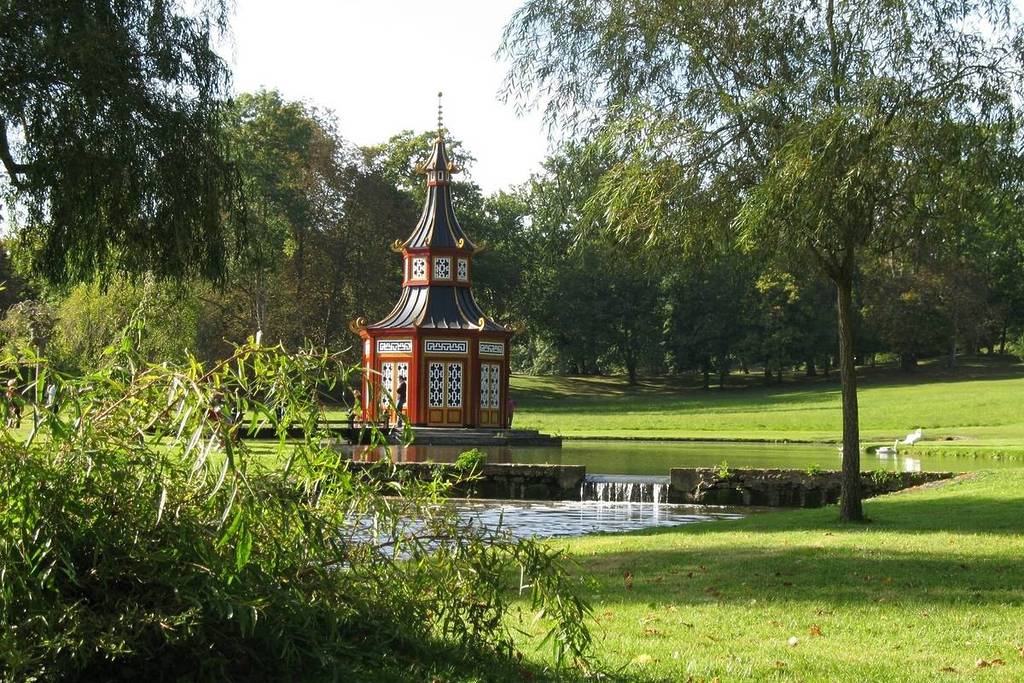

At first glance, the Château de Groussay resembles an elegant 19th-century country estate. Yet behind its classical facades lies a truly unique estate. A Chinese pagoda by the water, a Palladian bridge, a pyramid, an open-air theater, and even a Tartar tent: this 30-hectare park sometimes feels more like traveling through several countries than strolling through the Yvelines.
A 30-hectare park full of surprises
Located in Montfort-l’Amaury, less than an hour from Paris, the château was built in 1815 for the Duchess of Charost, daughter of Madame de Tourzel, governess to the children of Louis XVI and Marie Antoinette. But the site owes its reputation above all to the man who transformed it in the 20th century: Charles de Beistegui.
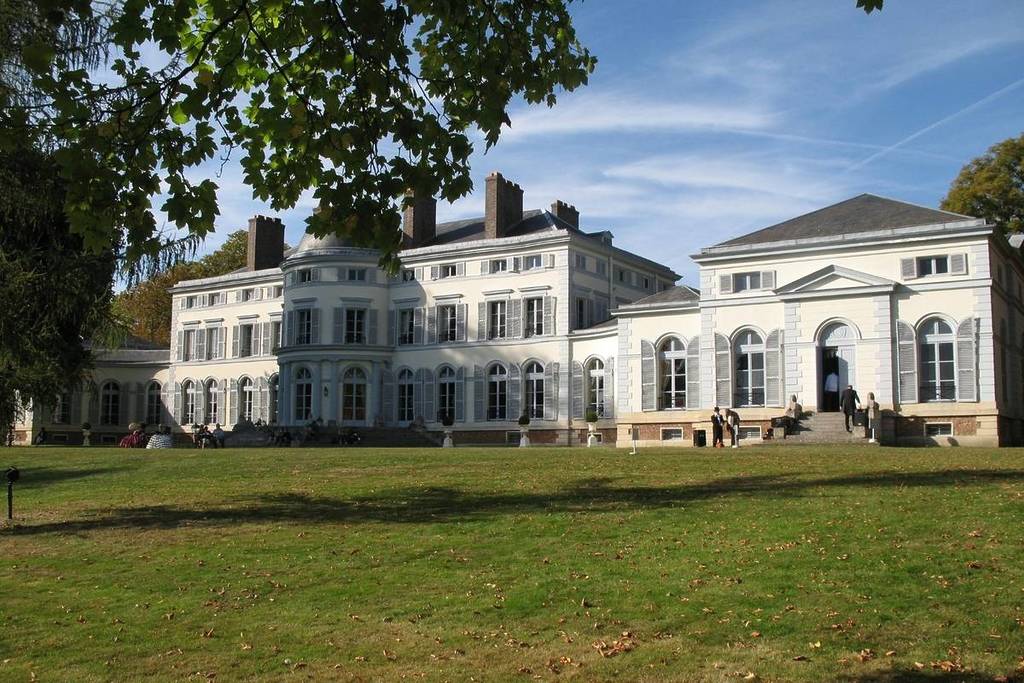
A collector, interior designer, and great lover of the good life, Beistegui bought Groussay in 1938 and set out to completely transform the estate. He expanded the château, created a private theater, added new wings, and, above all, designed a spectacular park inspired by 18th-century gardens.
Between the 1950s and 1970s, she had a series of “folies” built—those decorative structures once very much in vogue in grand aristocratic gardens. With the help of architect Emilio Terry and painter Alexandre Serebriakoff, she created a completely whimsical landscape where references to China, Italy, Egypt, and even Northern Europe intersect.
Among the most impressive structures are the Chinese pagoda, set on an artificial island; the spectacular Tartar tent covered with thousands of Delft tiles; and the Palladian bridge, inspired by Venetian and English models. Further on, you’ll find a pink-brick pyramid, a labyrinth temple, and a massive observatory column inspired by the Vendôme Column.
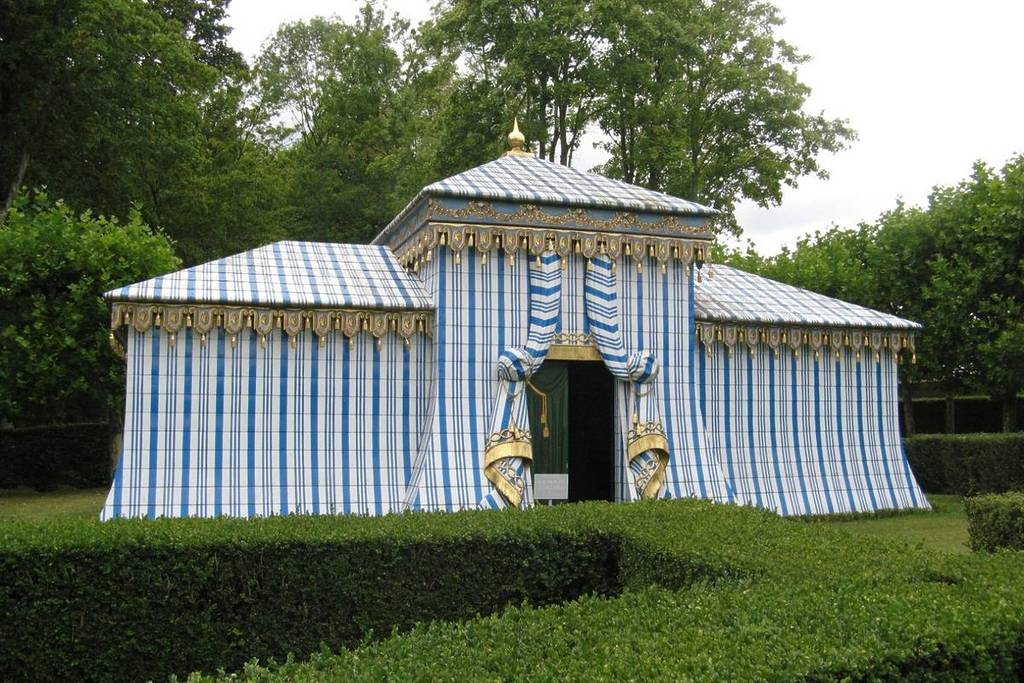
The park unfolds almost like a series of scenes. Behind every grove or path, a new surprise awaits. This theatrical layout largely explains why Groussay is today considered one of the most remarkable examples of a “fabric garden” in France. The estate has also been awarded the “Remarkable Garden” designation, and the entire site has been classified as a historic monument since 1993.
The château itself also has a significant cultural history. Its private theater notably hosted the Comédie-Française starting in 1957, and many figures from the arts world have passed through its doors over the decades.
Just a few minutes from the center of Montfort-l’Amaury and Maurice Ravel’s house, Groussay remains one of the most unique getaways in Île-de-France.
📍Château de Groussay – Montfort l’Amaury