
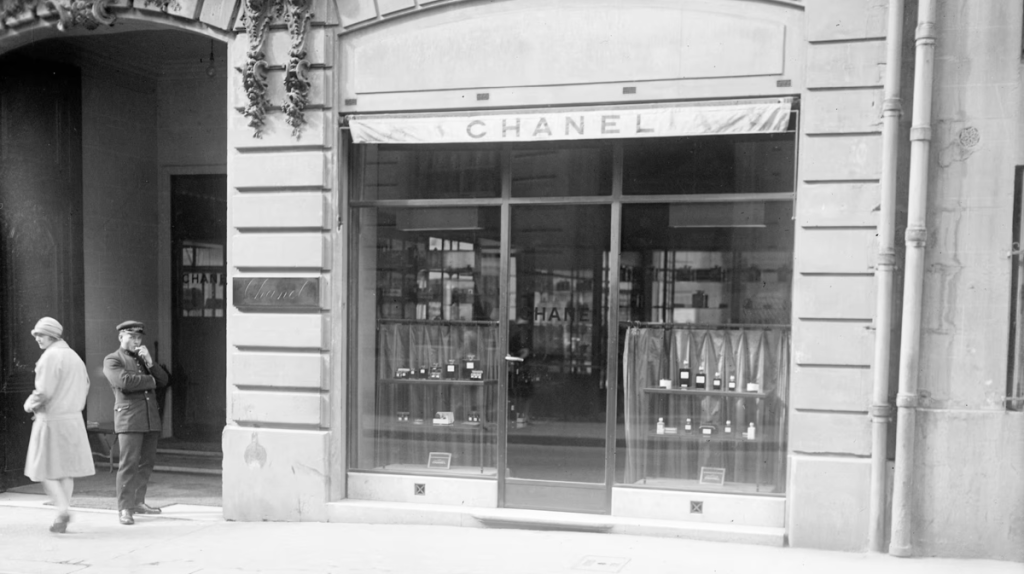

Just a few steps from Place Vendôme, a building in the 1st arrondissement holds a special place in the history of fashion. It was at 31 Rue Cambon that Gabrielle Chanel established her fashion house in 1918. More than a century later, this address continues to keep her legacy alive. Behind the boutique lie not only the haute couture ateliers but also the designer’s former private apartment. A place steeped in history, where each floor tells a part of the world created by Coco Chanel.
Rue Cambon, where Chanel’s story took on a new dimension
Chanel’s story on this street actually began a few years earlier. In 1910, Gabrielle Chanel opened her first hat shop at number 21, under the name Chanel Modes. Her designs quickly became a success, before expanding to Deauville and then Biarritz.
In 1918, Chanel moved to 31 Rue Cambon, where she brought together the various facets of her fashion house. On the ground floor, clients discover her creations in the boutique before heading to the haute couture salons on the first floor. The building also houses her private apartment and design studio, while the ateliers are located on the top floors.
31 Rue Cambon is more than just a boutique: it is the heart of the House of Chanel, where design, fittings, and clients come together to discover Gabrielle Chanel’s creations.
A private apartment and a mirrored staircase steeped in secrets
On the second floor, behind the doors of the fashion house, lies Gabrielle Chanel’s former apartment. Far from being merely a creative space, this apartment reflected the designer’s personal tastes, right down to the smallest details of its decor.
Inside, the decor is quite different from the understated elegance typically associated with Chanel. Gabrielle Chanel loved to surround herself with objects from around the world, notably large Chinese screens that played a prominent role in her apartment. There, the designer would entertain her loved ones and guests, surrounded by her art collection. One surprising detail: Coco Chanel did not sleep at 31 Rue Cambon. At the end of the day, she would return to her suite at the Ritz, just a few steps from the apartment.
The building has another distinctive feature that has become famous in the fashion world: its mirrored staircase. Entirely covered in reflective panels, it allowed Chanel to discreetly observe her fashion shows without being seen by the guests. This way, she could gauge their reactions to her creations—a detail that speaks volumes about the care she took in presenting her collections.
More than 100 years later, what remains of 31 Rue Cambon?
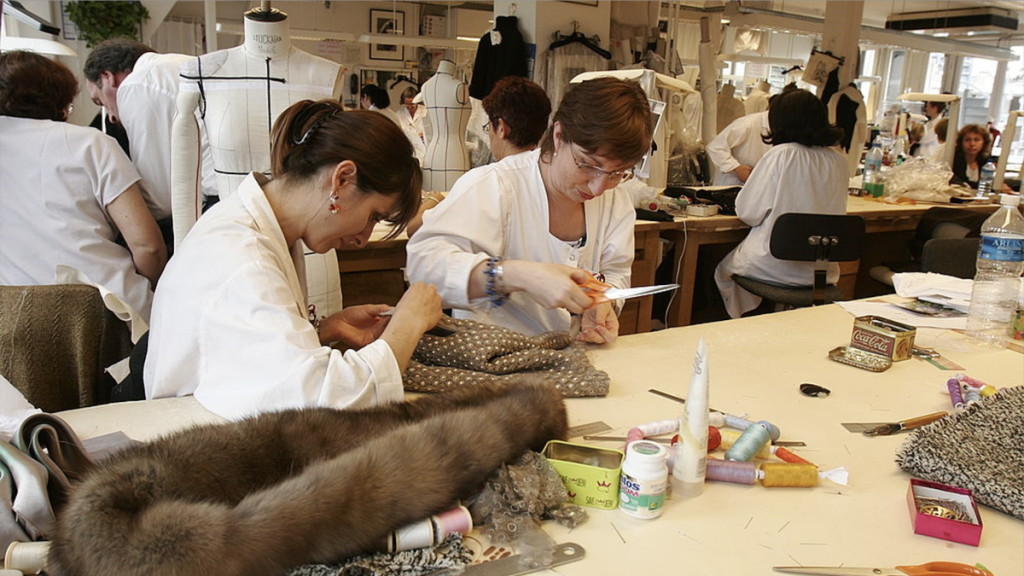
Today, 31 Rue Cambon remains one of the House’s most important locations. The boutique still occupies the ground floor, the haute couture salons welcome clients on the first floor, and the ateliers remain active on the upper floors. Coco Chanel’s layout of the building has stood the test of time, allowing 31 Rue Cambon to retain its original purpose: to be a place where haute couture continues to come to life.
Upstairs, her private apartment has also been preserved. In 2013, the apartment’s four rooms and the mirrored staircase were designated as historic monuments. This recognition attests to the heritage value of this place, which is inextricably linked to the history of French fashion.
However, these spaces are not open to the public. While the boutique welcomes visitors, the apartment and ateliers are not open to the general public. More than a century after she moved in, 31 Rue Cambon remains a symbolic landmark of the capital. Behind its façade, the ateliers continue to keep haute couture alive, while Gabrielle Chanel’s apartment preserves a more intimate part of her history.