
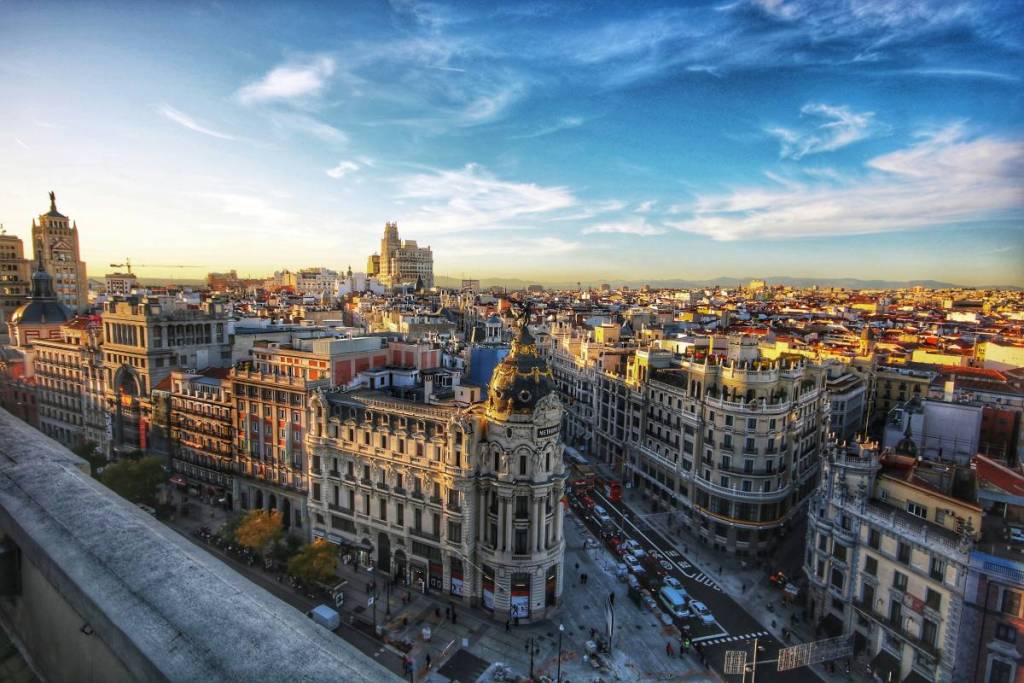

Paris Pride is beautiful. So is Amsterdam Pride. But when it comes to scale, duration, intensity, and that feeling of being at the heart of an event that truly matters on a global scale, Madrid is the place to be. MADO— Madrid Orgullo —is the largest Pride parade in Europe and one of the biggest in the world, ahead of London, Berlin, and Amsterdam. This year, the festival spans ten full days, from June 25 to July 5, 2026, and literally transforms the Spanish capital into the epicenter of LGBTQIA+ visibility and celebration.
For a Parisian, it’s also one of the easiest trips of the summer: a two-hour flight , a weekend to see the highlights and get a feel for the (frantic) pulse of a city that never sleeps—especially not during Pride.
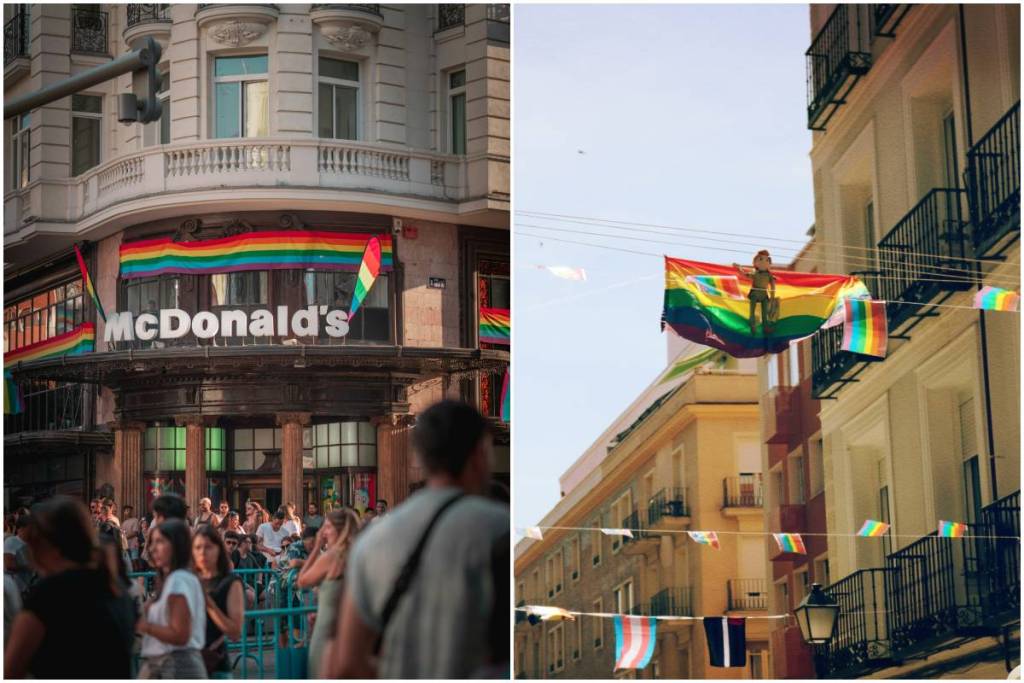
Madrid Pride: Europe’s Largest Pride Parade
Why Madrid and not another city? The answer lies in a few numbers. Nearly two million people take to the streets of Madrid every year for MADO— an absolute European record. The 2017 edition even came close to 3.5 million. This isn’t just another Pride event: it’s a show of strength that mobilizes the entire city—from institutions to neighborhood bars—and attracts visitors from all over Europe, Latin America, and the United States.
But beyond the numbers, Madrid has something few cities can offer: a nightlife culture that naturally stretches until dawn, a July sun that draws even the most homebodies out into the streets, and a neighborhood similar to the Marais— Chueca —which is one of the most welcoming places you’ll find in Europe during this time of year. Madrid is one of the most gay-friendly cities in the world. And for ten days in July, it proves it on a citywide scale.
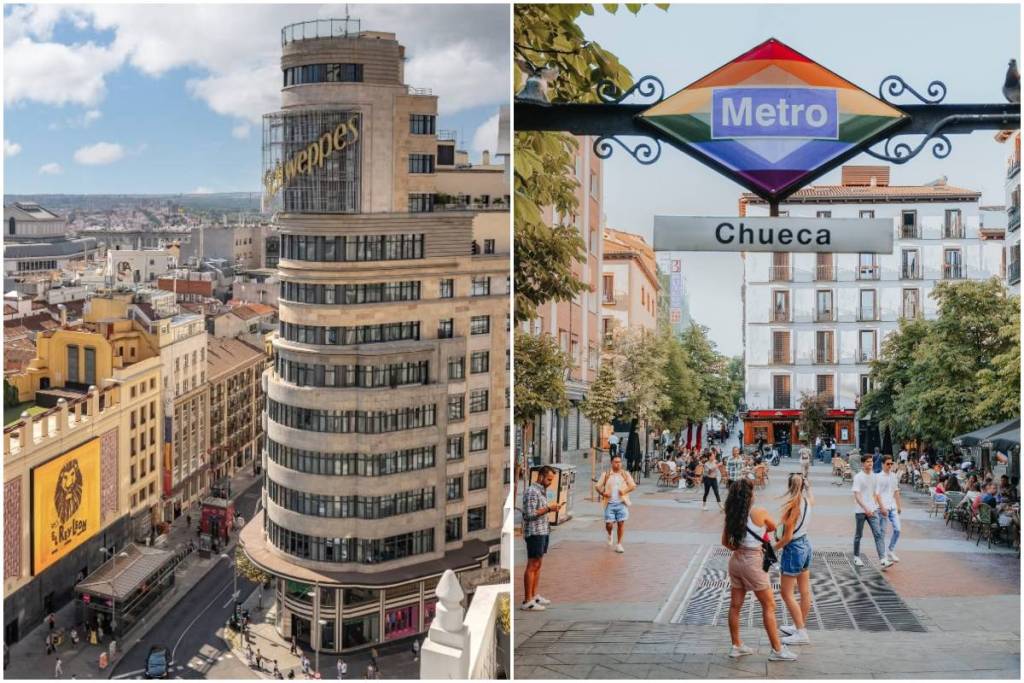
Chueca: Spain’s Marais, the nerve center of Pride
Chueca didn’t become the Pride neighborhood by chance. In the 1980s and 1990s, the LGBTQIA+ community settled there, renovated the buildings, opened bars, and created a network of businesses and organizations that now make it one of the liveliest neighborhoods in the Spanish capital. It’s a story of urban reclamation by a community that, lacking space elsewhere, created its own—and made it so attractive that the whole city now comes here.
During MADO, Chueca’s usually vibrant atmosphere intensifies: the outdoor cafes are packed starting in the afternoon, the streets are closed to traffic, stages are set up in the squares, and the party doesn’t really stop between 2 and 6 a.m. Plaza de Pedro Zerolo (renamed in honor of one of the activists who championed the legalization of marriage equality in Spain in 2005) is its symbolic epicenter.
The MADO 2026 schedule, day by day
June 25–30: Orgullo de Barrio – Chueca Pride
The week before: neighborhood parties, exhibitions, and cultural events throughout Chueca.
July 1: Pregón — Official opening speech
(Plaza Pedro Zerolo). Hosted by La Plexy, a key figure in Madrid’s nightlife scene.
July 1–5: Concerts and DJ sets on four stages
(Plaza Pedro Zerolo, Plaza de las Reinas, Puerta del Sol, Plaza de España).
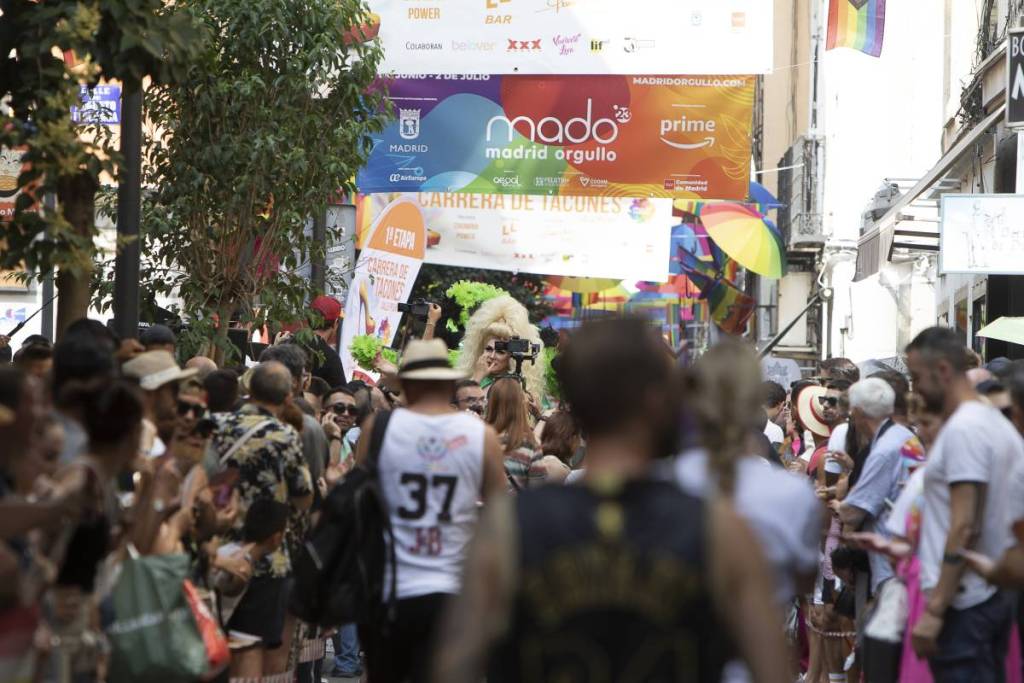
July 2: High Heels Run — 27th edition
(Calle Pelayo) The race in stiletto heels up to 15 cm high. Three qualifying rounds, one final. Iconic.
July 3: Madrid Summit — 8th edition
(European Parliament headquarters in Madrid). International conference on LGBTQIA+ rights.
July 3: Mr. Gay España contest
(Plaza de España). The pageant whose winner represents Spain at Mr. Gay World.
July 4: Pride Parade — The Atocha Event
(Paseo del Prado to Plaza de Colón). The largest LGBTQIA+ march in Europe.
July 5: MADO 2026 Closing Ceremony
The end of the festival. Or almost—Madrid keeps the party going long after.
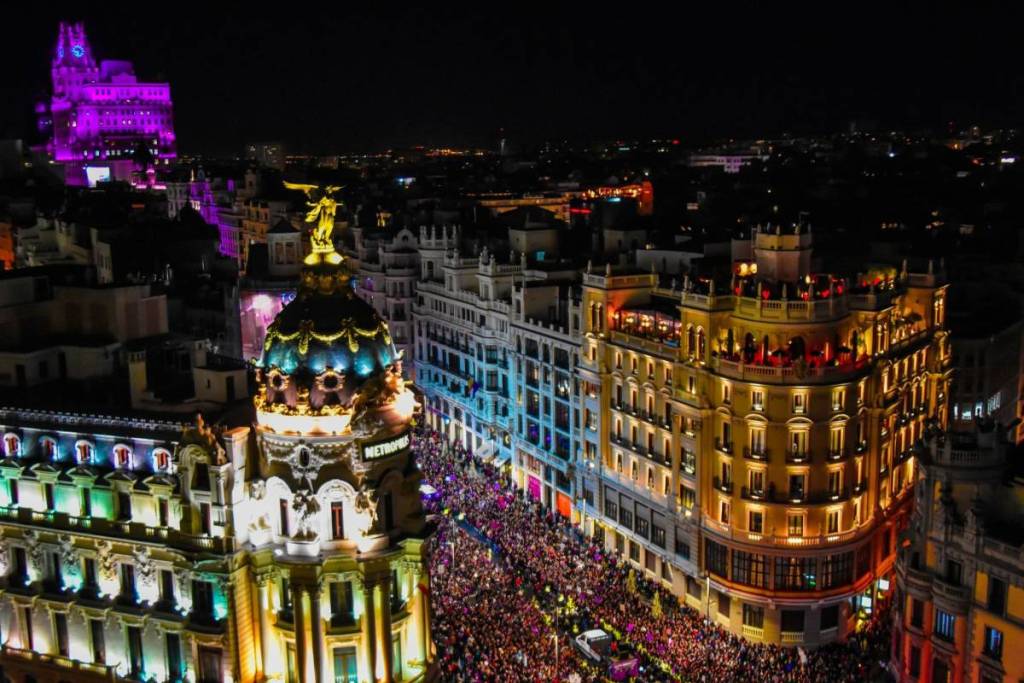
The July 4th March: the moment not to be missed
On Saturday, July 4, the march sets off from the Glorieta del Emperador Carlos V, in front of Atocha Station, follows the Paseo del Prado— one of Europe’s most beautiful boulevards —and heads up to the Plaza de Colón. Hundreds of floats, thousands of marchers, and a crowd so vast it defies belief. It is both a political act— the reading of an official manifestobrings the parade to a close—and an explosion of color and music that has no real equivalent anywhere else.
Madrid also illuminates its landmarks in the colors of the rainbow flag throughout the week: the Cibeles Palace, the Congress of Deputies, and the Puerta de Alcalá. The city isn’t just paying lip service to inclusion—it has embodied it since 2005, when Spain became one of the very first countries in the world to legalize marriage for all.
Paris–Madrid: Practical Information for Pride 2026
📆 Dates: June 25 – July 5, 2026
📍Parade: Saturday, July 4 — Atocha-Colón
🛫 From Paris Direct flights from Paris to Barajas: about 2 hours
🏩 Hotels: Book now: Chueca is fully booked several weeks in advance.
🎟️ Admission: Free festival. Concerts on open-access stages.
ℹ️ Official website: madridorgullo.com