
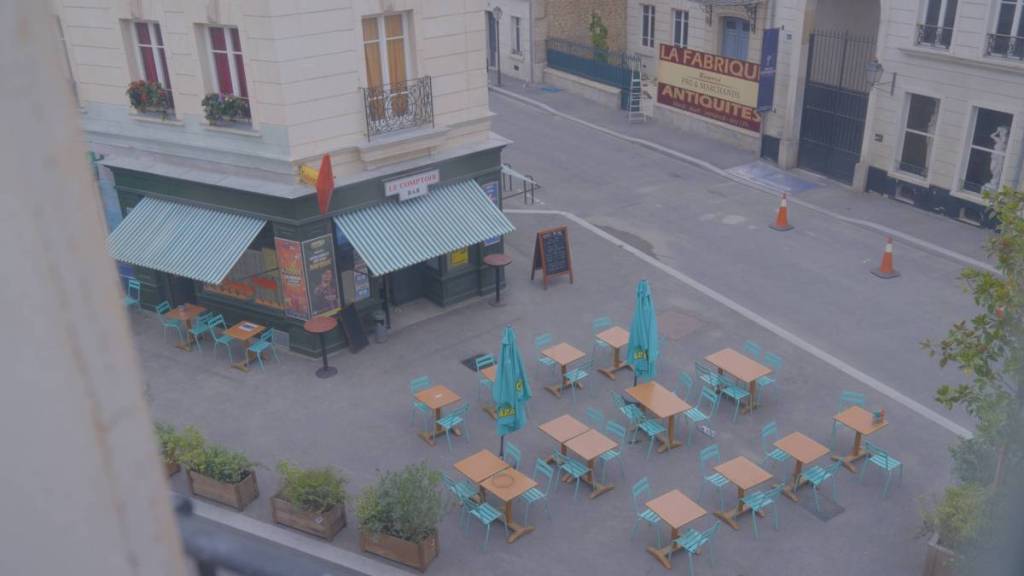

Haussmann-style facades, café terraces, shops, zinc roofs, a metro station, and even streets that seem to stretch as far as the eye can see… At first glance, you might think you’re strolling through Paris. Yet everything is fake—or almost everything. A few dozen kilometers from the capital, in the middle of a vast open field in the countryside, the TSF film studio has created an open-air set that recreates the streets of Paris down to the smallest detail: the “Rues de Paris” backlot.
A life-size Paris, transformed to suit each film production
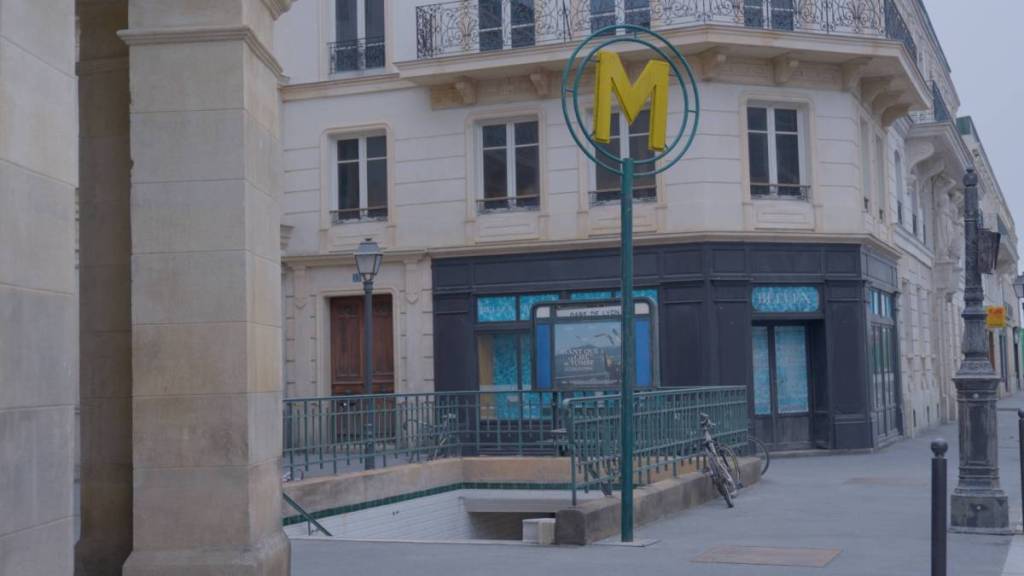
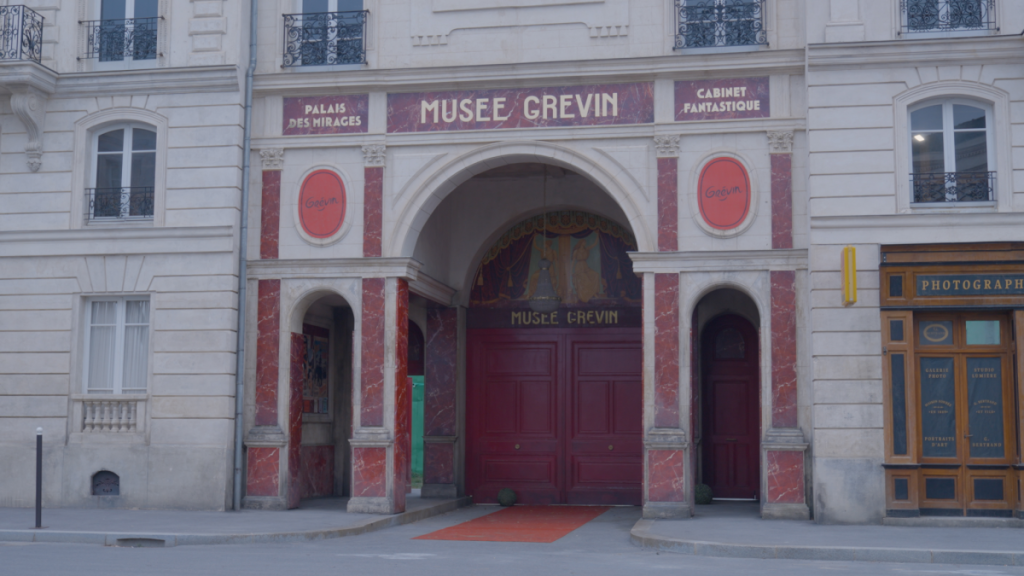
Belleville, Saint-Germain-des-Prés, the Marais, Montmartre… The Backlot alone covers nearly one and a half hectares of reconstructed Paris and approximately 650 meters of streets. From the outset, the site was conceived as a versatile Paris—not as the set for a single film—featuring different styles of facades and neighborhoods. The goal: to allow productions to adapt the space to their needs without the audience recognizing the same streets from one film to the next. A storefront can be repainted, a terrace moved, or a shop transformed or entirely created to suit a production’s requirements.
Major film productions, from *Lupin* to *Emily in Paris*
© Dorian Semet – Pandôme Studio
The very first scene filmed at the Backlot dates back to May 2024, during the Paris Olympic Games ceremony, featuring the passing of the Olympic torch between Jamel Debbouze and Zinédine Zidane. The series *Lupin* also filmed motorcycle and car stunts there, and *Emily in Paris* took over the location for a Pride Parade sequence, featuring three floats and nearly 400 extras. International artists and brands such as Chanel, Dior, Balenciaga, and Cartier have also filmed there.
A set designed to make life easier for film productions
© Dorian Semet – Pandôme Studio
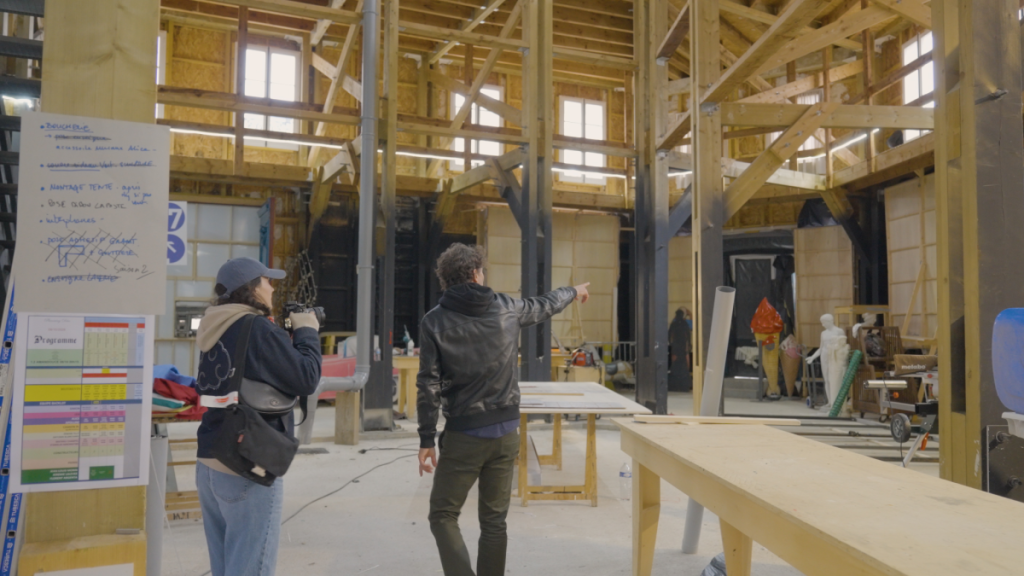
These artificial streets eliminate the constraints associated with filming, such as blocking off a street, obtaining permits, or managing traffic. They’re also ideal for shooting stunt scenes, explosions, and gunfire… The Backlot also addresses an economic challenge for the French film industry, which sometimes filmed in Eastern Europe where recreating sets was less expensive. With this type of infrastructure, TSF aims to keep more film shoots in France, including both French and international productions.
And the project doesn’t plan to stop there: TSF plans to develop traditional studios on the site, with soundproofed interior spaces to allow productions to alternate between exterior and interior scenes, especially when the weather isn’t cooperating.