

The origin of the name Rue des Deux Boules stems from the urban navigation methods of the past. In the 18th century, street numbers did not exist, and residents relied on store signs to find their way around. On this street stood a famous shop displaying two enormous balls on its facade—a distinctive feature that eventually gave the street its permanent name.
From roasted geese to seedy alleys
Changes in language and slang have also altered the names of certain streets. Rue aux Ours, for example, has never been home to any bears. In the Middle Ages, this street was home to the city’s goose roasters. At that time, it was called “rue aux Oues,” the old term for geese. Over time, popular pronunciation distorted the word until “ours” (bear) became permanently engraved on the city’s street signs.
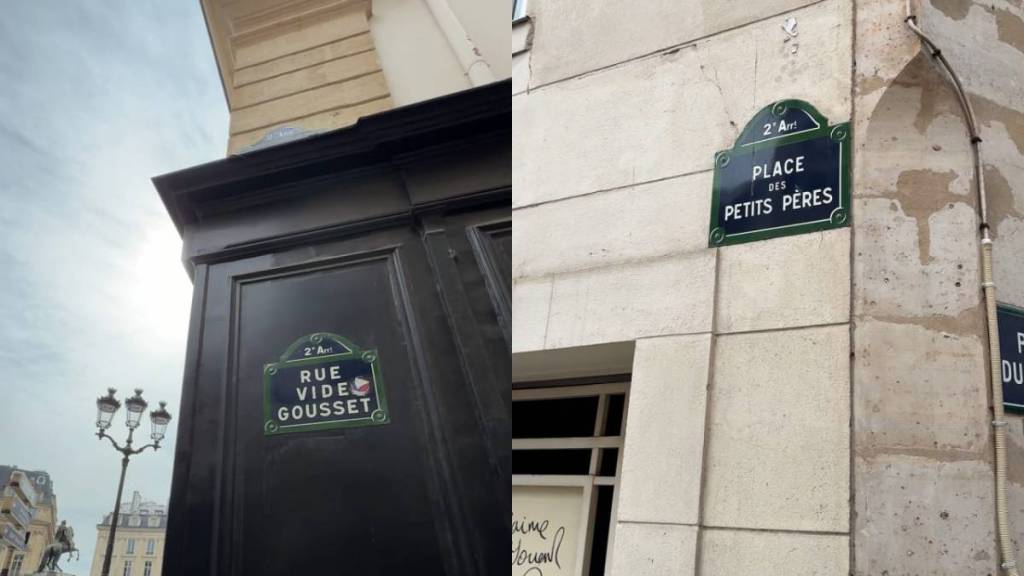
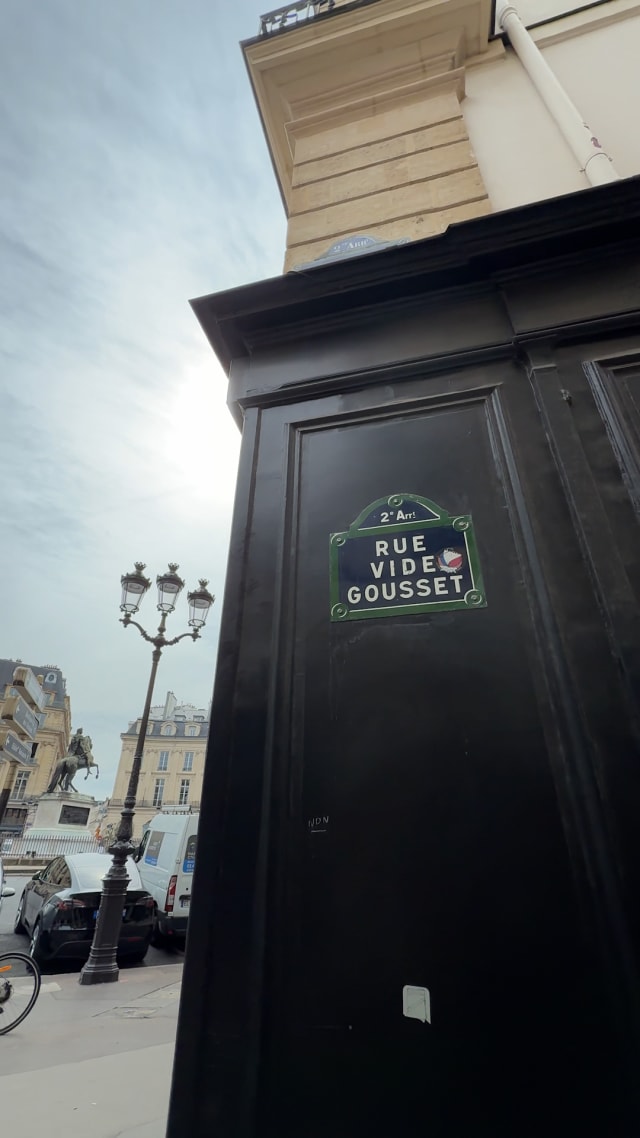
Further on, behind Place des Victoires, the small Rue Vide-Gousset bears witness to the danger of certain neighborhoods in the 17th century. At that time, this dark alley was located just behind the city walls. A “gousset” referred to the small pocket in clothing where residents hid their money. Passersby who ventured into this alley at night ran the risk of encountering pickpockets who would relieve them of their savings.
The Legacy of Religious Congregations
Just a few steps away, the street names take on a softer tone with the Place des Petits-Pères. This name comes from the affectionate nickname that local residents gave to the Augustinian monks. These monks were responsible for founding the convent, whose building still stands today on the cobblestones of the square.
Many other street signs in the city center, such as the one on Rue du Mail, still bear traces of these former uses and local historical figures.