
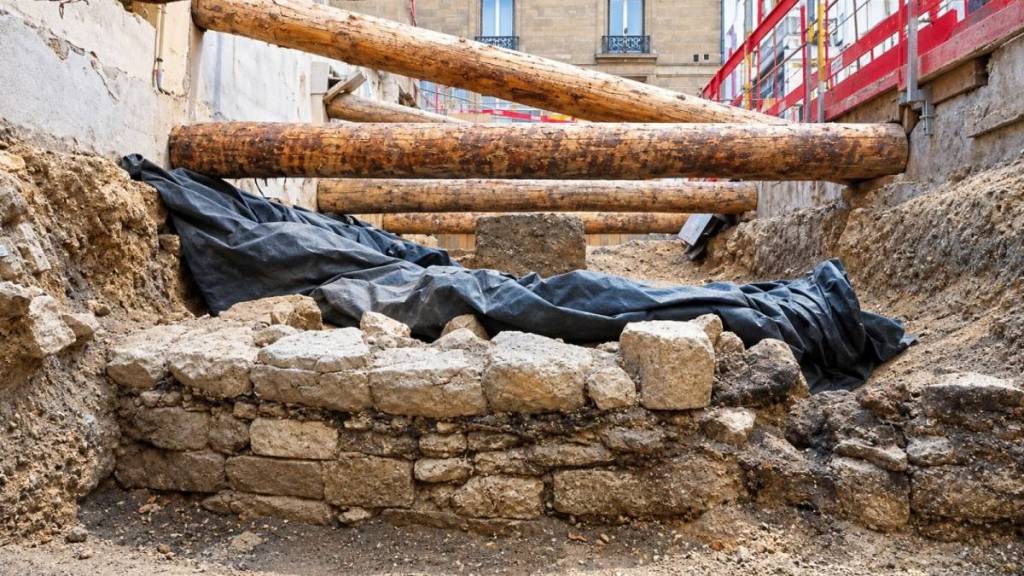

Just a few meters from Notre-Dame, archaeologists may have just uncovered one of the most important remains ever found for understanding the origins of Paris. An imposing wall combining stone and wooden beams was discovered during excavations conducted since February 2026. Preserved over a length of about twenty meters, it displays a construction technique characteristic of Gallic fortifications from the late Iron Age.
A major archaeological discovery in Paris
The discovery dates back to this summer, but it was not publicly revealed until September 23. Initial carbon-14 analyses date the wooden elements to between 200 and 10 BCE. At the base of the wall, researchers also found a Gallic spearhead. Behind it lies an artificial platform of sand and gravel up to two meters thick—another clue pointing to a fortified enclosure.
This is where the discovery takes on a whole new dimension. In *The Gallic Wars* , Julius Caesar mentions a Lutetia occupied by the Parisii, situated on an island in the Seine. In 52 BCE, facing the Roman troops of Labienus, the inhabitants are said to have set their oppidum ablaze and destroyed the bridges to slow the Roman advance.
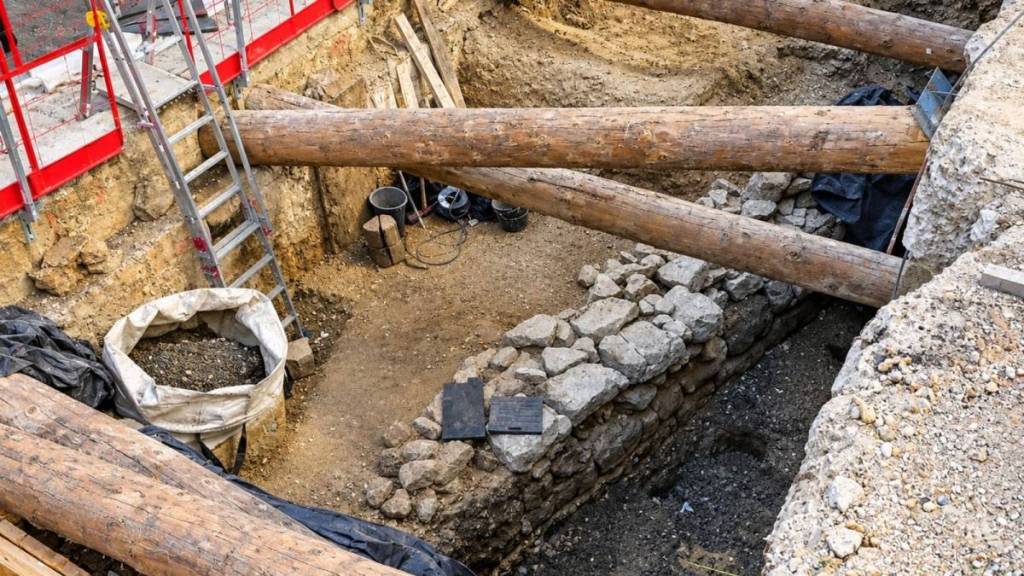
However, the wall at the Hôtel-Dieu bears the marks of a violent fire. Charred facing, burnt seeds, and the remains of a wooden building destroyed by flames were found around the structure. The connection is obviously tempting, but archaeologists remain cautious: the exact date of the wall still needs to be determined, and its function confirmed.
For a long time, the location of the Gallic city of Lutetia has been a subject of debate. There are numerous Gallo-Roman remains on the Left Bank, from the arena to the Cluny thermal baths, but physical evidence of a fortified Gallic settlement on the Île de la Cité was lacking .
Two thousand years after the events recounted by Caesar, the subsurface of the Île de la Cité may not yet have revealed all its secrets. And if further analyses confirm the current hypothesis, this wall could quite simply become the first direct archaeological evidence of the Gallic city that preceded Paris.