
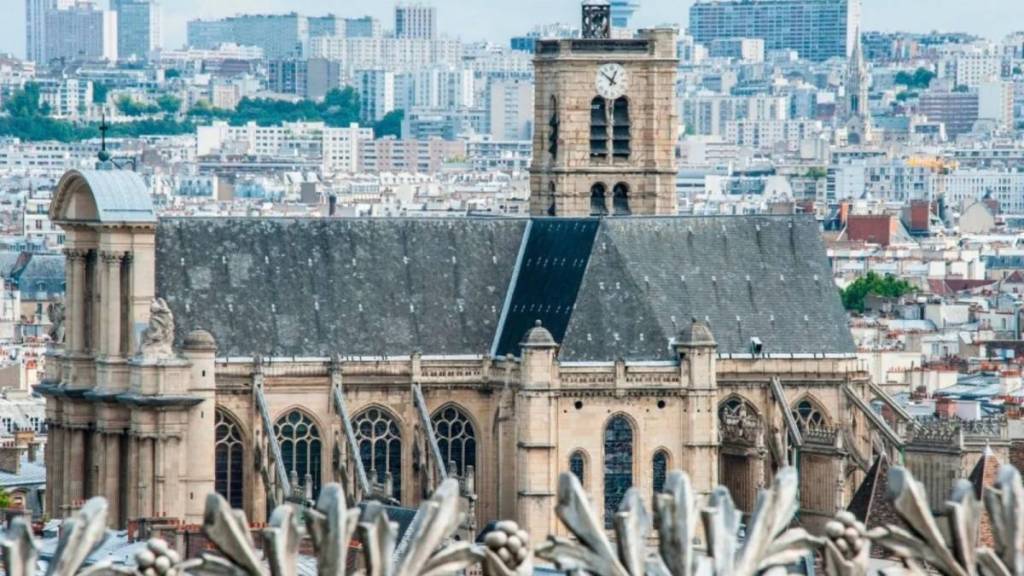

Located just behind City Hall, the Church of Saint-Gervais-Saint-Protais is one of those landmarks that’s easy to miss when walking through the Marais. Yet behind its monumental façade lies one of the oldest churches in Paris, featuring stained-glass windows dating back to the 15th century, an organ linked to the famous Couperin family, and, above all, a particularly tragic history.
On March 29, 1918, in the midst of World War I, the church was struck by a German shell while the congregation was attending the Good Friday service. Fired from a long-range cannon positioned about 140 km from Paris, the shell pierced the roof and caused part of the vault to collapse. The official toll was 91 dead and 68 wounded, making it one of the deadliest bombings suffered by the capital during the conflict.
A church in the Marais that still bears the scars of 1918
More than a century later, this episode has not completely faded from memory. A few traces of the explosion are still visible on the pillars of the south transept, and a memorial chapel commemorates the victims. Fortunately, the historic stained-glass windows had been removed as a precaution at the start of the war and thus escaped destruction.
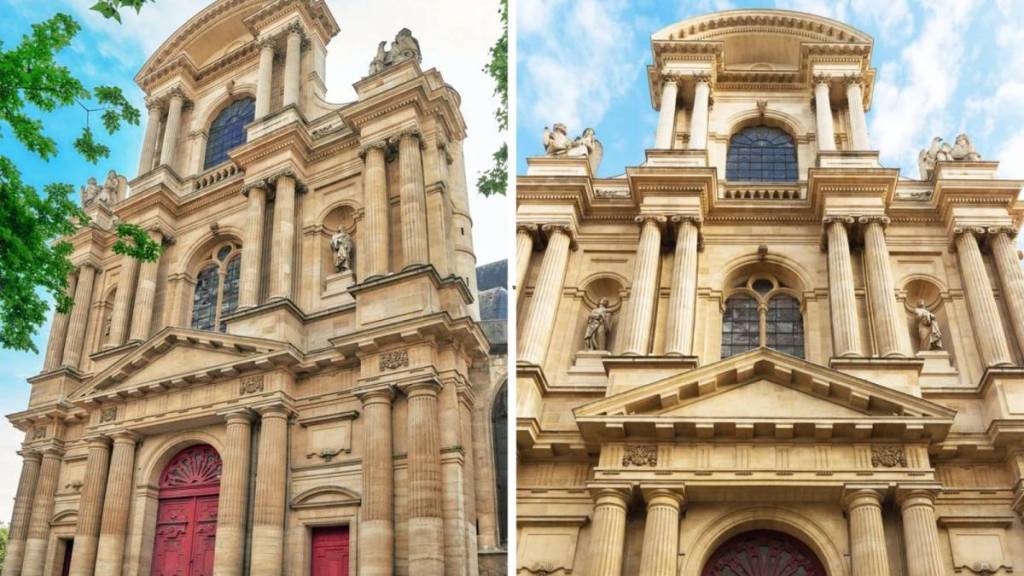
Construction of the church began in 1494 in the Flamboyant Gothic style, before its façade was built starting in 1616 in a much more classical style, inspired by Greco-Roman architecture.
Saint-Gervais also preserves a remarkable collection of stained-glass windows dating from the late 15th century to contemporary works. Some depict the Passion of Christ or the life of Mary Magdalene, while others, installed several centuries later, illustrate how the church’s interior decor has continued to evolve.
Another detail worth noting: its grand organ is closely linked to the Couperins, one of the most important musical dynasties of the French Baroque era. Concerts are still held there regularly today.
Location: Saint-Gervais-Saint-Protais Church, 13 rue des Barres, 75004 Paris